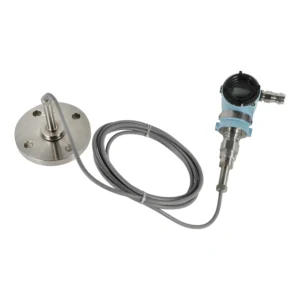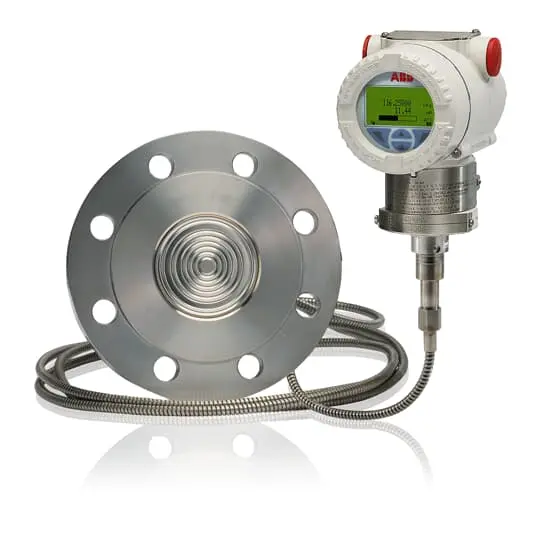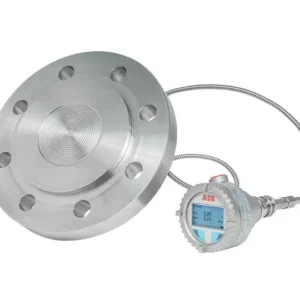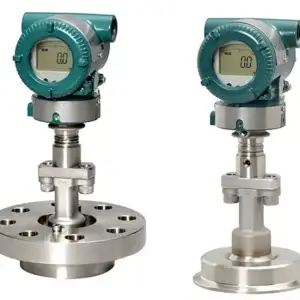
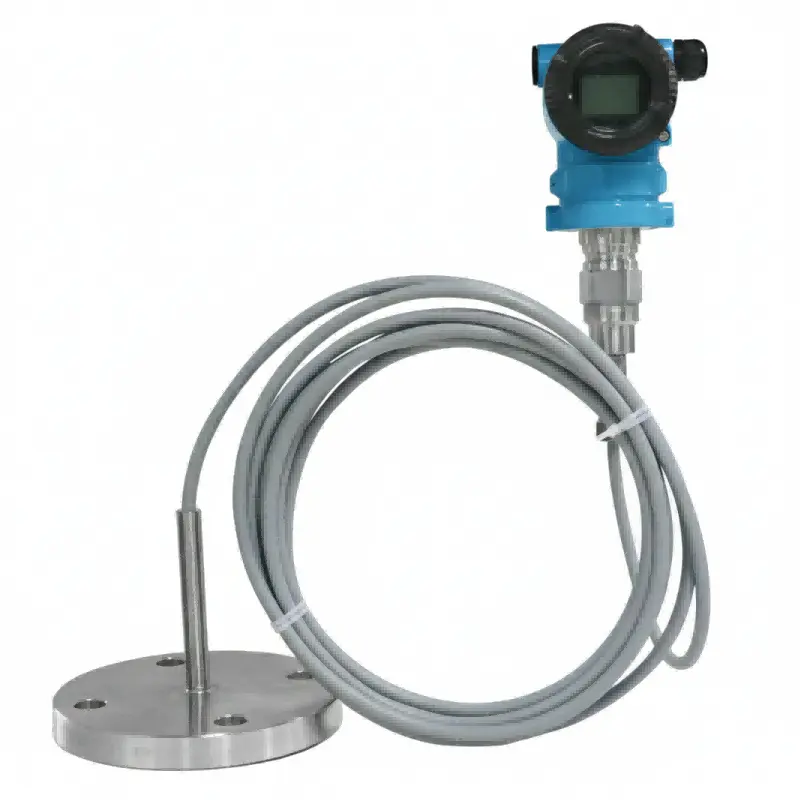
Capillary Pressure Transmitter
A capillary pressure transmitter is a pressure measuring instrument that adds a capillary remote seal structure to a single flange diaphragm seal assembly. It installs the measuring diaphragm at the process connection point and transmits pressure to the transmitter body located away from the process through a capillary, enabling stable measurement of pressure or pressure signals related to level.
This structure is still essentially a diaphragm seal pressure transmitter. However, compared with a direct-mount single flange structure, it offers greater advantages in installation flexibility, field adaptability, and equipment protection. It is especially suitable for applications where the installation space is limited, the temperature is high, vibration is significant, or where local observation and maintenance are inconvenient.
- Pressure Type: Gauge Pressure, Absolute Pressure
- Pressure Range: -1 bar to 400 bar, -0.1 MPa to 40MPa
- Accuracy: ±0.075%, ±0.2%
- Output Signal: 4–20 mA / HART
- Process Connection: DN20 / DN25 / DN40 / DN50 / DN65 / DN80 / DN100 / DN150 (customized available)
- Diaphragm Material: SS316L, HC-276, Tantalum, Gold-plated
- Capillary length: 1-10 meters (length can be customized upon request)
- Power Supply: 12–36 VDC
- Protection Rating: IP65 / IP67
- OEM Service: Available. The transmitter can be supplied with your company name and logo on the nameplate.
- Packaging: Individual carton box with protective foam.
- Weight: Approx. 6 kg per unit.
- Port of Shipment: Shanghai or Ningbo Port, China.
- Delivery Time: 3-7 working days.
- Transportation: Air freight, sea freight, or express delivery.
- Documentation: Certificate of Conformity (COC); Inspection / Test Report; Packing List; Commercial Invoice
Accessories for Capillary Pressure Transmitters
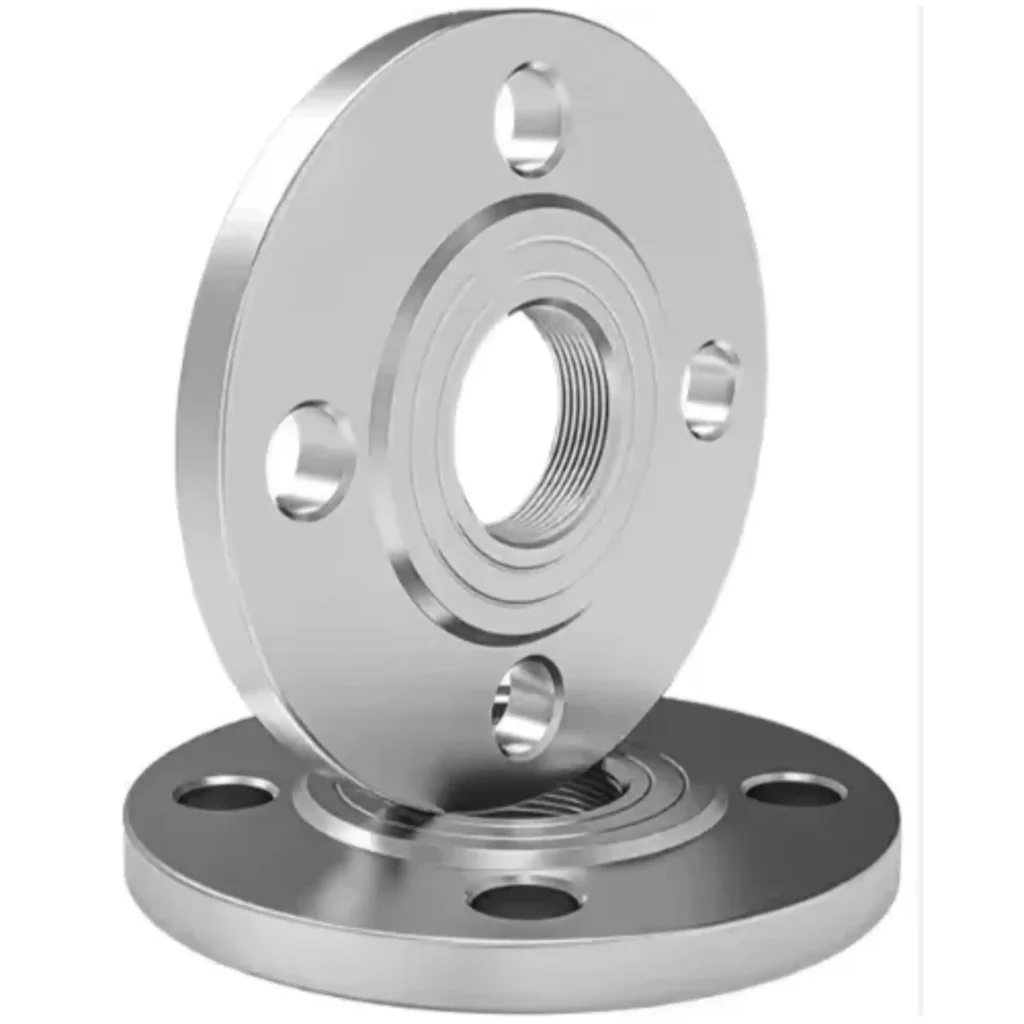
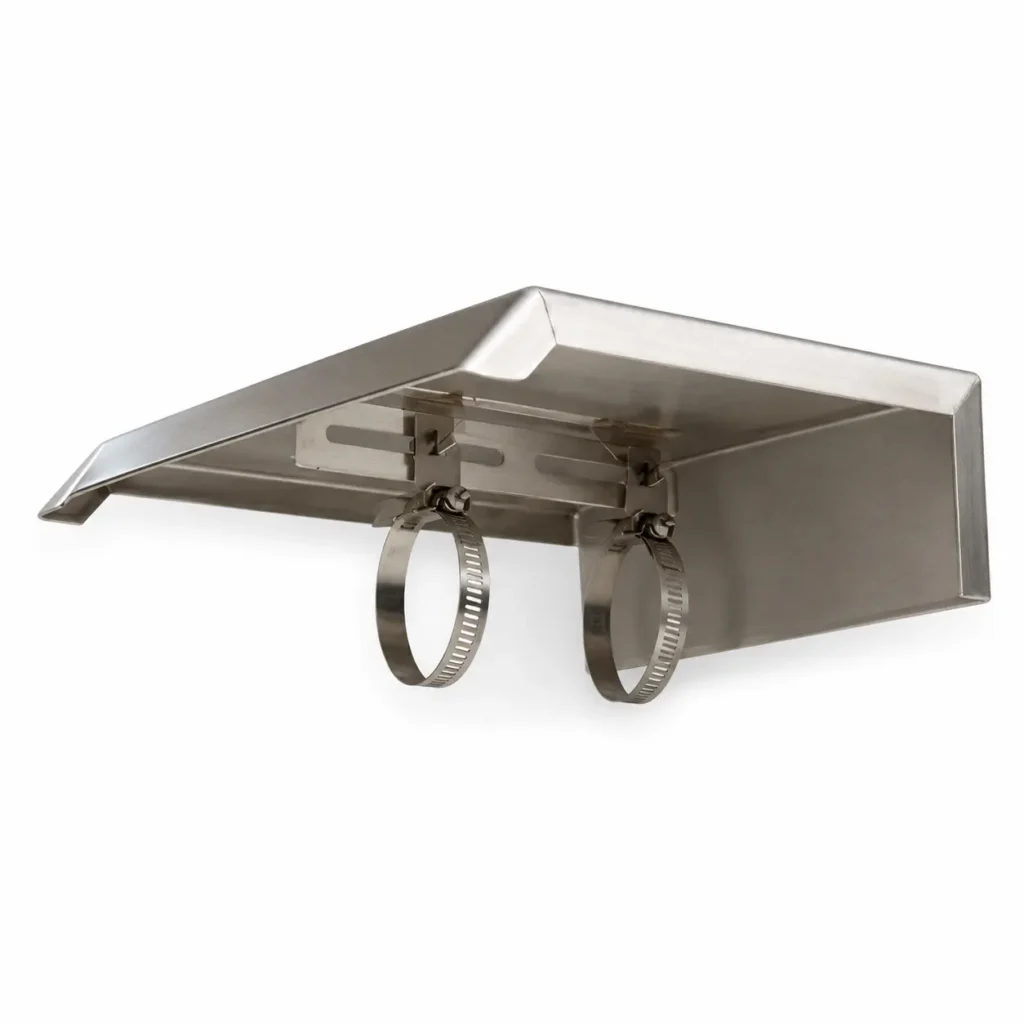
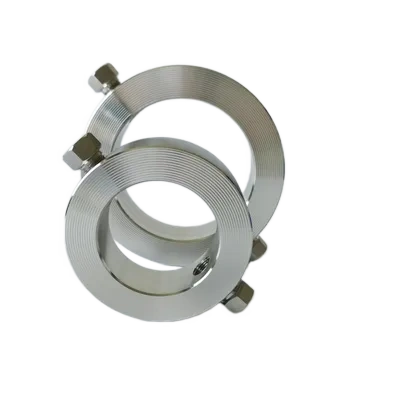
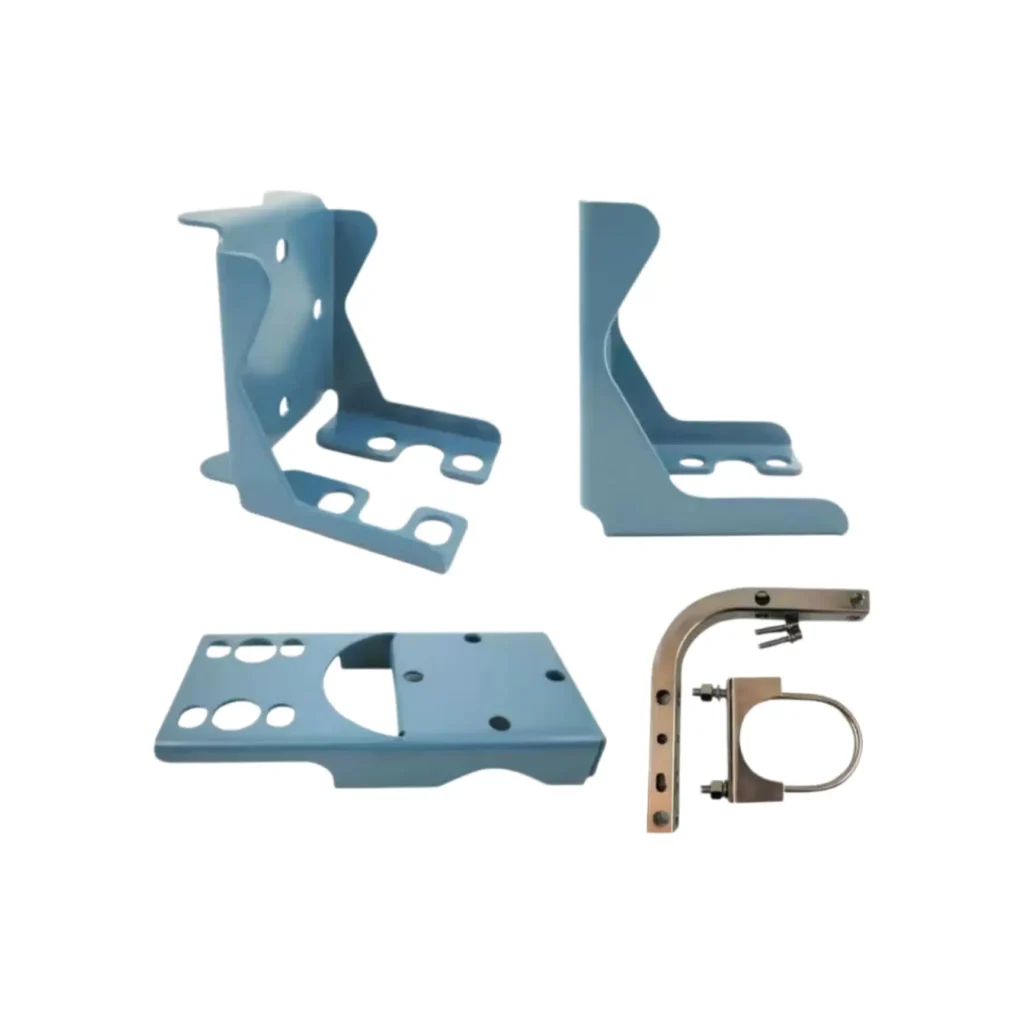
Table of Contents
Capillary Pressure Transmitters Overview
1. What Is a Capillary Pressure Transmitter?
A capillary pressure transmitter can be understood as a combined structure of:
single flange diaphragm seal + capillary + transmitter body
In a standard single flange pressure transmitter, the flange diaphragm seal is usually connected directly to the transmitter body. The overall structure is compact and suitable for locations with enough installation space and a relatively friendly operating environment.
However, in some practical applications, the process connection point may have the following problems:
- The installation space is too limited, and the transmitter body cannot be mounted directly.
- The local temperature is too high, making it unsuitable for electronic components to stay close to the heat source for a long time.
- The pipeline or tank position is too high, too low, or too far inward, making observation or maintenance inconvenient.
- There is strong vibration on site, and the user wants to install the head in a more stable location.
- The process medium is corrosive, viscous, or prone to crystallization, and needs to be isolated through a diaphragm seal.
In these cases, a capillary remote structure can be used. It separates the measuring end from the display/electronics end, making installation more flexible while maintaining measurement performance.
2. Structure and Diagram of a Capillary Pressure Transmitter
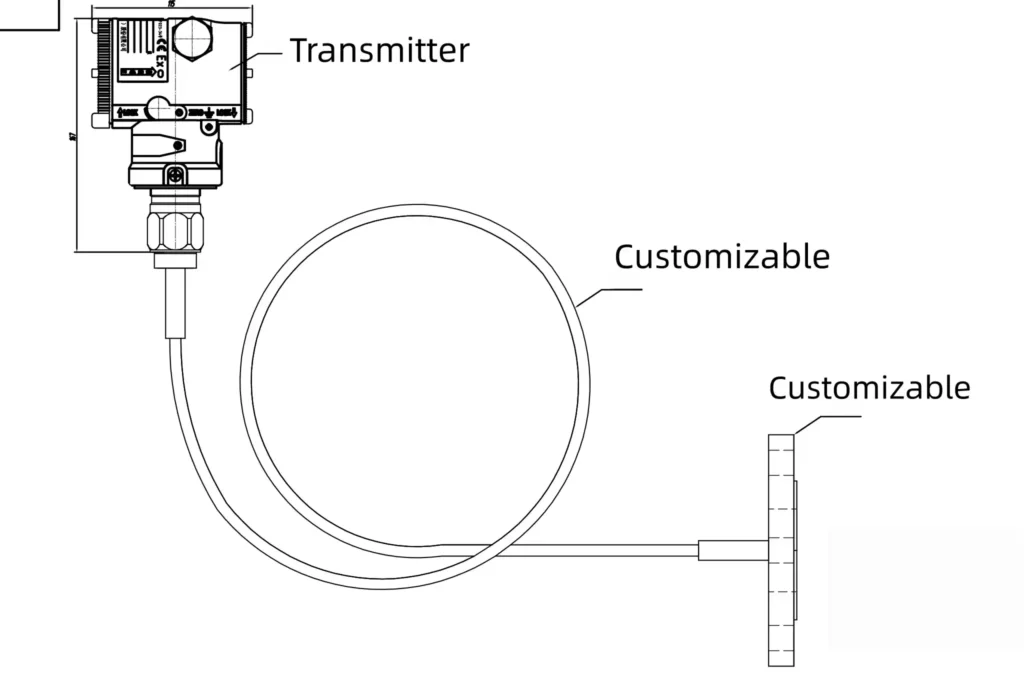
1). Flange diaphragm seal assembly
Installed at the process connection point on the vessel or pipeline, where the process medium first acts on the diaphragm surface. The diaphragm isolates the medium from the sensitive internal elements of the transmitter, preventing corrosion, clogging, or contamination from entering the instrument.
2). Capillary
The capillary is filled with special fill fluid and is used to stably transmit the pressure sensed by the diaphragm to the transmitter sensor. The presence of the capillary makes the transmitter more suitable for high-temperature and vibration-prone applications, and allows the transmitter body to be installed away from the process connection.
3). Fill fluid
The fill fluid is the key medium in the remote seal structure. It is responsible for transmitting the pressure signal and also affects high-temperature performance, low-temperature performance, and overall response characteristics. Depending on the application, silicone oil, high-temperature fill fluid, or other special fill fluids can be selected.
4). Transmitter body
The transmitter body can be understood as a threaded pressure transmitter containing the sensor, electronics module, and wiring compartment. It receives the pressure signal transmitted through the capillary and converts it into a standard output signal, such as 4–20 mA, HART, RS485, or other communication forms.
5). Flange and installation fittings
These include flange size, pressure rating, facing type, and process connection standard. Users can choose different standards such as ANSI, ASME, HG, and DIN according to field interfaces.
3. Why Use a Capillary Remote Structure?
Many users ask during selection: if a direct-mount single flange pressure transmitter can already measure pressure, why add a capillary?
The answer is usually not about whether it can measure, but whether it is suitable to install that way on site.
Limited installation space
Some tanks, reactors, jacketed equipment, or narrow pipelines have very limited space around the flange connection, making it impossible to install the transmitter body directly. In this case, the diaphragm seal can remain at the process point, while the transmitter head is moved to a more convenient location.
Inconvenient observation and maintenance
Some measuring points are too high, too low, or too close to the back of equipment, making them hard for personnel to access. By using capillary remote transmission, the transmitter can be installed on a platform, bracket, or other location that is easier for wiring, observation, and maintenance.
Protecting electronics in high-temperature applications
When the temperature near the process connection is high, it is not ideal for the electronics module to remain close to the heat source for a long time. A capillary remote structure allows the transmitter to be positioned away from the heat source, improving long-term stability.
Strong vibration or impact environment
Certain locations near pump outlets, equipment shells, or machinery may have strong vibration. Keeping the diaphragm seal at the process point while installing the transmitter head in a more stable position can help reduce the effect of vibration on the electronics.
Medium isolation requirements
For corrosive, viscous, clogging, crystallizing, or sanitary media, the diaphragm seal itself already provides obvious advantages. The capillary remote structure further improves installation flexibility.
4. Capillary Pressure Transmitters Working Principle
The working principle of a capillary pressure transmitter is the same as that of a diaphragm seal pressure transmitter, except that a remote pressure transmission structure is added.
First, the process pressure acts on the diaphragm surface of the single flange diaphragm seal assembly. The diaphragm undergoes slight deformation under pressure. This pressure change is transmitted through the internal fill fluid into the capillary. The capillary then stably transfers the pressure to the remote transmitter sensor.
After the sensor detects the pressure, it converts it into an electrical signal. The signal is then amplified, temperature compensated, and linearized by the electronics, and finally output as a standard industrial signal to PLC, DCS, display instruments, or other automation control systems.
In simple terms, the signal transmission path is:
Process pressure → diaphragm → fill fluid → capillary → sensor → electronics module → 4–20 mA / HART output
5. Applications of Capillary Pressure Transmitters
A capillary pressure transmitter is commonly used in the following applications:
Tank and vessel side installation
When the flange position on the side of the tank is not convenient for mounting the transmitter head directly, a capillary can be used to move the transmitter to a platform or another location that is easier to observe.
Reactors and jacketed equipment
Reactors are often surrounded by insulation, heat tracing, pipelines, and platform structures, making the installation space more complicated. A capillary remote structure is easier to arrange.
High-temperature pressure measurement
Examples include steam condensate systems, hot oil, and some chemical liquids. The process connection area is often at high temperature, so the electronics should be placed away from the heat source.
Corrosive media
For acids, alkalis, salt solutions, and other corrosive liquids, long-term stable measurement can be achieved by selecting suitable diaphragm materials and fill fluids.
Difficult-to-access installation points
Such as underneath equipment tops, inside brackets, behind platforms, near pit edges, or other locations where wiring and maintenance are inconvenient.
Capillary Pressure Transmitter Specifications and Selection
1. Technical Specifications of Capillary Pressure Transmitters
| SIY3051T Capillary Remote Diaphragm Gauge & Absolute Pressure Transmitter Selection Table | ||||
| 10 | Transmitter type | |||
| 3051T | Pressure transmitter | |||
| 20 | Pressure type | |||
| G | Gauge pressure | |||
| A | Absolute pressure | |||
| 30 | Accuracy | |||
| -H | Basic error ±0.075% | |||
| -N | Basic error ±0.1% | |||
| 40 | Pressure range (span / minimum span) | |||
| Gauge pressure TG | ||||
| 3 | -6kPa~6kPa(-60mbar~60mbar) | |||
| 4 | -40kPa~40kPa(-400mbar~400mbar) | |||
| 5 | -100kPa~250kPa(-1bar~2.5bar) | |||
| 6 | -0.1MPa~1MPa(-1bar~10bar) | |||
| 7 | -0.1MPa~3MPa(-1bar~30bar) | |||
| 8 | -0.1MPa~10MPa(-1bar~100bar) | |||
| 9 | -0.1MPa~21MPa(-1bar~210bar) | |||
| 10 | -0.1MPa~40MPa(-1bar~400bar) | |||
| 0 | Other agreed pressure ranges | |||
| Absolute pressure TA | ||||
| 3 | 0~250kPa(0~2.5bar) | |||
| 4 | 0~3MPa(0~30bar) | |||
| 0 | Other agreed pressure ranges | |||
| 50 | Communication Protocol | |||
| H | 4–20 mA / HART7 communication protocol | |||
| M | RS485 Modbus communication protocol | |||
| 60 | Diaphragm material | |||
| 2 | 316SST | |||
| 3 | Hastelloy C-276 | |||
| 5 | Tantalum | |||
| 6 | 316L gold-plated | |||
| 7 | Ceramic diaphragm (99.9% AL2O3) | |||
| 0 | Customer-specified diaphragm material | |||
| 70 | Process connection | |||
| S1 | One remote flange | |||
| 80 | Fill fluid | |||
| 1 | Silicone oil | |||
| 2 | Fluorinated oil | |||
| 90 | Display | |||
| N | None | |||
| L | LCD display (-20°C) | |||
| O | OLED display (-40°C) | |||
| 100 | Housing material & electrical connection | |||
| B | Aluminum alloy housing, electrical connection M20×1.5 | |||
| S | Aluminum alloy housing, electrical connection 1/2 NPT | |||
| C | Stainless steel housing, electrical connection M20×1.5 | |||
| T | Stainless steel housing, electrical connection 1/2 NPT | |||
| 110 | Mounting bracket option | |||
| N | None | |||
| 1 | Galvanized carbon steel bracket | |||
| 2 | Stainless steel bracket | |||
| 120 | Hazardous area certification | |||
| E5 | ExiaⅡCT4 | |||
| K5 | ExdⅡCT4-CT6 | |||
| 130 | Other options | |||
| Q4 | Factory calibration certificate | |||
| Q3 | Third-party calibration certificate | |||
| V6 | Suitable for full vacuum service | |||
| J1 | NAMUR NE43 standard | |||
| J3 | Built-in lightning protection module | |||
| T1 | Oil-free degreasing | |||
| C1 | SIL3 certification (for HART communication type only) | |||
| A | Integral radiator | |||
| B | External radiator | |||
| 140 | Remote seal assembly options for diaphragm pressure transmitter (Note: -1199 option) | |||
| RFW | Remote flange type seal | |||
| EFW | Extended flange type seal | |||
| FFW | Flush flange type seal | |||
| PFW | Flat type seal | |||
| SCW | Sanitary type seal | |||
| RTW | Remote threaded type seal | |||
| 150 | Flange rating & material | Flange size | Pressure rating | Material |
| A21 | DN50/2″ | 150Ib | 304SST | |
| B21 | DN50/2″ | 150Ib | 316SST | |
| A31 | DN80/3″ | 150Ib | 304SST | |
| B31 | DN80/3″ | 150Ib | 316SST | |
| A41 | DN100/4″ | 150Ib | 304SST | |
| B41 | DN100/4″ | 150Ib | 316SST | |
| A22 | DN50/2″ | 300Ib | 304SST | |
| B22 | DN50/2″ | 300Ib | 316SST | |
| A32 | DN80/3″ | 300Ib | 304SST | |
| B32 | DN80/3″ | 300Ib | 316SST | |
| A42 | DN100/4″ | 300Ib | 304SST | |
| B42 | DN100/4″ | 300Ib | 316SST | |
| A24 | DN50/2″ | 600Ib | 304SST | |
| B24 | DN50/2″ | 600Ib | 316SST | |
| A34 | DN80/3″ | 600Ib | 304SST | |
| B34 | DN80/3″ | 600Ib | 316SST | |
| A44 | DN100/4″ | 600Ib | 304SST | |
| B44 | DN100/4″ | 600Ib | 316SST | |
| 160 | Diaphragm material | |||
| D4 | 316L | |||
| D6 | Hastelloy | |||
| E0 | Tantalum | |||
| F0 | Monel | |||
| P | With PTFE/PFA coating | |||
| G | Gold-plated coating | |||
| Z | Other agreed special requirements | |||
| 170 | Insertion tube (for EFW extended flange type seal only) | |||
| Insertion length | Tube material | |||
| EC0 | Special custom | Special custom | ||
| ES1 | 50mm | 316L | ||
| ES2 | 100mm | 316L | ||
| ES3 | 150mm | 316L | ||
| EP1 | 50mm | 316L+PTFE/PFA | ||
| EP2 | 100mm | 316L+PTFE/PFA | ||
| EP3 | 150mm | 316L+PTFE/PFA | ||
| EH1 | 50mm | HC-276 | ||
| EH2 | 100mm | HC-276 | ||
| EH3 | 150mm | HC-276 | ||
| 180 | Pressure connection port (for RTW remote threaded type seal only) | |||
| A | 1/4–18 NPT | |||
| C | 3/8–18 NPT | |||
| D | 1/2–14 NPT | |||
| H | 1–111/2 NPT | |||
| H | 11/2–111/2 NPT | |||
| 190 | Seal fill fluid | |||
| A | Syltherm XLT -100 to 300℉ (-73 to 135℃) | |||
| C | High-temperature silicone oil 60 to 572℉ (15 to 300℃) | |||
| D | D.C. Silicone 200 -40 to 400℉ (-40 to 205℃) | |||
| H | Inert oil (fluorinated oil) -50 to 350℉ (-45 to 177℃) | |||
| 200 | Capillary length | |||
| □□ | Agreed capillary length, from 1–15 m (e.g. 2 m: 02) | |||
| 210 | Capillary armor material | |||
| P | 304+PVC | |||
| 220 | Other options | |||
| T1 | Oil and grease removal | |||
| V6 | Vacuum-resistant treatment | |||
| Z | Other agreed special requirements | |||
| Note: Please contact the sales representative for special options. | ||||
2. How to Select the Right Capillary Pressure Transmitter?
When selecting a capillary pressure transmitter, it is recommended to confirm at least the following parameters:
1). Medium type
Confirm whether the medium is liquid, gas, or steam, and whether it is corrosive, highly viscous, prone to crystallization, likely to clog, or requires hygienic design.
2). Pressure range
Confirm the normal operating pressure, maximum pressure, and whether pressure fluctuation exists. A proper range selection helps balance measurement accuracy and service life.
3). Operating temperature
Temperature directly affects the suitability of the diaphragm, fill fluid, and capillary structure. High-temperature applications especially require confirmation of fill fluid type and capillary length.
4). Flange standard and size
This includes nominal flange size, pressure rating, facing type, bolt standard, and installation orientation. It must match the field process connection.
5). Diaphragm material
Common options include 316L, Hastelloy, tantalum, and Monel. The stronger the corrosiveness of the medium, the higher the requirement for diaphragm material.
6). Capillary length
Longer is not always better. A longer capillary increases installation flexibility, but may also reduce response speed, increase temperature influence, and raise cost. Therefore, the capillary length should be kept as reasonable as possible while still meeting installation needs.
7). Fill fluid type
Different fill fluids are suitable for different temperature ranges and process conditions. High-temperature, low-temperature, food, and pharmaceutical applications all require separate consideration.
8). Output and electrical requirements
Whether 4–20 mA, HART, RS485, intrinsic safety, explosion-proof design, local display, mounting brackets, and so on are required should all be confirmed during the selection stage.
Installation and Maintenance of Capillary Pressure Transmitters
1. How to Install a Capillary Pressure Transmitter?
Correct installation directly affects the measurement accuracy, stability, and service life of a diaphragm seal pressure transmitter.
1) Check before installation
- Confirm whether the model is correct
- Confirm whether the measuring range matches the application
- Confirm whether the flange specification is compatible
- Confirm whether the diaphragm surface is intact
2) Avoid diaphragm damage
The isolating diaphragm is the key pressure-sensing component. During transportation, unpacking, and installation, it must not be dented, squeezed, or scratched by hard objects. It is best to gently press the diaphragm with a finger to check whether it has elasticity. If the diaphragm does not move when pressed, contact the manufacturer directly.
3) Position the gasket correctly
The gasket provides sealing and helps prevent medium leakage, so it must be installed correctly. At the same time, care must be taken to ensure that the gasket does not press against the diaphragm, otherwise zero shift may occur. PTFE gaskets are commonly used, but if the process temperature is too high, a spiral wound gasket should be used instead.
4) Tighten the fasteners properly
The transmitter flange is usually not welded to the mating flange on the equipment. In most cases, the two flanges are connected by bolts and other fasteners. Therefore, whether the bolts are tightened properly has a direct effect on both measurement performance and whether the medium may leak.
5) Fix the transmitter head properly
Use a flat mounting bracket or an L-shaped bracket to secure the transmitter head to a 2-inch pipe. The installation position should be convenient for on-site personnel to observe and commission the transmitter.
6) Wire correctly
In most cases, only the positive and negative power wires need to be connected to the corresponding terminals of the transmitter. Incorrect wiring may lead to unexpected problems.
7) Check zero before commissioning
After installation, the zero point should be checked whenever conditions allow.
In practice, it is common for customers to position the gasket incorrectly during installation, causing it to press against the diaphragm and resulting in zero shift. In this case, the transmitter can be removed and installed again correctly. If removal is not possible, the zero can be recalibrated. However, this is only a temporary corrective measure and is not suitable for long-term measurement.
2. Installation Notes for Capillary Pressure Transmitter
There are several important points that must be considered when installing a capillary pressure transmitter:
The capillary must not be sharply bent or crushed
The capillary is the key component of the remote structure. During installation, it must not be forcibly bent, stepped on, squeezed, or used as a load-bearing point.
Avoid mechanical damage
During transport, lifting, and installation, prevent the capillary outer sheath from being scratched, twisted, or pulled.
Avoid excessive ambient temperature differences
Both the capillary and the fill fluid are affected by temperature changes. Therefore, installation should avoid having one part of the capillary exposed to a high-temperature zone while another part remains in a low-temperature zone for a long time, in order to reduce additional error.
The transmitter body should be installed in a location that is easy for wiring and maintenance
A capillary pressure transmitter is a split structure, which allows the transmitter head to be mounted in a position convenient for observation and operation, while only the diaphragm seal remains at the process connection point.
Flange installation must ensure reliable sealing
The flange sealing surface, gasket, and bolt tightening method must all comply with specifications to avoid leakage or abnormal stress on the diaphragm caused by improper installation.
Capillary Pressure Transmitter Comparison
1. Difference Between Direct-Mount Single Flange Type and Capillary Type
Direct-mount single flange type
The direct-mount single flange type has a compact structure. The flange seal assembly and the transmitter body are directly connected, making the overall installation simple. It is suitable for applications with enough space, moderate temperature, and convenient maintenance.
Capillary type
The capillary type adds a capillary between the flange seal end and the transmitter body, allowing the transmitter head to be installed farther away in a more convenient position. It is more suitable for applications with limited space, high temperature, vibration, or inconvenient observation.
How to choose
If the field installation conditions are good and a simple structure with more direct response is preferred, the direct-mount type is usually the first choice.
If the site is difficult for direct installation, the environment is not friendly, or the transmitter head needs to be moved to a more convenient maintenance position, the capillary type is more suitable.
OEM Service and Quotation Information about Capillary Pressure Transmitters
1. Why Choose Our Capillary Pressure Transmitter?
- Is the capillary length appropriate?
- Can it operate stably for a long time in high-temperature applications?
- What diaphragm material should be selected for corrosive media?
- Can the flange standard match the field interface?
- Will it be convenient for wiring and maintenance after installation?
- Custom capillary structure
- Different flange standards and sizes
- Multiple diaphragm material options
- Customized capillary lengths
- 4–20 mA / HART and other output methods
- OEM / ODM support
2. Do Capillary Pressure Transmitters Support OEM / Private Labeling?
Yes.
For OEM / ODM cooperation, we can provide the following according to customer requirements:
- Private label service (logo / nameplate customization)
- Model code customization
- Appearance and packaging customization
- Parameter and configuration customization
- Product manual and label customization
All products are strictly tested and calibrated before shipment to ensure measurement accuracy and long-term stability. With reliable product quality, stable delivery time, and professional technical support, we have already provided long-term OEM cooperation services for many equipment manufacturers, engineering companies, and instrument distributors.
If you are looking for a stable and reliable capillary pressure transmitter manufacturer or OEM supplier, please feel free to contact us. We will provide professional product solutions according to your requirements.
3. Price of Capillary Pressure Transmitters
For the most conventional applications, such as normal temperature, normal pressure, 316L diaphragm, flange specification DN50 / PN16 / 304 material, and capillary length within 3 meters, the price is usually around USD 370.
The price of a capillary pressure transmitter is usually not determined by the transmitter body alone, but by the whole configuration.
Please send us your data sheet or detailed on-site operating conditions, and we will provide a quotation within one hour.
FAQ
What is a capillary pressure transmitter suitable for?
It is suitable for pressure measurement applications where medium isolation is required, installation space is limited, temperature is high, or on-site observation and maintenance are inconvenient. It is also commonly used for pressure-related measurement on tanks, vessels, and reaction equipment.
Is a longer capillary always better?
No. A longer capillary provides more installation flexibility, but it also increases cost, affects response characteristics, and adds temperature influence. It should be selected reasonably according to the actual installation distance, rather than simply making it longer.
Can it be used in high-temperature applications?
Yes, but the appropriate fill fluid, diaphragm material, and structural solution must be selected according to the actual temperature. For high-temperature applications, the process temperature range should be clearly confirmed during selection.
Is a capillary remote seal the same as an impulse line?
No. A capillary remote seal is a diaphragm seal system that transmits pressure through internal fill fluid, while an impulse line brings the process medium itself to the transmitter. The two differ significantly in applicable media, installation method, and maintenance requirements.
Can it be used for corrosive media?
Yes, but only when the diaphragm material and wetted part materials are selected correctly. For strongly corrosive media, diaphragm material compatibility must be carefully confirmed.