Sanitary Pressure Transmitter
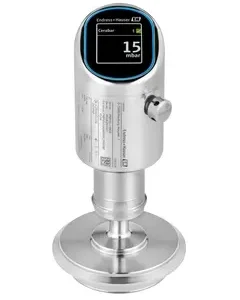
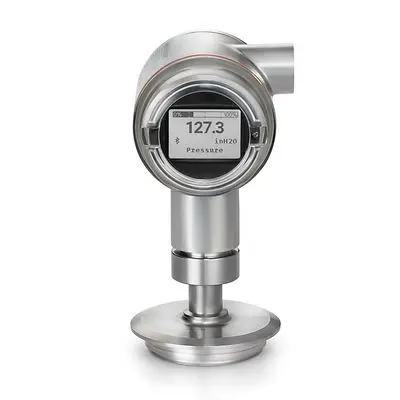
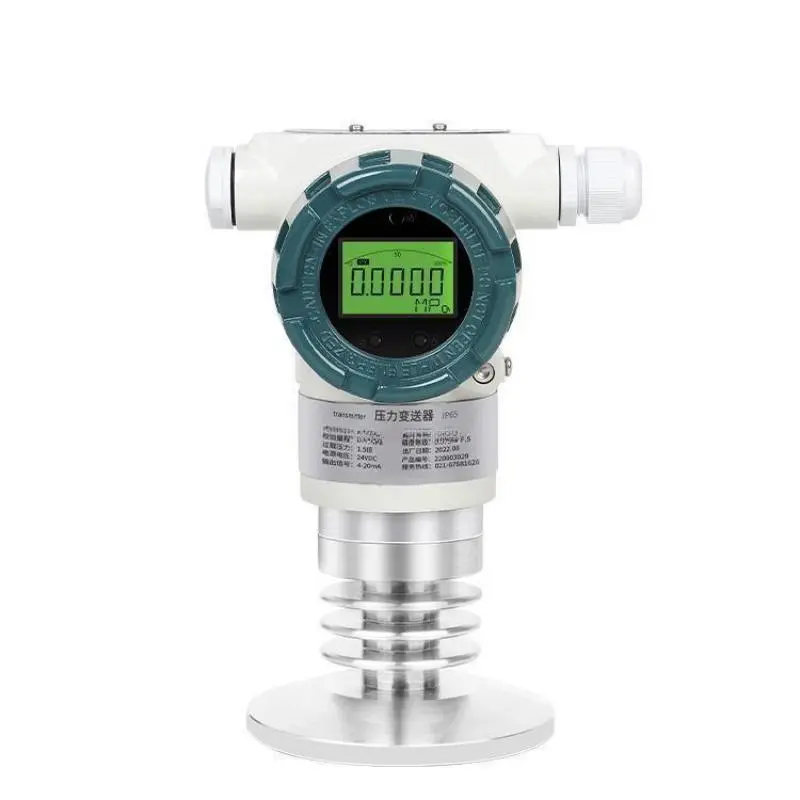
Sanitary pressure transmitter is also called hygienic pressure transmitter. It is structurally similar to a traditional 3051-type smart pressure transmitter. It features the housing, electronic module, display head, and intelligent output functions of a standard industrial transmitter, but its process connection is not threaded. Instead, it uses a sanitary clamp connection, making it more suitable for installation on hygienic pipelines, tanks, and equipment.
Sanitary pressure transmitters are specifically used for pressure measurement in food, beverage, dairy, pharmaceutical, biopharmaceutical fermentation, purified water, and other high-cleanliness process systems. They use sanitary process connections such as Tri-Clamp fittings, combined with flush diaphragms or sanitary isolation diaphragm designs, so they can deliver stable and accurate pressure measurement and signal output while meeting hygienic requirements.
- Pressure Type: Gauge Pressure, Absolute Pressure
- Pressure Range: -1 bar to 55.15 bar, -100 kPa to 5515 kPa
- Accuracy: ±0.075%, ±0.2%
- Output Signal: 4–20 mA / HART
- Process Connection: φ25、φ38、φ50.5、φ63、φ76 (customized available)
- Diaphragm Material: SS316L, HC-276, Tantalum
- Power Supply: 12–36 VDC
- Protection Rating: IP65 / IP67
- OEM Service: Available. The transmitter can be supplied with your company name and logo on the nameplate.
- Packaging: Individual carton box with protective foam.
- Weight: Approx. 2 kg per unit.
- Port of Shipment: Shanghai or Ningbo Port, China.
- Delivery Time: 3-7 working days.
- Transportation: Air freight, sea freight, or express delivery.
- Documentation: Certificate of Conformity (COC); Inspection / Test Report; Packing List; Commercial Invoice
Accessories for Sanitary Pressure Transmitters
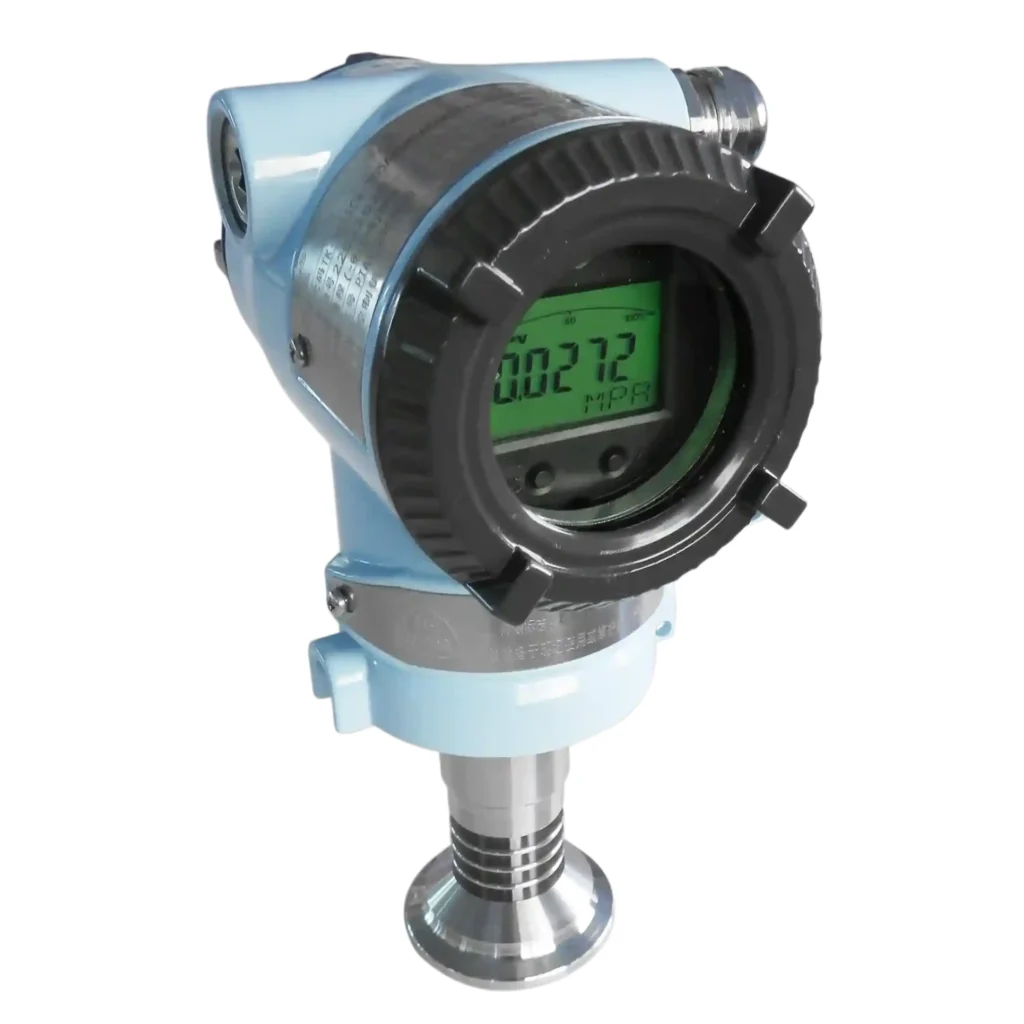
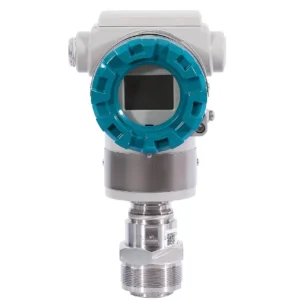
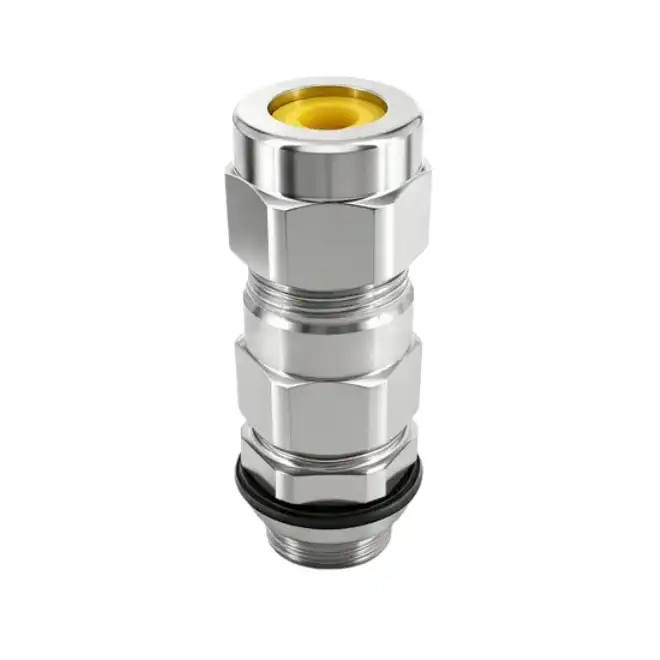
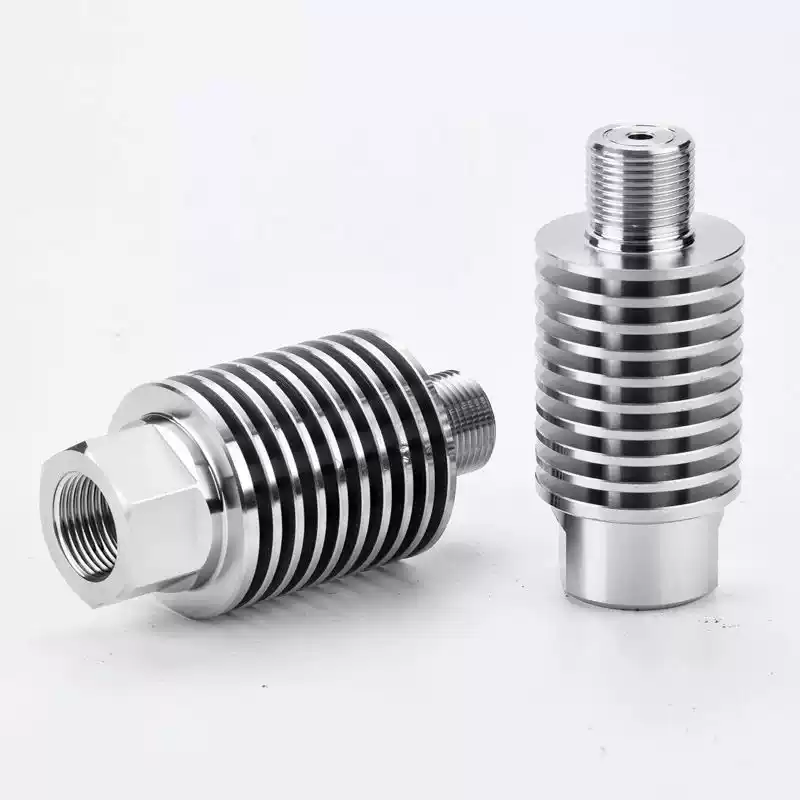
Table of Contents
Sanitary Pressure Transmitter Overview
1. What Is a Sanitary Pressure Transmitter?
A sanitary pressure transmitter is essentially an intelligent field instrument used to measure process pressure and convert that pressure signal into a standard electrical output. It can convert the pressure of the measured medium into standard signals such as 4–20 mA or 4–20 mA + HART, and transmit them to a PLC, DCS, recorder, or other automation control systems.
Simply put, a sanitary pressure transmitter can be understood as:
Sanitary pressure transmitter = smart pressure transmitter + sanitary process connection + easy-to-clean wetted structure
Sanitary pressure transmitters are suitable for the following typical applications:
- Pressure monitoring inside pipelines or tanks
- Pump outlet pressure monitoring
- Pressure control before and after filters
- Pressure monitoring of fermenters, mixing tanks, and reaction vessels
- Pressure control in purified water, WFI, and clean media systems
- Hygienic process equipment requiring online cleaning and steam sterilization
It inherits the signal processing capability, accuracy, and stability of a 3051 industrial smart transmitter, while also meeting the structural and process compatibility requirements of hygienic industries.
2. Structure of a Sanitary Pressure Transmitter
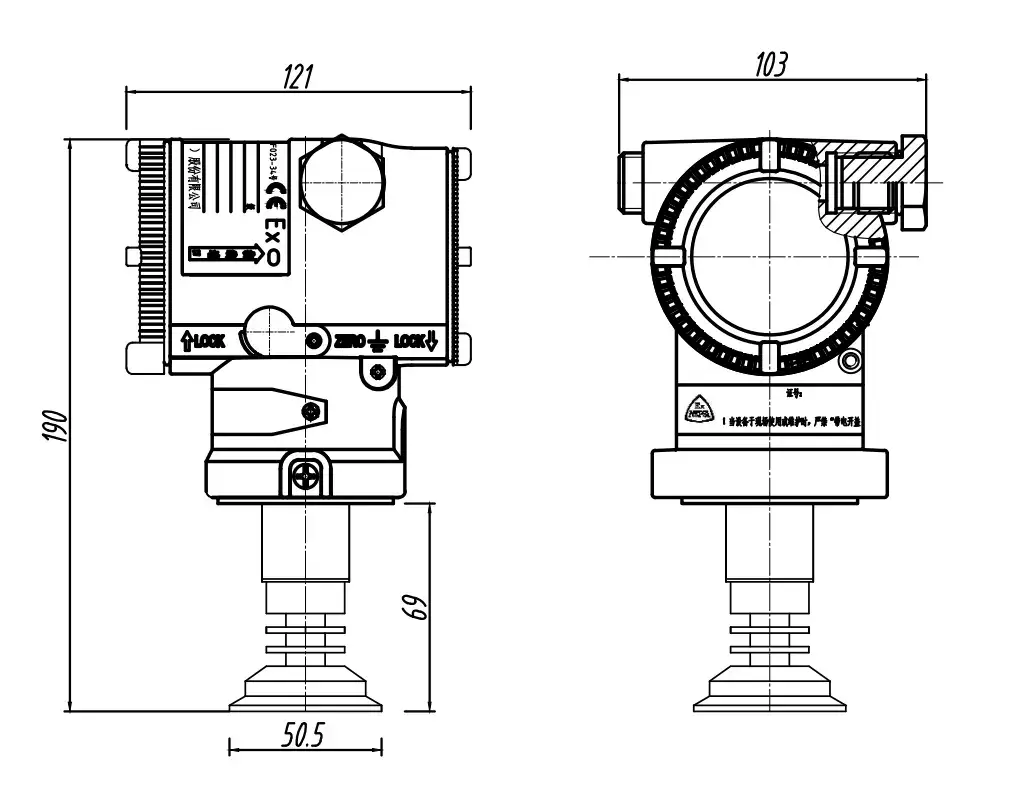
Although a sanitary pressure transmitter differs from a standard threaded pressure transmitter in its process connection, its overall structural logic is similar to that of a 3051 direct-mount precssure transmitter. It usually consists of the following parts.
1). Housing
The housing is used to contain the circuit board, terminals, display module, and communication module.
This part usually adopts an industrial design with good protection performance, typically IP65 to IP67, and strong field adaptability. Common materials include aluminum alloy housing (with copper and zinc content below 5‰) and stainless steel housing (316 material).
The main functions of the housing include:
- Protecting internal electronic components
- Providing wiring space
- Mounting the display module
- Allowing local push-button setting or communication-based configuration
- Meeting industrial requirements for dust and moisture protection
2). Sensor Module
The sensor module is the core component of pressure measurement.
In high-end products, single-crystal silicon sensor technology is often used. Diffused silicon or other measuring principles can also be used depending on product positioning.
The sensor converts the pressure transmitted from the isolation diaphragm into an original electrical signal.
If a single-crystal silicon design is used, it usually provides the following advantages:
- Higher accuracy
- Better long-term stability
- Good repeatability
- Strong temperature compensation capability
- Lower drift
3). Sanitary Isolation Diaphragm
A sanitary pressure transmitter usually does not allow the medium to directly enter the sensor. Instead, pressure is sensed through a sanitary isolation diaphragm.
The transition between the diaphragm and the process connection is smooth, which helps reduce medium buildup and residue, making it more suitable for food, pharmaceutical, and other high-cleanliness applications.
The main functions of this diaphragm include:
- Transmitting process pressure to the internal sensing element
- Preventing the medium from directly contacting the electronic measuring system
- Reducing blockage, contamination, and residue
- Facilitating online cleaning and sterilization
4). Fill Fluid or Pressure Transmission Structure
In some isolation diaphragm structures, pressure is transmitted to the core sensor through an internal fill medium.
The design of this part directly affects the product’s stability, temperature adaptability, and dynamic response performance.
5). Sanitary Clamp Connection
Compared with common industrial threaded connections such as 1/2 NPT, G1/2, and M20×1.5, sanitary products use clamp or Tri-Clamp quick connections. This is the most important external feature of a sanitary pressure transmitter and better matches the installation requirements of hygienic piping and equipment systems.
Its advantages include:
- Easy installation and removal
- Easier cleaning at the connection point
- Better suitability for sanitary piping systems
- Reduced contamination risks caused by thread gaps
- Better compliance with CIP/SIP process requirements
6). Electrical Connection and Display Module
Sanitary pressure transmitters also typically provide complete industrial electrical output capabilities and can be configured with:
- 4–20 mA analog output
- HART communication
- LCD / LED display
- M20×1.5 or 1/2-14 NPT electrical connection
- Intrinsically safe or explosion-proof options
3. Working Principle of a Sanitary Pressure Transmitter
The working principle of a sanitary pressure transmitter is essentially the same as that of a standard smart pressure transmitter: it converts the pressure signal of the measured medium into a standard electrical output.
The difference is that the sanitary pressure transmitter uses a different process connection and wetted structure, with designs more suitable for high-cleanliness applications, such as sanitary clamp connections, flush diaphragms, or sanitary isolation diaphragms. This allows it not only to measure pressure, but also to meet the hygienic industry’s requirements for cleaning, sterilization, and contamination prevention.
Common measuring principles for sanitary pressure transmitters include:
- Piezoresistive: mature technology, widely used, fast response, relatively low cost
- Capacitive: good stability, strong overpressure resistance, commonly used in differential pressure products
- Single-crystal silicon resonant: high accuracy, excellent long-term stability, strong temperature compensation, commonly used in high-end smart transmitters
- Strain gauge: relatively simple structure, compact size, lower cost, commonly used in some compact pressure measurement products
Regardless of the measuring principle, the basic process is the same: the process pressure first acts on the sanitary isolation diaphragm, then is transmitted through the internal pressure transfer structure to the sensitive sensing element. The sensing element generates a measurable electrical change, and the electronics then amplify, compensate, and process the signal, finally outputting standard signals such as 4–20 mA or 4–20 mA + HART for PLC, DCS, recorders, or other automation systems.
A 3051-type sanitary pressure transmitter usually uses a single-crystal silicon measuring principle, while a 2088 sanitary pressure sensor or compact sanitary pressure sensor usually adopts a diffused silicon principle.
4. Key Features of Hygienic Pressure Transmitters
The value of a sanitary pressure transmitter is not simply that it replaces a threaded connection with a clamp connection. Its entire structure and application logic are better suited to hygienic industries.
1). Sanitary clamp connection for clean process systems
Clamp connections are very common in food, beverage, and pharmaceutical industries.
Compared with threaded connections, clamp connections are easier to install, remove, clean, and maintain, and are more suitable for process systems that require frequent cleaning and sterilization.
2). Flush diaphragm or isolation diaphragm design reduces residue
Ordinary threaded pressure transmitters usually have a small pressure port, where certain media may accumulate.
Sanitary products use flush diaphragms or isolation diaphragms to reduce dead legs and residue, which is particularly suitable for viscous, adhesive, or contamination-sensitive media.
3). Suitable for CIP cleaning and SIP sterilization
Cleaning and sterilization procedures are common in hygienic industries, and they place high demands on instrument structure and temperature resistance.
Sanitary pressure transmitters are usually more suitable for online cleaning and steam sterilization together with the process system, reducing disassembly frequency and improving production efficiency.
4). Combines hygienic requirements with industrial automation requirements
Many compact sanitary pressure sensors are simple in structure, but their system compatibility, anti-interference capability, and display functions are not as strong as industrial transmitters.
A sanitary pressure transmitter with a 3051-style structure combines the advantages of both:
- Sanitary process connection
- Smart electronics module
- Industrial standard output
- Local display
- Communication capability
- Better stability
5). High accuracy and good long-term stability
If equipped with a single-crystal silicon smart measuring unit, the product usually offers high accuracy and excellent long-term stability, making it suitable for continuously operating process control systems.
6). Easy installation and maintenance
The clamp connection allows quick installation and removal, which is especially suitable for sites requiring regular inspection, cleaning, and calibration.
5. Industries Suitable for Sanitary Pressure Transmitters
1). Pharmaceutical industry
In pharmaceutical processes, many media require very high cleanliness, and the system usually needs frequent cleaning and sterilization.
Sanitary pressure transmitters can be used in:
- Mixing tanks
- Fermenters
- Purified water systems
- WFI systems
- Clean steam systems
- Filtration systems
In the pharmaceutical industry, instruments must not only be accurate, but also minimize contamination risks and cleaning dead legs.
2). Food and beverage industry
Pressure measurement is very common in food and beverage production, such as:
- Pipeline pressure
- Filling equipment pressure
- Filtration equipment pressure
- Fermentation tank pressure
- Mixing system pressure
Since the medium may be syrup, juice, beverage base liquid, seasoning liquid, etc., with relatively high viscosity, threaded connections are prone to blockage and are difficult to flush, while sanitary connections are more suitable.
3). Dairy industry
Dairy media are prone to residue and require high hygienic standards.
Sanitary pressure transmitters can be used in:
- Milk transfer lines
- Pasteurization systems
- Homogenizing equipment
- Fermentation systems
- Dairy storage tanks
4). Biopharmaceutical fermentation industry
In biotechnology and fermentation processes, pressure control in fermenters is critical.
Sanitary pressure transmitters can meet the following requirements:
- Long-term online monitoring
- Cleaning and sterilization cycles
- Requirements of contamination-sensitive processes
5). Purified water and clean systems
In purified water, ultrapure water, and clean liquid systems, sanitary pressure measurement solutions are also commonly used to ensure that the connection structure is more suitable for hygienic requirements.
6. Suitable Media for Sanitary Pressure Measurement
Sanitary pressure transmitters are suitable for measuring a wide range of clean process media, especially those with high hygienic requirements, that are prone to residue, or that require frequent cleaning.
1). Various liquid media
Purified water, WFI, drinking water, juice, beverage base liquid, emulsions, syrup, fermentation broth
2). Viscous media
For media with relatively high viscosity, ordinary pressure transmitters have smaller pressure ports that are prone to blockage or residue, while sanitary flush diaphragm structures offer clear advantages.
3). Media prone to adhesion or scaling
Some media tend to stick to surfaces, crystallize, or form deposits at the measuring point. Sanitary structures are easier to flush and maintain.
4). Process systems requiring cleaning or sterilization
As long as the process system has CIP / SIP requirements, sanitary process connections and hygienic measuring structures should be given priority.
Technical Specifications and Selection Guide for Sanitary Pressure Transmitter
1. Sanitary Pressure Transmitter Selection Table
| SIY3051F Gauge and Absolute Pressure Transmitter Selection | ||
| 10 | Transmitter Type | |
| 3051F | Sanitary Pressure Transmitter | |
| 20 | Pressure Type | |
| G | Gauge Pressure | |
| A | Absolute Pressure | |
| 30 | Accuracy | |
| -H | Reference Accuracy ±0.075% | |
| -N | Reference Accuracy ±0.2% | |
| 40 | Pressure Range (Span / Min. Span) | |
| 4 | 0kPa~40kPa(0mbar~400mbar) | |
| 5 | 0kPa~200kPa(0bar~2bar) | |
| 6 | 0kPa~1030kPa(0bar~10.3bar) | |
| 7 | 0kPa~5515kPa(0bar~55.15bar) | |
| 0 | Other agreed pressure ranges | |
| 50 | Communication Protocol | |
| H | 4-20 mA / HART 7 communication protocol | |
| Y | Other agreed communication protocol | |
| 60 | Diaphragm Material | |
| 2 | 316SST | |
| 3 | Hastelloy HC-276 | |
| 5 | Tantalum | |
| 0 | Customer-specified diaphragm material | |
| 70 | Process Connection | |
| F | 2-inch Tri-Clamp connection | |
| G | 3-inch Tri-Clamp connection | |
| X | Other agreed connection type | |
| 80 | Fill Fluid | |
| 1 | Silicone oil | |
| 2 | Customer-specified fill fluid | |
| 90 | Indicator | |
| N | None | |
| L | LCD display (-20°C) | |
| O | OLED display (-40°C) | |
| 100 | Housing Material / Electrical Connection | |
| B | Aluminum alloy housing, electrical connection M20×1.5 | |
| S | Aluminum alloy housing, electrical connection 1/2 NPT | |
| C | Stainless steel housing, electrical connection M20×1.5 | |
| T | Stainless steel housing, electrical connection 1/2 NPT | |
| 110 | Mounting Bracket Option | |
| N | None | |
| 1 | Galvanized carbon steel bracket | |
| 2 | Stainless steel bracket | |
| 120 | Hazardous Area Certification | |
| E5 | ExiaⅡCT4 | |
| K5 | ExdⅡCT4-CT6 | |
| 130 | Other Options | |
| Q4 | Factory calibration certificate | |
| Q3 | Third-party calibration certificate | |
| V6 | Suitable for full vacuum service | |
| J1 | NAMUR NE43 standard | |
| J3 | Built-in lightning protection module | |
| T1 | Oil-free degreasing | |
| C1 | SIL3 certification (only for HART communication type) | |
| A | Integral radiator | |
| B | Remote radiator | |
| Note: Please contact the sales representative for special options. | ||
2. How to Select a Suitable Sanitary Pressure Transmitter?
When selecting a sanitary pressure transmitter, it is not enough to look only at range and price.
Proper selection should take into account the medium characteristics, hygienic requirements, connection type, cleaning process, and signal requirements.
1). Confirm the measurement type first
You need to determine whether you are measuring gauge pressure, absolute pressure, or vacuum. In most food and pharmaceutical equipment, gauge pressure applications are the most common. Different measurement types require different sensors.
2). Confirm the measuring range
A larger range is not always better.
If the selected range is too large, the resolution and accuracy at the low end will be affected. If the range is too small, overpressure may damage the product.
The general rule is:
The selected range should be about 1.5 to 2 times the maximum working pressure.
3). Confirm the clamp specification
The sanitary pressure transmitter must match the on-site interface, so it is necessary to confirm:
- Clamp standard
- Clamp size
The most commonly used clamp size is 50.5 mm. If the interface size does not match, installation will not be possible.
4). Confirm the wetted material
316L is commonly used for standard applications.
If the medium is specially corrosive, it is necessary to further confirm whether the diaphragm and wetted materials need to be upgraded.
5). Confirm the output type
If connected to a PLC or DCS, the most common options are:
- 4–20 mA
- 4–20 mA + HART
If remote parameter setting, range adjustment, or device management is required, a smart version with HART communication is recommended. It is also recommended to have at least one HART communicator on site.
6). Confirm process temperature and cleaning temperature
Since sanitary pressure transmitters are often used in food, pharmaceutical, and other hygienic industries, it is not enough to consider only the normal process temperature. The high temperature during pipeline cleaning must also be considered. Many instruments can withstand normal operating temperatures, but may be damaged during steam sterilization due to excessive heat affecting the sensor or electronics.
7). Confirm whether display, installation orientation, explosion-proof rating, or certifications are required
Some customers may require:
- Local display
- Adjustable housing / rotatable display
- Intrinsic safety or explosion-proof design
- Special hygienic certifications
- Customized nameplate or tags
These should all be confirmed during the selection stage.
How to Install a Sanitary Pressure Transmitter?
Although a sanitary pressure transmitter is easier to install than a threaded version, many details still require attention. Otherwise, measurement stability, cleaning effect, and service life may be affected.
1. Choose a suitable installation location
Because sanitary pressure transmitters use clamp connections, they should not be installed in areas with severe vibration or in positions where gas pockets, liquid pockets, or sediment are likely to form. This can effectively extend service life and improve measuring accuracy.
2. Clamp installation must be standardized
- Check whether the diaphragm has scratches or pressure marks.
- Check whether the clamp size matches the on-site connection. If not, contact the manufacturer directly for replacement.
- Check whether the accessories include the gasket and clamp. PTFE gaskets are commonly used.
- Check whether the connection end faces are clean. There must be no dirt or residue, otherwise sealing may be unreliable and leakage may occur.
- Place the gasket on the sealing face, align the transmitter clamp connection carefully, and make sure the diaphragm is not compressed.
- Fix the two clamp ends with the clamp and tighten them to ensure there is no leakage.
- If required on site, a bracket can be used to mount the transmitter on a 2-inch pipe.
- Connect the power supply polarity correctly and test the signal loop.
- Seal the electrical entry properly to prevent water from entering the housing, which could damage the internal circuit and cause no display or no signal output.
- The diaphragm of a sanitary instrument is usually thin and sensitive to mechanical damage, so hard tools must not be used to press against the diaphragm during installation.
Sanitary Pressure Transmitter Comparison
1. Sanitary Pressure Transmitter vs. Inline Pressure Transmitter
Sanitary pressure transmitter:
- Uses clamp connection, more suitable for hygienic piping and equipment.
- Diaphragm structure is easier to clean and reduces dead legs and media residue.
- More suitable for CIP / SIP applications.
- Better for viscous, contamination-prone, or hygiene-sensitive media.
- More common in food, beverage, and pharmaceutical industries.
Threaded inline pressure transmitter:
- Usually uses industrial connections such as NPT, G thread, or M20×1.5.
- Suitable for general industrial process measurement.
- Usually lower cost.
- Better suited to conventional media such as water, gas, and oil.
- Less compatible with hygienic cleaning requirements.
2. Sanitary Pressure Transmitter vs. Diaphragm Seal Pressure Transmitter
Both isolate the medium through a diaphragm, but sanitary pressure transmitters focus more on hygienic structure, while ordinary diaphragm seal pressure transmitters focus more on corrosion resistance, high temperature, viscous media, or media with solids.
Sanitary pressure transmitter:
- More oriented to food, pharmaceutical, and clean industries.
- Mainly uses clamp or other sanitary process connections.
- Focuses on dead-leg-free design, easy cleaning, and sterilization compatibility.
- Emphasizes hygienic process compatibility.
- Must withstand the high temperature during cleaning.
Diaphragm seal pressure transmitter:
- More often used for high temperature, corrosive, viscous, or clogging media.
- Can be equipped with flange, thread, or remote capillary structures.
- Focuses on protecting the sensor and adapting to harsh media to extend service life.
- Can also be made with sanitary connections and hygienic surface finishes.
A sanitary pressure transmitter is a specialized product for clean processes, while a diaphragm seal pressure transmitter is more of a structural solution for complex industrial media.
3. Sanitary Pressure Transmitter vs. Compact Sanitary Pressure Sensor
Both can be used for sanitary pressure measurement, but a 3051-style sanitary pressure transmitter is more suitable for industrial-grade, intelligent, and system-level applications.
Sanitary pressure transmitter:
- Structure is closer to an industrial smart transmitter.
- Can provide 4–20 mA + HART.
- Optional local display for better field maintainability.
- Usually has better accuracy, stability, and anti-interference performance.
- More suitable for long-term use in DCS and PLC systems.
Compact sanitary pressure sensor with clamp connection:
- Smaller size.
- Potentially lower cost.
- Suitable for equipment integration or limited installation space.
- Functions are usually relatively simpler.
- Less complete than a smart transmitter in complex system integration and high-end process control.
If the project values system compatibility, communication capability, and long-term stability, a sanitary pressure transmitter is more suitable. If compact size and cost are more important, a compact sanitary clamp pressure sensor can also be considered.
OEM Service, Price, and Quotation Information about Sanitary Pressure Transmitters
1. Why Choose Our Sanitary Pressure Transmitter?
Siyelectric sanitary pressure transmitter is not simply a standard transmitter modified with a clamp connection. It is designed around the needs of hygienic industries, combining sanitary structure, intelligent measurement, field suitability, and long-term stability.
Our main advantages are as follows:
1). 3051-style structure with stronger industrial-grade reliability
The overall structure is mature and suitable for long-term field operation, balancing mechanical strength, electrical protection, and system compatibility.
2). Sanitary clamp connection, more suitable for food and pharmaceutical industries
Compared with ordinary threaded products, the sanitary connection better matches the installation habits of food, dairy, and pharmaceutical equipment, and is more convenient for cleaning and maintenance.
3). Optional single-crystal silicon smart measuring solution
In high-end configurations, higher accuracy, better stability, and lower long-term drift can be provided for demanding process control applications.
4). Supports multiple outputs and configurations
According to customer requirements, we can provide:
- 4–20 mA
- 4–20 mA + HART
- Display head
- Different clamp sizes
- Different measuring ranges
- Customized nameplates and tags
5). Suitable for OEM / ODM support
We can provide customized support according to customer requirements, including model coding, nameplate logo, parameter configuration, and packaging.
6). Suitable for various hygienic industries
The product can be widely used in:
- Pharmaceutical
- Food and beverage
- Dairy
- Biopharmaceutical fermentation
- Clean water systems
2. Do sanitary Pressure Transmitters Support OEM / Private Labeling?
Yes.
Custom production can be arranged according to customer requirements. We can also print the customer’s logo and company name on the product nameplate, helping customers establish their own branded product line.
SIY Electric focuses on the research, development, and manufacturing of pressure transmitters, with more than 10 years of experience in industrial instrumentation production. We have been providing reliable and stable pressure measurement products to customers both domestically and internationally. Our company has mature manufacturing processes, strict quality control procedures, and a well-established supply chain system. Our products are widely used in industries such as water treatment, petrochemical, energy, power generation, machinery, and industrial automation.
For OEM / ODM cooperation, we can provide customized services based on customer requirements, including:
- Product private labeling (logo / nameplate customization).
- Model coding customization.
- Appearance and packaging customization.
- Parameter and configuration customization.
- Product manuals and label customization.
All products undergo strict performance testing and calibration before leaving the factory, ensuring measurement accuracy and long-term stability. With reliable product quality, stable delivery schedules, and professional technical support, we have established long-term OEM partnerships with many equipment manufacturers, engineering companies, and instrumentation distributors.
If you are looking for a stable and reliable pressure transmitter manufacturer or OEM supplier, please feel free to contact us. We will provide professional product solutions based on your specific requirements.
3. Price of Sanitary Pressure Transmitters
For standard-range sanitary pressure transmitters with 316L wetted parts and 0.075% accuracy, the typical price is around USD 210 per unit. The standard configuration includes a stainless steel clamp, gasket, and stainless steel explosion-proof cable gland.
Please send us your data sheet or detailed on-site operating conditions, and we will provide a quotation within one hour.