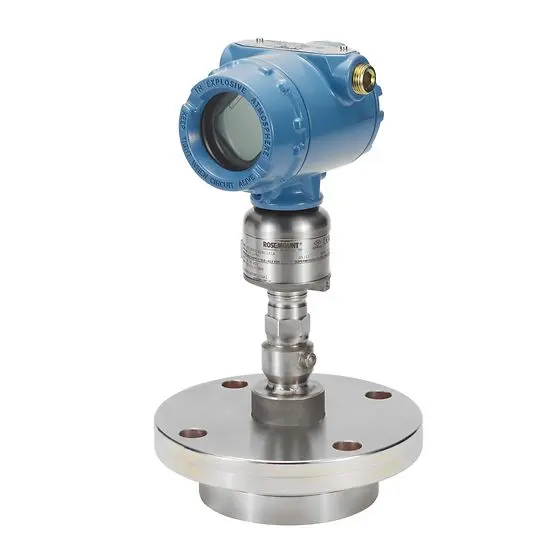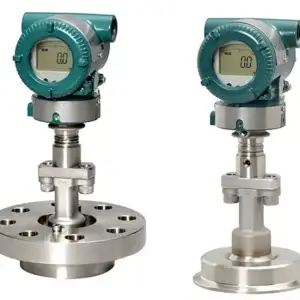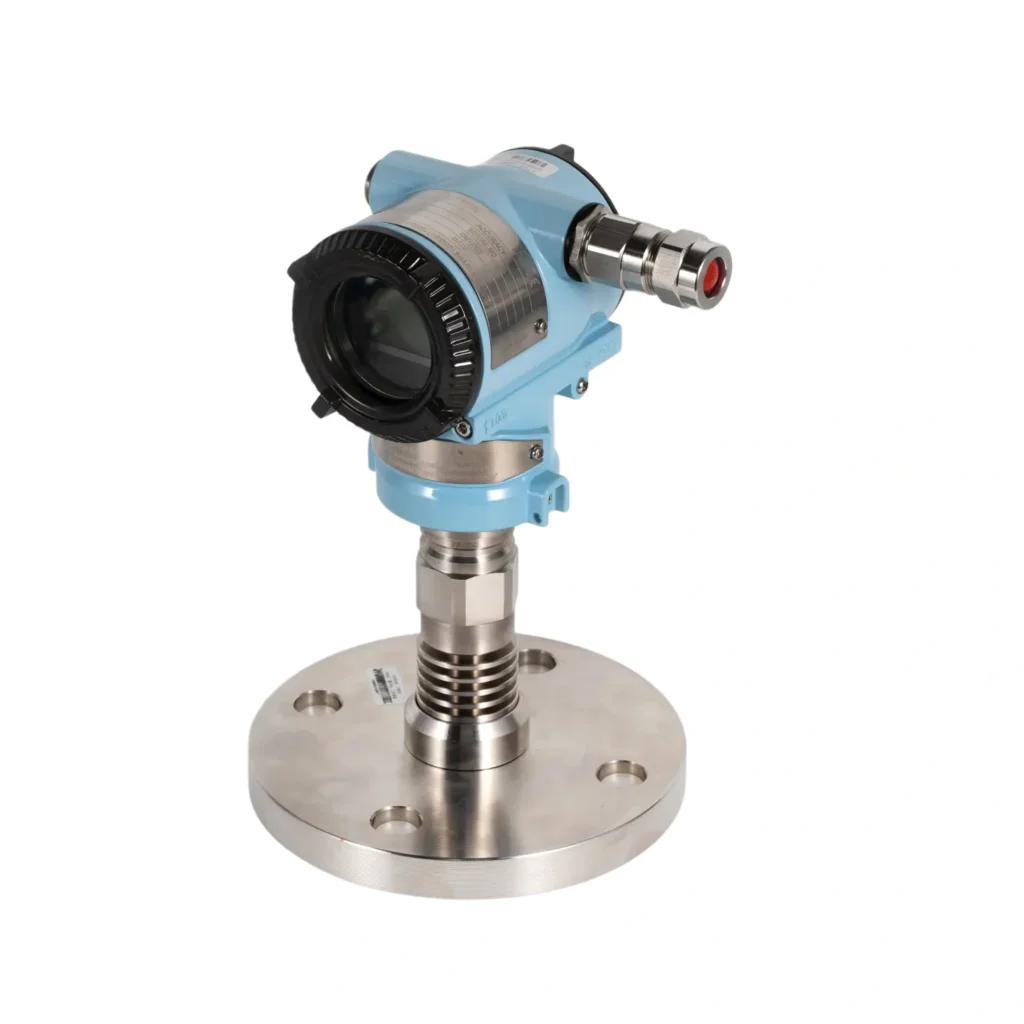
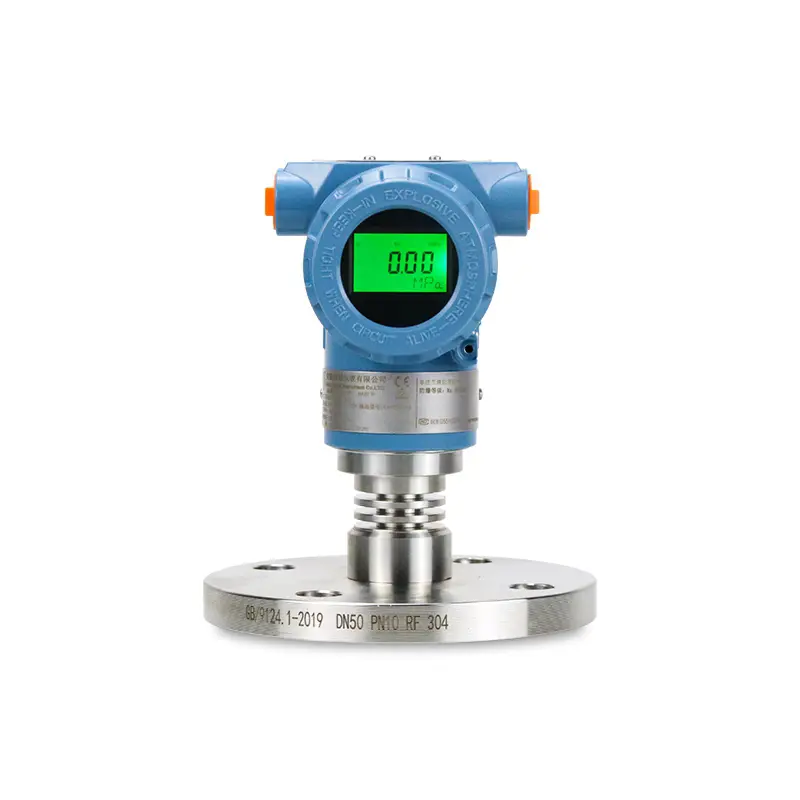
Diaphragm Seal Pressure Transmitter
A diaphragm seal pressure transmitter is an industrial pressure measuring instrument that uses a flanged process connection and senses process pressure directly through an isolating diaphragm. Structurally, it follows the industrial design style of the 3051 series, with an upper electronic housing and terminal compartment, and a lower flange diaphragm assembly. The overall structure is compact and suitable for installation on tanks, vessels, reactors, pipelines, and sanitary equipment.
Compared with standard threaded pressure transmitters, a diaphragm seal pressure transmitter is more suitable for viscous media, crystallizing media, media containing particles, sanitary applications, and installations requiring standard flange mounting. It retains the stability, reliability, and standardized output of a smart pressure transmitter, while improving media adaptability and field installation through its flange diaphragm structure. For this reason, it is widely used in food processing, pharmaceuticals, chemicals, water treatment, energy, and general process industries.
- Pressure Type: Gauge Pressure, Absolute Pressure
- Pressure Range: -1 bar to 400 bar, -0.1 MPa to 40MPa
- Accuracy: ±0.075%, ±0.2%
- Output Signal: 4–20 mA / HART
- Process Connection: DN20 / DN25 / DN40 / DN50 / DN65 / DN80 / DN100 / DN150 (customized available)
- Diaphragm Material: SS316L, HC-276, Tantalum, Gold-plated
- Power Supply: 12–36 VDC
- Protection Rating: IP65 / IP67
- OEM Service: Available. The transmitter can be supplied with your company name and logo on the nameplate.
- Packaging: Individual carton box with protective foam.
- Weight: Approx. 5 kg per unit.
- Port of Shipment: Shanghai or Ningbo Port, China.
- Delivery Time: 3-7 working days.
- Transportation: Air freight, sea freight, or express delivery.
- Documentation: Certificate of Conformity (COC); Inspection / Test Report; Packing List; Commercial Invoice
Accessories for Diaphragm Seal Pressure Transmitter
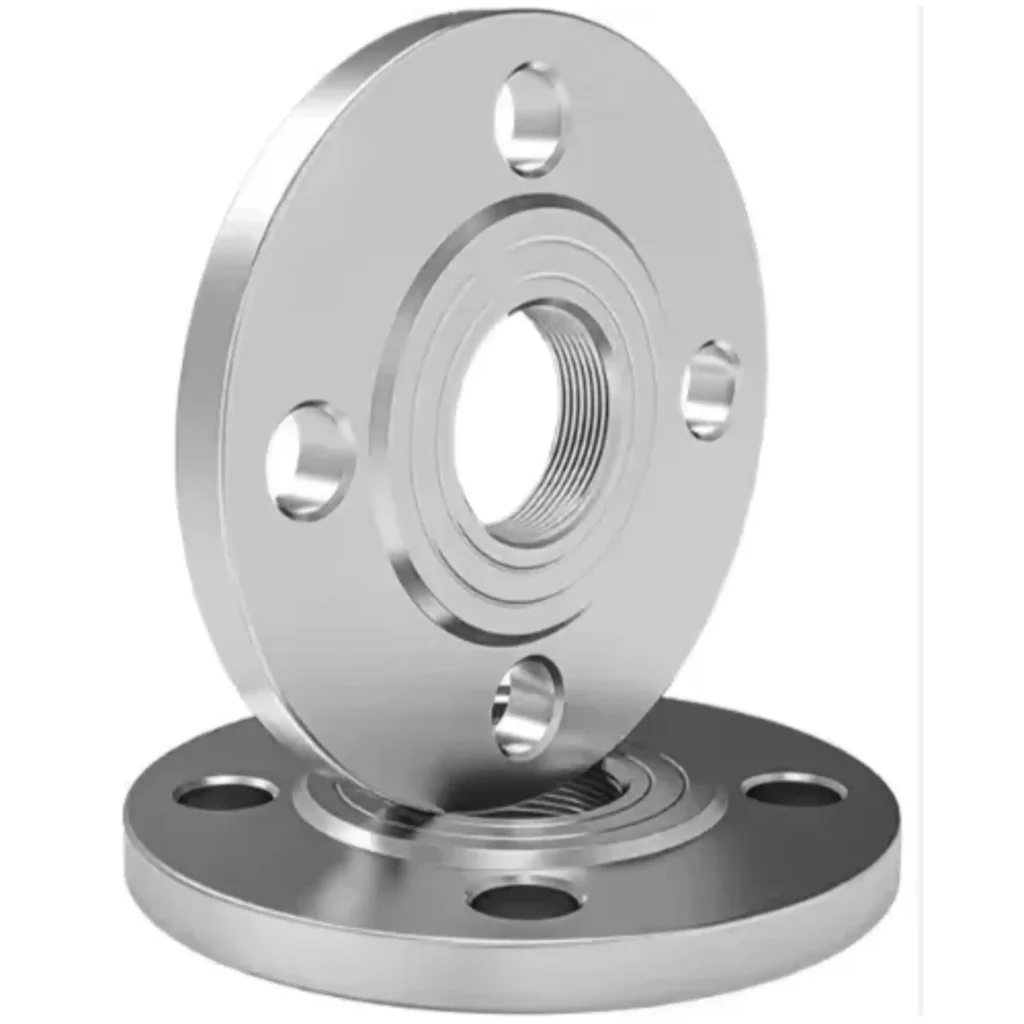
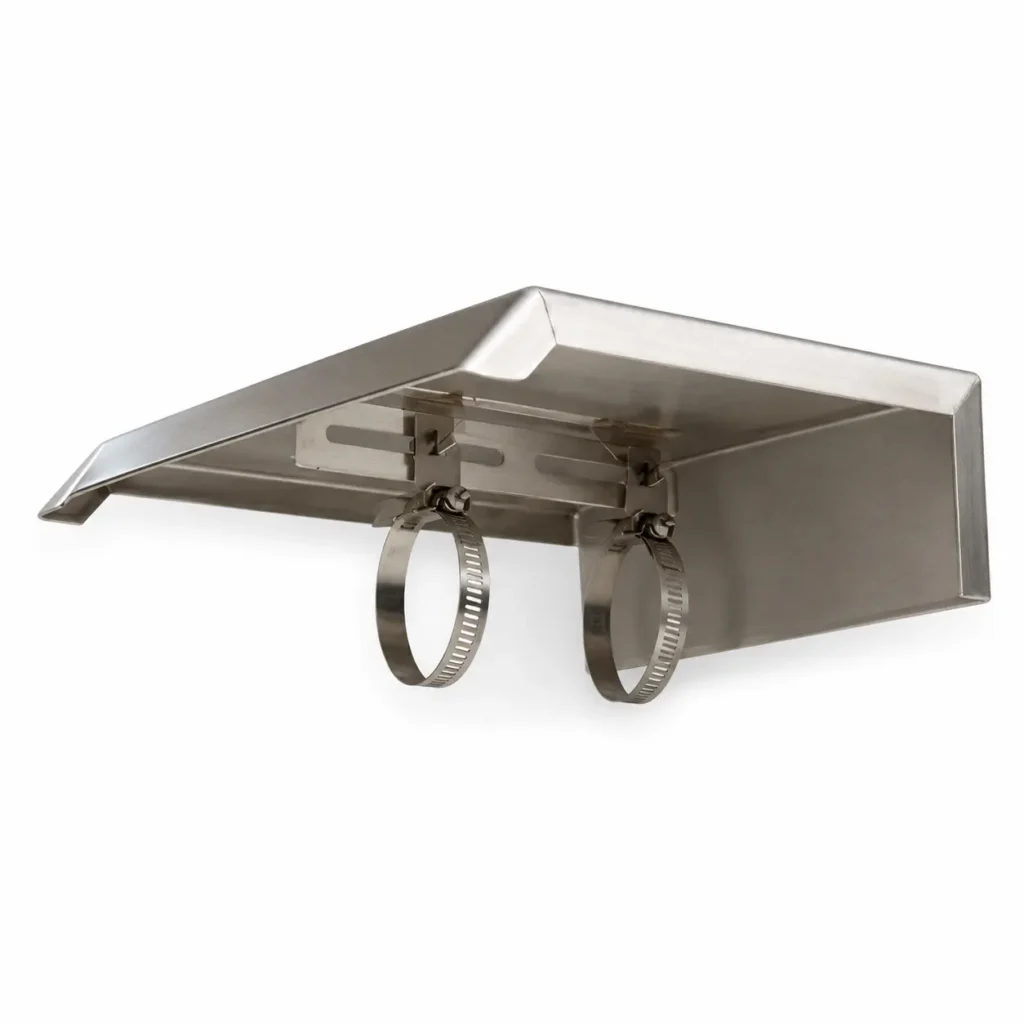
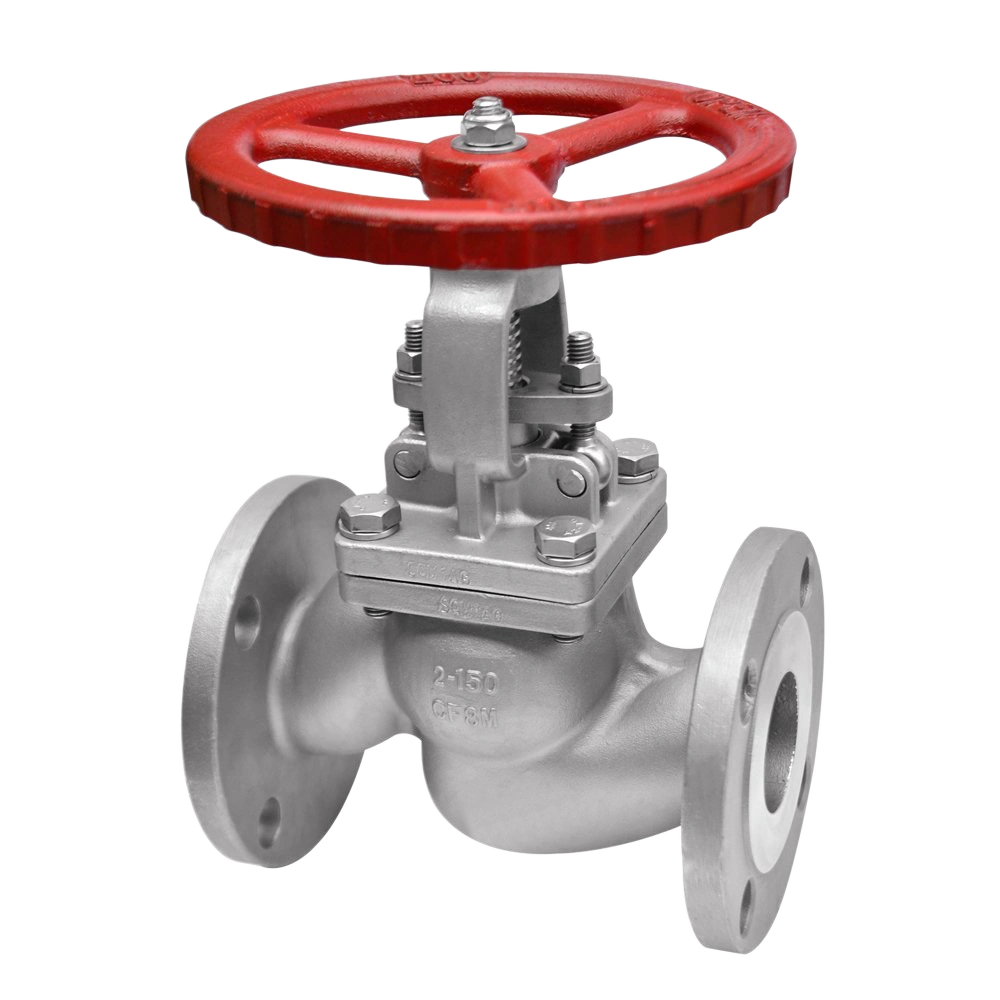
Table of Contents
Diaphragm Seal Pressure Transmitter Overview
1. What Is a Diaphragm Seal Pressure Transmitter?
A diaphragm seal pressure transmitter is essentially a pressure transmitter equipped with an isolating diaphragm seal. The process medium does not act directly on the sensor itself. Instead, it acts on the external diaphragm, and the pressure is transmitted through the internal fill fluid to the sensing element inside the transmitter.
This type of product is commonly selected when:
- the process connection is flange-mounted rather than threaded
- the medium is viscous, sticky, corrosive, or prone to crystallization
- solids or particles may block a normal pressure port
- a flush diaphragm structure is preferred
- the process requires more standardized installation on tanks, vessels, or reactors
- the application needs the reliability of a smart pressure transmitter together with better protection against difficult media
In simple terms, a diaphragm seal pressure transmitter can be understood as:
An inline pressure transmitter combined with a diaphragm seal structure to improve medium compatibility and installation flexibility
2. Structure and Diagram of a Diaphragm Seal Pressure Transmitter
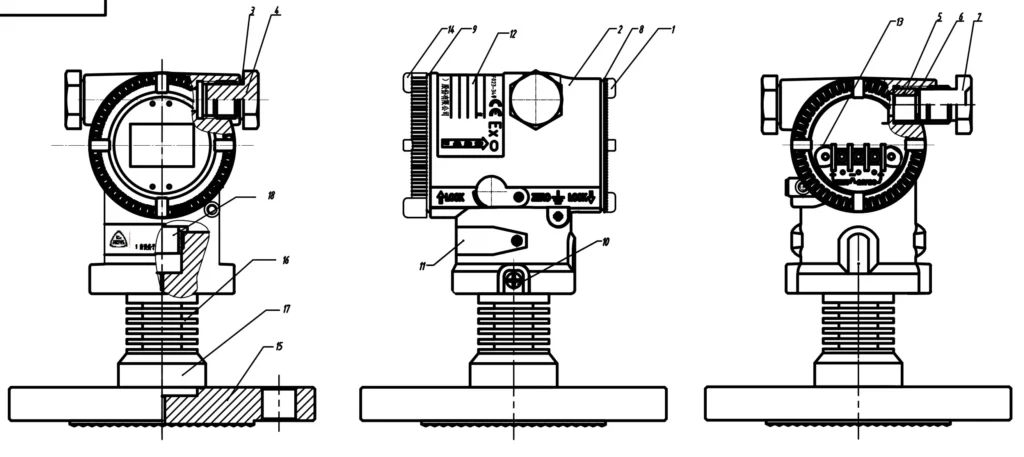
A direct-mount diaphragm seal pressure transmitter generally includes the following main parts:
Housing
The upper housing protects the electronics, terminals, and optional display module. Standard housings are usually cast aluminum, while stainless steel housings may be used for offshore, corrosive, or special industrial environments.
Electronics Module
The electronics module receives the raw sensor signal and performs amplification, temperature compensation, linearization, and output conversion.
Display Module
An optional LCD display can be provided for local indication of pressure and configuration parameters.
Electrical Connection
Common electrical entries include M20×1.5 and 1/2-14 NPT, depending on project requirements.
Nameplate
The nameplate usually shows the model, range, accuracy, output, materials, and other key product data.
Sensor
The internal sensing element is commonly based on monocrystalline silicon or other stable industrial-grade sensor technologies.
Diaphragm Seal Assembly
This is the most important structural difference between a diaphragm seal pressure transmitter and a standard threaded pressure transmitter. The diaphragm seal assembly isolates the medium from the sensor and transmits pressure through fill fluid.
The flange connects the transmitter to the process equipment. Common sizes include DN20, DN25, DN50, DN80, and DN100, or equivalent inch sizes depending on the standard.
Diaphragm Material
Common diaphragm materials include:
- 316L stainless steel
- Hastelloy C-276
- tantalum
- Monel
- gold-plated diaphragm
- other special materials as required
Fill Fluid
The fill fluid transmits the pressure from the diaphragm to the sensor. Typical options include:
- standard silicone oil
- high-temperature silicone oil
- low-temperature silicone oil
- fluorinated oil
The fill fluid must be selected carefully according to temperature, medium compatibility, and installation conditions.
3. Why Choose a Diaphragm Seal Pressure Transmitter?
A diaphragm seal pressure transmitter is widely used because it offers better protection, stronger application flexibility, and improved compatibility with harsh or difficult process conditions.
Better for flange-mounted applications
Many tanks, vessels, and process systems are already designed with flange connections. In these applications, a single flange diaphragm seal pressure transmitter can be installed more directly and more professionally than a threaded type with adapters.
Better for viscous or crystallizing media
Standard threaded pressure ports can become blocked when the medium is viscous, sticky, or prone to crystallization. A diaphragm seal structure offers a more open and flush measuring surface.
Better for corrosive media
By selecting the right diaphragm material and wetted materials, diaphragm seal pressure transmitters can be used in many corrosive applications where standard structures may fail prematurely.
Better for sanitary or flush diaphragm applications
Where medium retention, cleaning, or contamination is a concern, a flush diaphragm structure is often more suitable than a threaded pressure port.
More suitable for standardized industrial installation
A direct-mount single flange diaphragm seal pressure transmitter is often easier to integrate into industrial process equipment that already follows flange standards.
Faster response than capillary remote seal types
Compared with capillary-mounted remote seal pressure transmitters, the direct-mount diaphragm seal type has no long capillary, so the pressure signal transmission is generally faster and the structure is more compact.
4. Working Principle of Flange-Mounted Diaphragm Seal Pressure Transmitter
The working principle of a diaphragm seal pressure transmitter can be summarized in several steps:
1). Pressure sensing at the diaphragm
The process medium acts on the front isolating diaphragm of the diaphragm seal assembly. The diaphragm makes a very small elastic displacement under pressure.
2). Pressure transmission through fill fluid
The pressure applied to the diaphragm is transmitted by the internal fill fluid to the sensing element inside the transmitter.
3). Secondary sensing by the internal sensor
The sensor detects the transmitted pressure and converts it into a weak electrical signal.
4). Signal processing
The electronics module processes the raw signal through amplification, compensation, and linearization.
5). Standard output
The final output is converted into a standard industrial signal, such as:
- 4–20 mA
- 4–20 mA + HART
The output signal can then be sent to PLC, DCS, recorders, or other control systems.
In simplified form, the working logic is:
Process pressure → diaphragm seal → fill fluid transmission → internal sensor → electronics processing → standard output
Because the measurement involves an additional pressure transmission stage through the diaphragm seal and fill fluid, the response is usually slightly less direct than that of a standard threaded pressure transmitter. However, the trade-off is much better suitability for difficult media and flange-mounted applications.
5. Applications of Direct-Mount Diaphragm Seal Pressure Transmitters
Diaphragm seal pressure transmitters are commonly used in the following applications:
Tank and vessel pressure measurement
They are suitable for pressure measurement on storage tanks, reactors, process vessels, and buffer tanks, especially when the equipment already uses flange nozzles.
Chemical processing
In chemical applications, the medium may be corrosive, sticky, reactive, or prone to crystallization. A diaphragm seal structure helps protect the sensor and improve service life.
Food, beverage, and pharmaceutical industries
Where flush diaphragm measurement is needed, a diaphragm seal pressure transmitter can reduce dead zones and improve cleanability.
Wastewater, slurry, and pulp systems
Media containing sludge, slurry, solids, or pulp can easily clog ordinary threaded pressure ports. A flange diaphragm seal structure is often a better choice.
Corrosive liquid measurement
Acids, alkalis, salts, and other aggressive media may require special diaphragm materials such as Hastelloy or tantalum.
High-standard flange process systems
In petrochemical, power generation, metallurgy, and energy industries, flange-mounted installation is often preferred because it is more standardized and easier to align with process specifications.
Diaphragm Seal Pressure Transmitter Technology
1. Technical Specifications of Diaphragm Seal Pressure Transmitters
| SIY3051P Diaphragm Seal Pressure Transmitter Selection Table | ||||
| 10 | Accuracy | |||
| -H | Reference accuracy±0.075% | |||
| -N | Reference accuracy±0.2% | |||
| 20 | Pressure Range | |||
| Gauge Pressure | ||||
| 3 | -6kPa~6kPa(-60mbar~60mbar) | |||
| 4 | -40kPa~40kPa(-400mbar~400mbar) | |||
| 5 | -100kPa~250kPa(-1bar~2.5bar) | |||
| 6 | -0.1MPa~1MPa(-1bar~10bar) | |||
| 7 | -0.1MPa~3MPa(-1bar~30bar) | |||
| 8 | -0.1MPa~10MPa(-1bar~100bar) | |||
| 9 | -0.1MPa~21MPa(-1bar~210bar) | |||
| 10 | -0.1MPa~40MPa(-1bar~400bar) | |||
| 10 | Other Agreed Range | |||
| Absolute Pressure | ||||
| A4 | 0~40kPa(0~0.4bar) | |||
| A5 | 0~250kPa(0~2.5bar) | |||
| A6 | 0~1MPa(0~10bar) | |||
| A7 | 0~3MPa(0~30bar) | |||
| 5A | Other Agreed Range | |||
| 30 | Communication Protocol | |||
| H | 4-20 mA + HART 5 / HART 6 / HART 7 Protocol | |||
| M | RS485 Modbus Protocol | |||
| 40 | Display | |||
| 0 | None | |||
| 2 | LCD Display (-20°C) | |||
| 4 | OLED Display (-40°C) | |||
| 50 | Housing Material & Electrical Connection | |||
| B | Aluminum Alloy Housing, Electrical Connection M20×1.5 | |||
| S | Aluminum Alloy Housing, Electrical Connection 1/2 NPT | |||
| C | Stainless Steel Housing, Electrical Connection M20×1.5 | |||
| T | Stainless Steel Housing, Electrical Connection 1/2 NPT | |||
| 60 | Transmitter Diaphragm Material & Fill Fluid | |||
| 3 | 316L Stainless Steel, Silicone Oil | |||
| 9 | Other Special Requirements as Agreed | |||
| 70 | Mounting Bracket | |||
| N | None | |||
| 1 | Galvanized Carbon Steel Bracket | |||
| 2 | Stainless Steel Bracket | |||
| 80 | Capillary Length | |||
| D | No Capillary, Direct Flange Mounting | |||
| □□ | Agreed Capillary Length, from 1 to 15 m (e.g. 2 m: 02) | |||
| 90 | Seal Fill Fluid | |||
| A | Syltherm XLT -100 to 300℉ (-73 to 135℃) | |||
| C | High-Temperature Silicone Oil 60 to 572℉ (15 to 300℃) | |||
| D | D.C. Silicone 200 -40 to 400℉ (-40 to 205℃) | |||
| H | Inert Oil (Fluorinated Oil) -50 to 350℉ (-45 to 177℃) | |||
| 100 | Diaphragm Material | |||
| 2 | 316L Stainless Steel | |||
| 3 | Hastelloy C276 | |||
| 4 | Tantalum | |||
| 5 | Monel | |||
| T | Titanium | |||
| P | With PTFE/PFA Coating | |||
| G | Gold-Plated Coating | |||
| Z | Other Special Requirements as Agreed | |||
| 110 | Flange Size & Material | Flange Size | Pressure Class | Material |
| A21 | DN50/2″ | 150Ib | 304SST | |
| B21 | DN50/2″ | 150Ib | 316SST | |
| A31 | DN80/3″ | 150Ib | 304SST | |
| B31 | DN80/3″ | 150Ib | 316SST | |
| A41 | DN100/4″ | 150Ib | 304SST | |
| B41 | DN100/4″ | 150Ib | 316SST | |
| A22 | DN50/2″ | 300Ib | 304SST | |
| B22 | DN50/2″ | 300Ib | 316SST | |
| A32 | DN80/3″ | 300Ib | 304SST | |
| B32 | DN80/3″ | 300Ib | 316SST | |
| A42 | DN100/4″ | 300Ib | 304SST | |
| B42 | DN100/4″ | 300Ib | 316SST | |
| A24 | DN50/2″ | 600Ib | 304SST | |
| B24 | DN50/2″ | 600Ib | 316SST | |
| A34 | DN80/3″ | 600Ib | 304SST | |
| B34 | DN80/3″ | 600Ib | 316SST | |
| A44 | DN100/4″ | 600Ib | 304SST | |
| B44 | DN100/4″ | 600Ib | 316SST | |
| YY | Other Agreed Special Size, Pressure Class or Material | |||
| 120 | Hazardous Area Approval | |||
| E5 | ExiaⅡCT4 | |||
| K5 | ExdⅡCT4-CT6 | |||
| 130 | Other Options (Non-Exclusive Options) | |||
| Q4 | Factory Calibration Certificate | |||
| Q3 | Third-Party Calibration Certificate | |||
| V6 | Suitable for Full Vacuum Service | |||
| J1 | NAMUR NE43 Standard | |||
| J3 | Built-in Lightning Protection Module | |||
| T1 | Oil-Free Degreasing | |||
| C1 | SIL3 Certification (Only for HART Communication Type) | |||
| A | Integral Radiator (For No-Capillary, Direct Flange-Mounted Type) | |||
| B | External Radiator (For Remote Capillary Type) | |||
| Z | Other Special Requirements as Agreed | |||
| Note: Please contact your sales representative for special options | ||||
2. How to Select a Diaphragm Seal Pressure Transmitter?
Correct selection is critical. In many diaphragm seal applications, the success of the instrument depends more on the correctness of the selection than on the transmitter body alone.
At a minimum, the following parameters should be confirmed:
Process medium
You need to confirm whether the medium is:
- corrosive
- viscous
- sticky
- crystallizing
- particle-laden
- sanitary-sensitive
This determines the diaphragm material, fill fluid, and wetted materials.
Pressure type
First determine whether the required measurement is:
- gauge pressure
- absolute pressure
- sealed pressure
Selecting the wrong pressure reference type will make the transmitter unsuitable for the actual application.
Pressure range
The range should be selected based on:
- normal operating pressure
- maximum operating pressure
- pressure fluctuation
- shock pressure or surge risk
If the range is too small, overload may occur. If it is too large, measurement performance may be reduced.
Flange specification
For a single flange diaphragm seal pressure transmitter, flange selection is especially important. Confirm:
- flange standard
- flange size
- pressure class
- facing type
- flange material
If the flange does not match the site, the instrument cannot be installed properly even if all other parameters are correct.
Process temperature
Temperature has a direct effect on fill fluid, stability, and structural suitability. If the temperature is high, you may need:
- high-temperature fill fluid
- a cooling structure
- or a capillary remote seal solution instead of a direct-mount type
Output and communication
Confirm whether the application requires:
- 4–20 mA only
- HART communication
- local display
- remote configuration
Installation environment
Check whether the application involves:
- hazardous area requirements
- outdoor use
- vibration
- high humidity
- special cable entry requirements
Accessories and special requirements
Also confirm whether the project requires:
- mounting bracket
- customized nameplate
- export documents
- matching flange
- gasket and bolts
- special certificates
In one sentence, the core of selecting a diaphragm seal pressure transmitter is:
confirm the medium, pressure type, pressure range, temperature, flange specification, and material requirements
Installation and Maintenance of Diaphragm Seal Pressure Transmitters
1. How to Install a Flange Direct-Mount Pressure Transmitter?
Correct installation directly affects the measurement accuracy, stability, and service life of a diaphragm seal pressure transmitter.
1). Check before installation
- Whether the model is correct
- Whether the measuring range matches the application
- Whether the flange specification is compatible
- Whether the diaphragm surface is intact
2). Avoid diaphragm damage
The isolating diaphragm is the key pressure-sensing component. During transportation, unpacking, and installation, it must not be damaged, squeezed, or scratched by hard objects. It is best to gently press the diaphragm with a finger to check whether it has elasticity. If the diaphragm does not move when pressed, contact the manufacturer directly.
3). Position the gasket correctly
The gasket provides sealing and helps prevent medium leakage, so it must be installed correctly. At the same time, care must be taken to ensure that the gasket does not press against the diaphragm, otherwise zero shift may occur. PTFE gaskets are commonly used, but if the process temperature is too high, a spiral wound gasket should be used instead.
4). Tighten the fasteners properly
The flange of the transmitter is not welded to the mating flange on the equipment. In most cases, the two flanges are connected by bolts and other fasteners. Therefore, whether the bolts are tightened properly has a direct effect on measurement performance and on whether the medium may leak.
5). Wire correctly
In most cases, only the positive and negative power wires need to be connected to the corresponding terminals of the transmitter. Incorrect wiring may lead to unexpected problems.
6). Check zero before commissioning
After installation, the zero point should be checked whenever conditions allow.
It is common for customers to position the gasket incorrectly during installation, causing it to press against the diaphragm and resulting in zero shift. In this case, the transmitter can be removed and installed again correctly. If removal is not possible, the zero can be recalibrated. However, this is only a temporary corrective measure and is not suitable for long-term measurement.
2. Common Questions and Precautions
Can a direct-mount single flange type be used for high-temperature media?
Yes, it can be used in certain high-temperature applications, but this depends on the actual process temperature, exposure duration, and installation method. In many cases it can be used up to 200°C (392°F).
If the temperature is too high, heat will be conducted directly to the transmitter body through the flange. In such cases, it is usually necessary to re-evaluate whether a remote capillary type should be used instead.
How to choose between direct-mount single flange type and capillary remote seal type?
If the installation position allows it, the medium temperature is not extremely high, and a compact structure with faster response is preferred, the direct-mount single flange type is usually more suitable.
If the site has high temperature, strong vibration, limited space, or the transmitter body needs to be located farther from the process point, the remote seal type is more suitable.
How to choose diaphragm material?
The principle is to select according to medium corrosiveness.
For non-strongly corrosive applications, 316L is commonly used.
For strongly corrosive applications, Hastelloy, tantalum, or other higher-grade materials may be required.
Why does zero shift occur after installation?
Possible reasons include:
- Change in installation position
- Flange mechanical stress
- Gasket not positioned correctly
- Temperature changes
- Zero not readjusted on site
In general, zero should be checked and adjusted if necessary according to the actual installation condition.
Is this product suitable for hygienic industries?
If an appropriate structure, wetted material, and surface treatment are selected, it can be used in some hygienic industries.
However, if the industry has very strict hygienic standards, the actual connection method should be evaluated to determine whether a sanitary clamp pressure transmitter would be more suitable.
Can it be made with corrosion-resistant or special materials?
Yes. Direct-mount single flange pressure transmitters usually support a variety of diaphragm and wetted material options to suit different corrosive media.
Diaphragm Seal System Pressure Transmitter Comparison
1. Direct-Mount Single Flange Type vs Threaded Direct-Mount Pressure Transmitter
A threaded direct-mount type is more suitable for conventional clean media and standard threaded connection applications, while the direct-mount single flange type is more suitable for flange mounting, difficult media, and higher-standard applications.
Diaphragm seal pressure transmitter = threaded pressure transmitter + one diaphragm seal device
Direct-mount single flange type:
- Uses flange connection, making it more suitable for standardized process equipment installation.
- The isolating diaphragm structure is better for viscous, crystallizing, and particle-laden media.
- Media adaptability is generally better than ordinary threaded pressure port structures.
- Installation is more standardized and better suited for vessels, reactors, and tanks.
- Cost is usually higher than standard threaded types.
Threaded direct-mount pressure transmitter:
- Simpler structure and lower cost.
- More suitable for conventional clean media such as water, air, and oil.
- Easy to install and suitable for general pipeline and equipment connections.
- Relatively limited adaptability to difficult media.
- More common in budget-sensitive projects.
If the medium is difficult, the equipment uses flange connections, or the site requires more standardized installation, the direct-mount single flange type is usually the better choice.
2. diaphragm seal pressure transmitter vs Single Flange Capillary Remote Seal Pressure Transmitter
Both are suitable for flange diaphragm measurement, but the direct-mount type is more compact and responds faster, while the remote seal type is more suitable for high temperature and special installation positions.
Capillary pressure transmitter = diaphragm seal pressure transmitter + extended capillary
Direct-mount single flange type:
- The transmitter body is directly connected to the flange assembly.
- Compact structure and smaller footprint.
- Generally faster response.
- Fewer installation points and relatively easier maintenance.
- Not suitable for extremely high temperature, strong vibration, or applications where the transmitter body must be located far from the process point.
Single flange remote seal type (capillary pressure transmitter):
- The flange diaphragm and transmitter body are connected by a capillary.
- Suitable for locating the transmitter farther away in a safer position.
- More suitable for high-temperature media or limited installation space.
- More sensitive to installation method, capillary protection, and temperature influence.
- Usually more expensive than the direct-mount type.
For normal applications, the direct-mount type should be considered first. For high temperature or special installation positions, then consider the remote seal type.
3. diaphragm seal pressure transmitter vs Sanitary Clamp Pressure Transmitter
A direct-mount single flange type is more oriented toward industrial flange mounting, while a sanitary clamp pressure transmitter is more suitable for food, pharmaceutical, and other highly hygienic applications.
Direct-mount single flange type pressure transmitter:
- Mostly used in industrial flange connection applications.
- Emphasizes connection strength and adaptability to difficult media.
- Can be used in some sanitary applications, but may not represent the highest hygienic connection level.
Sanitary clamp pressure transmitter:
- Usually uses clamp connection.
- Easier to disassemble and clean.
- More commonly used in food, dairy, pharmaceutical, and fermentation equipment.
- Places greater emphasis on no dead zones, easy cleaning, and hygienic compliance.
If the main requirement is industrial flange installation and adaptability to difficult media, choose the direct-mount single flange type. If the main requirement is high cleanliness and quick disassembly for cleaning, a sanitary clamp structure should be prioritized.
OEM Service, Price, and Quotation Information about diaphragm seal pressure transmitter
1. Why Choose Our Direct-Mount Single Flange Pressure Transmitter?
Siy Electric focuses on the R&D and manufacturing of pressure transmitters and has more than 10 years of experience in industrial instrument production. We have long provided stable and reliable pressure measurement products to domestic and overseas customers. Our company has mature production processes, strict quality control procedures, and a well-developed supply chain system. Our products are widely used in water treatment, petrochemical, energy, power generation, machinery, and automation control industries.
Products of this type usually adopt a mature industrial structure design, combining field adaptability, reliability, and configurability to meet the needs of most standard industrial processes and some special applications.
Mature 3051-style structure
The product appearance and structure are mature and widely accepted in industrial fields. Installation, wiring, and maintenance are straightforward.
Multiple flange and material options
Different options can be provided according to different applications, including:
- Flange specifications
- Diaphragm materials
- Wetted materials
- Fill fluid solutions
Supports multiple output methods
According to project requirements, the following can be provided:
- 4–20 mA
- HART communication
- Display head
- Explosion-proof configuration
Suitable for a variety of difficult media
For viscous, corrosive, easily clogged media, or media requiring flush diaphragm flange measurement, this type of product usually has advantages over ordinary threaded pressure transmitters.
Tested and calibrated before shipment
The value of an industrial-grade transmitter lies not only in its ability to measure, but in its long-term stability.
Qualified products are usually checked for zero, span, linearity, and basic stability before leaving the factory.
Suitable for OEM / ODM
For customers with branding requirements, export projects, or packaged equipment applications, this type of product is also suitable for customized cooperation.
2. Does It Support OEM / ODM?
Yes.
In addition to supplying standard models, direct-mount single flange pressure transmitters can also be customized to a certain extent according to project requirements.
The following customization options are available:
- Nameplate and logo customization
The brand, model, range, output, and label content can be customized according to customer requirements.
- Model code customization
For long-term customers, dedicated coding logic can be established according to internal purchasing habits or project specifications.
- Parameter presetting
Parameters such as range, unit, zero, and damping can be preset before shipment, allowing direct installation after delivery.
- Material and connection customization
For special media or special equipment interfaces, flange and diaphragm solutions can be matched according to actual conditions.
- Packaging and documentation support
For export projects, neutral packaging, shipping marks, packing information, and standard technical documents can be provided as required.
3. Price of Diaphragm Seal Pressure Transmitters
For the most common applications, such as normal temperature, normal pressure, 316L diaphragm, and flange specification DN50 / PN16 / 304 material, the price is usually around USD 350.
The price of a direct-mount single flange pressure transmitter is usually not determined by the transmitter body alone, but by the entire configuration.
FAQ
What kind of media is a direct-mount single flange pressure transmitter suitable for?
It is suitable for various liquid, gas, and steam applications, especially flange-mounted applications where standard threaded connections are inconvenient or the medium is more difficult.
How to choose between direct-mount single flange type and standard threaded type?
If the field medium is conventional and clean, the budget is sensitive, and the connection is threaded, a standard threaded type is more common. If the equipment uses flange connection, the medium is difficult, or the site requires more standardized industrial installation, the direct-mount single flange type is more suitable.
What is the difference between direct-mount single flange type and remote seal type?
The direct-mount type has no capillary, so the structure is more compact and the response is faster. The remote seal type uses a capillary and is more suitable for high temperature or applications where the transmitter body needs to be installed farther away.
Does the direct-mount single flange type support HART?
Yes, depending on the electronics module configuration.
Can special diaphragm materials be provided?
Yes, different diaphragm materials can usually be selected according to the corrosiveness of the medium.
Can it be used in hygienic industries?
Yes, in some sanitary applications. However, whether it should finally be selected depends on the connection method, surface treatment, and the required hygienic standards.
Does it support OEM?
Yes. Nameplate, logo, parameter presetting, packaging, and some structural configurations can be customized.
How can I get a quotation quickly?
Once you provide the medium, range, temperature, flange specification, material, and output requirements, an accurate solution and quotation can usually be provided more quickly.