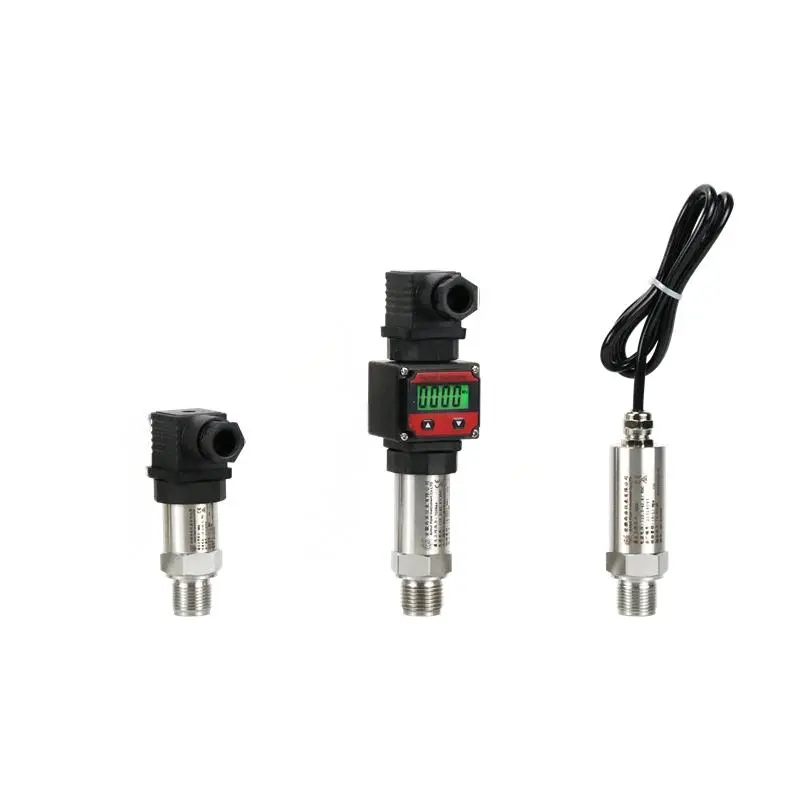
Compact Pressure Transmitter
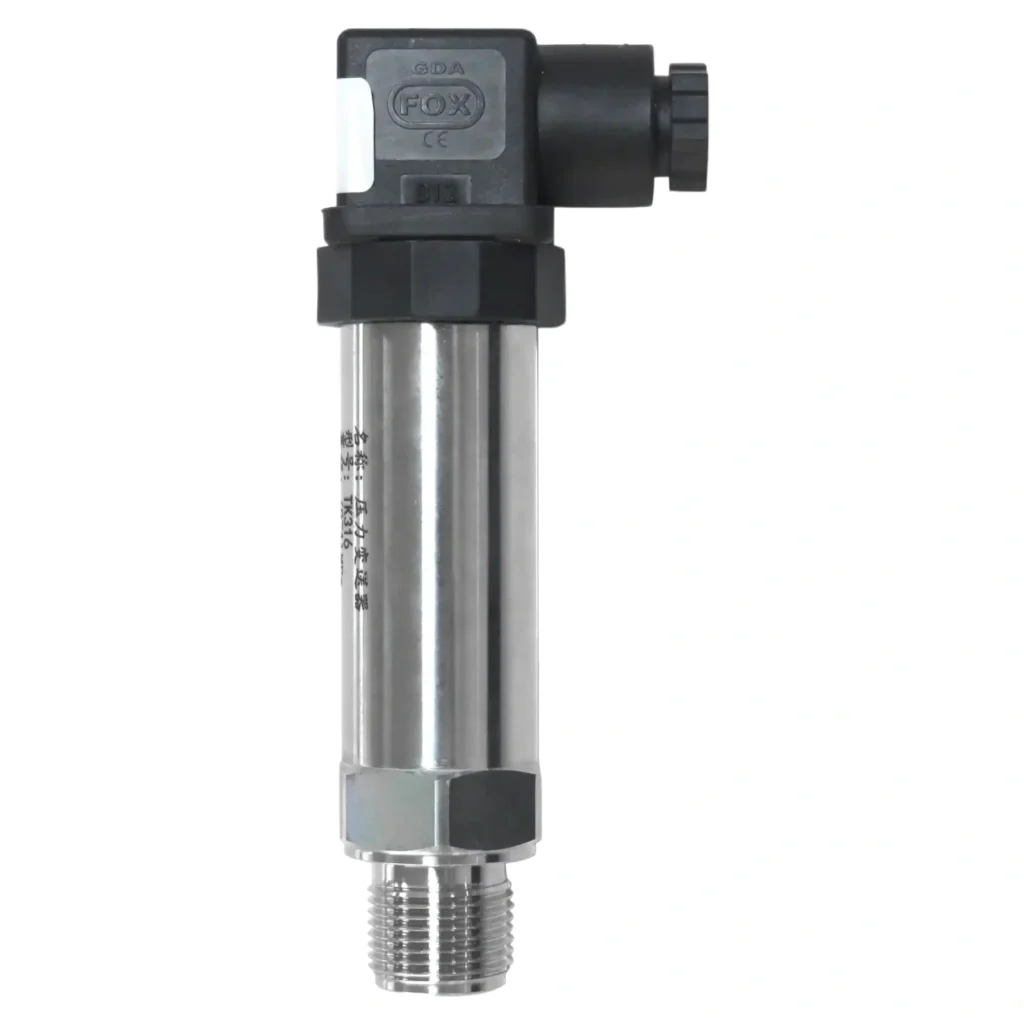
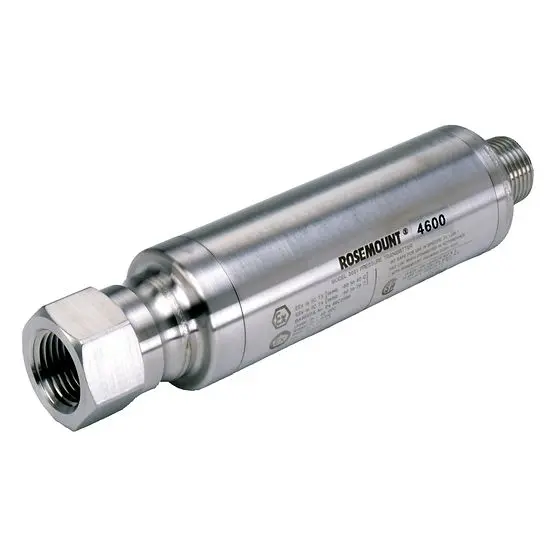
The compact pressure transmitter is a small-size pressure measuring instrument designed for equipment integration and industrial pressure monitoring. It is commonly used in air compressors, water pumps, hydraulic equipment, pneumatic systems, refrigeration units, machinery, and compact pipeline installations where space is limited.
This type of pressure transmitter converts the measured pressure of gases or liquids into a standard electrical signal, such as 4–20 mA, voltage output, or digital output. It offers fast response, simple installation, stable performance, and flexible configuration options for pressure range, process connection, electrical interface, and wetted materials.
SIY Electric supplies compact pressure transmitters for OEM equipment manufacturers, automation projects, and general industrial applications. Different structures, labels, model codes, output signals, and connection specifications can be customized according to project requirements.
- Pressure Type: Gauge Pressure, Absolute Pressure
- Pressure Range: -1 bar to 1200 bar, -0.1 MPa to 120MPa
- Accuracy: ±0.25%, ±0.5%
- Output Signal: 4–20 mA / HART / RS485 / 0-5 V / 0-10 V
- Process Connection: 1/2 NPT, G1/2, M20×1.5 (customized available)
- Diaphragm Material: SS316L, HC-276, Tantalum
- Power Supply: 12–36 VDC
- Protection Rating: IP65 / IP67
- OEM Service: Available. The transmitter can be supplied with your company name and logo on the nameplate.
- Packaging: Individual carton box with protective foam.
- Weight: Approx. 0.25 kg per unit.
- Port of Shipment: Shanghai or Ningbo Port, China.
- Delivery Time: 3-7 working days.
- Transportation: Air freight, sea freight, or express delivery.
- Documentation: Certificate of Conformity (COC); Inspection / Test Report; Packing List; Commercial Invoice
Accessories for Compact Pressure Sensor
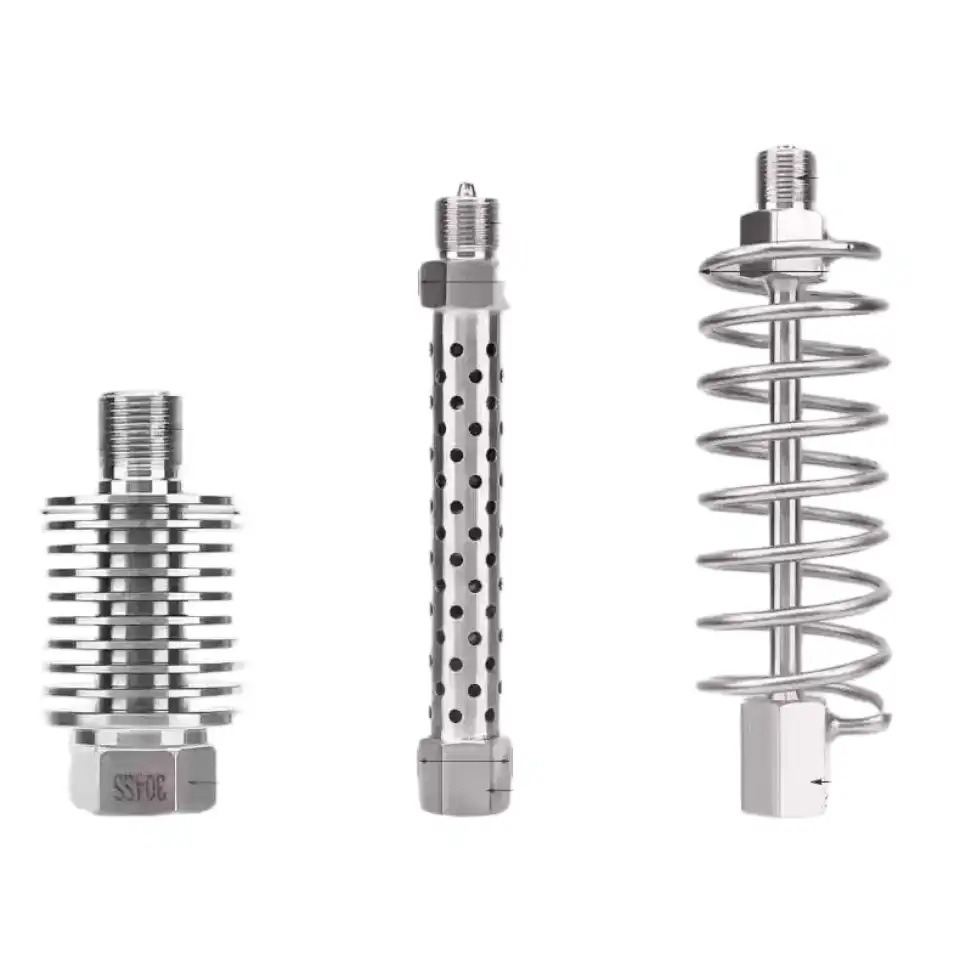
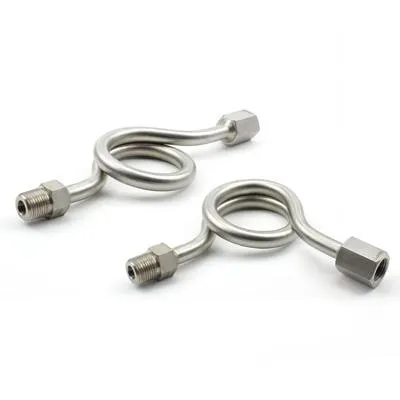
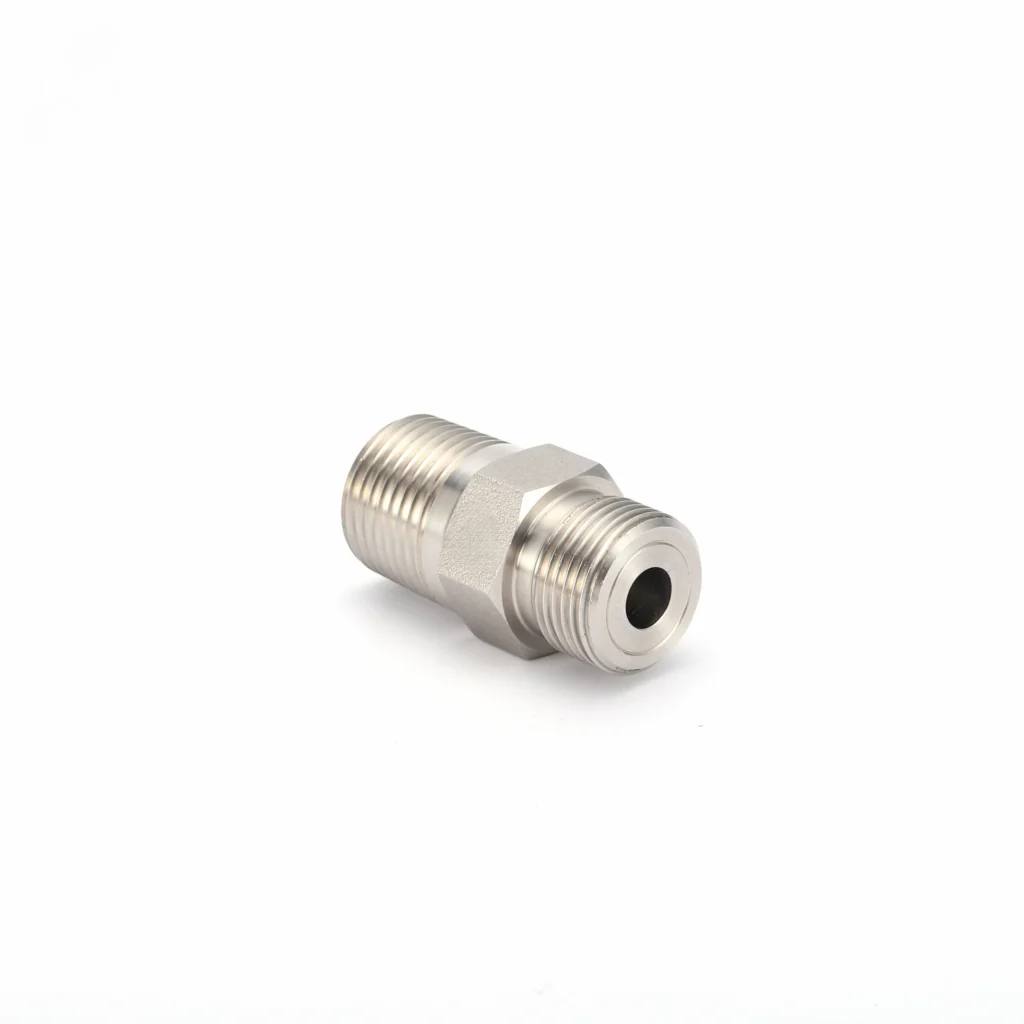
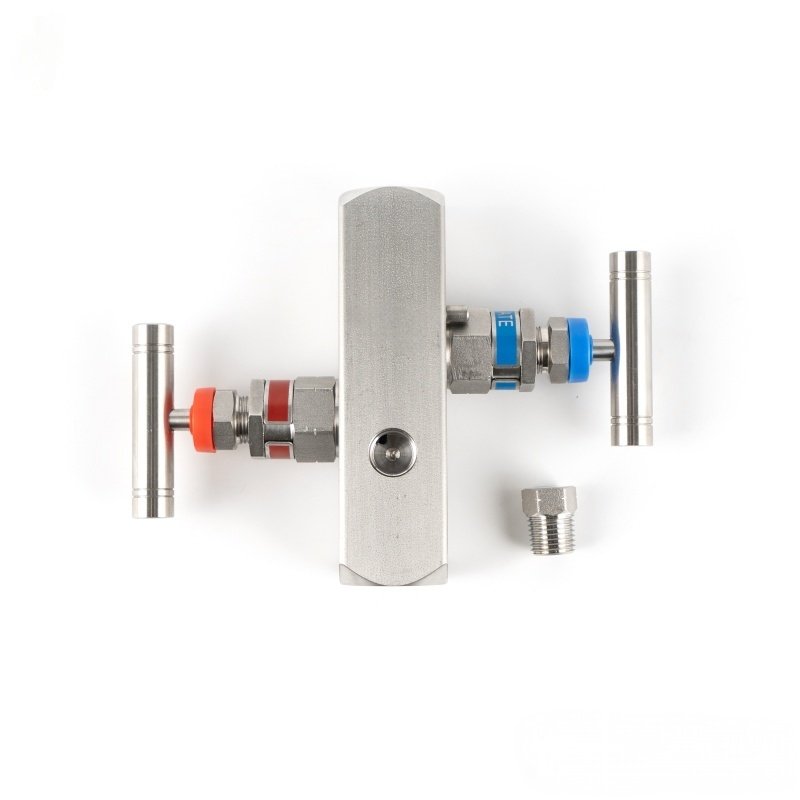
Table of Contents
Compact Pressure Transmitter Overview
1. What Is a Compact Pressure Transmitter?
A compact pressure transmitter is a small-sized, integrated industrial pressure measuring instrument used to convert the pressure of a measured medium into a standard electrical output signal, such as 4–20 mA, 0–10 V, or RS485, and transmit it to a PLC, DCS, or other automation control systems.
Compared with traditional industrial pressure transmitters, such as the 3051 inline pressure transmitter or the 2088 industrial pressure transducer, a compact pressure transmitter features an integrated design in which the sensing element, signal processing circuit, and output module are all built into a compact housing. It is usually installed directly on pipelines or equipment through threaded connections, such as M20×1.5, 1/2 NPT, or G1/2, without the need for impulse lines or remote seal systems.
Common Alternative Names
Compact pressure transmitters are known by different names, such as:
- Small Pressure Transmitter
- Micro Pressure Transmitter
- Compact Pressure Sensor
- Miniature Pressure Transducer
Although the names differ, they usually refer to the same type of compact, directly mounted pressure measuring device.
Product Features
Compact pressure transmitters usually have the following typical features:
- Small size and compact structure, suitable for installation environments with limited space
- Direct mounting (Inline / Direct Mount), with no need for impulse piping and faster response
- Multiple output options, supporting both analog signals and digital communication
- Flexible installation, with a variety of threaded connections and electrical connection options, such as DIN 43650, M12, or direct cable output
- Lower cost, suitable for OEM applications and volume use
2. Structure and Diagram of a Compact Pressure Transmitter
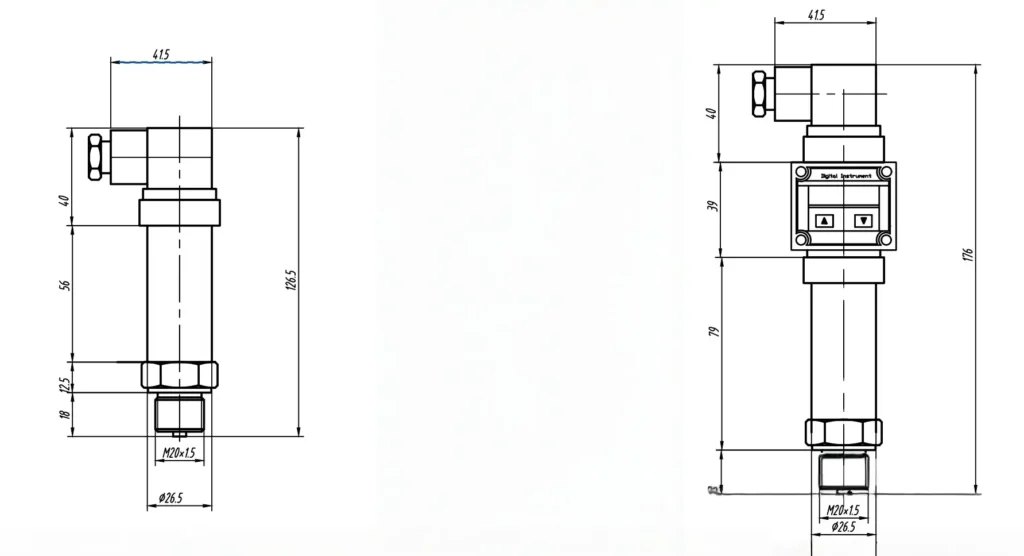
Structurally, a compact pressure transmitter usually adopts an integrated design, combining pressure sensing, signal processing, and signal output functions inside a compact housing. It mainly consists of the following parts:
1). Pressure Sensing Element
The sensing element is the core part of the transmitter and is used to directly detect changes in the pressure of the measured medium.
Common types include:
- Diffused silicon piezoresistive sensor (most common)
- Ceramic capacitive sensor
- Strain gauge sensor
When the medium pressure acts on the diaphragm, the sensing element produces a slight deformation and converts it into an electrical signal.
2). Isolation Diaphragm and Fill Fluid
The medium does not directly contact the sensing core. Instead, pressure is transmitted through an isolation diaphragm.
- Diaphragm material:Usually 316L stainless steel
- Fill fluid:Silicone oil, used to transmit pressure evenly to the sensing element
Functions:
- Protects the sensing core from corrosive media
- Improves measurement stability and service life
3). Signal Processing Circuit
The sensing element outputs a weak electrical signal, which must be processed by the electronic module.
Main functions include:
- Signal amplification
- Temperature compensation
- Non-linearity correction
- Digital processing (for some communication models)
Finally, the original signal is converted into a stable industrial standard signal.
4). Output Module
This part outputs the processed signal to the external control system.
Common output signals include:
- 4–20 mA
- 0–10 V / 0–5 V
- RS485 / Modbus (for some models)
5). Process Connection
This is the part used to connect the transmitter to the measured equipment or pipeline and is a key part of field installation.
Common connection types:
- M20 × 1.5
- 1/2 NPT
- G1/2
6). Housing and Electrical Connection
The housing protects the internal components and also provides the electrical connection.
Common configurations:
- Housing material:Stainless steel
- Electrical connection:
- DIN 43650 (Hirschmann connector)
- M12 connector
- Direct cable output
Through the integrated design of “sensing element + isolation structure + signal processing + output interface,” a compact pressure transmitter completes the full process from pressure sensing to signal output.
This compact structure not only reduces installation space, but also improves response speed and reliability, making it especially suitable for OEM equipment integration and direct field mounting applications.
3. Main Features of Compact Pressure Transducers
1). Compact Structure and Small Footprint
Its integrated design and small size make it especially suitable for equipment or pipelines with limited installation space.
2). Direct Mounting and Fast Response
With threaded inline or direct mounting:
- No impulse pipe is required
- Hysteresis is reduced
- Measurement response becomes faster
3). Flexible Installation and Strong Adaptability
It supports various threaded process connections, electrical connection types, and output signals to match different international standards and equipment requirements.
4). High Cost Performance for Volume Applications
Compared with a 3051 smart industrial pressure transmitter, a compact pressure sensor is lower in cost and simpler in structure, making it very suitable for OEM support and equipment integration.
5). Good Stability and Low Maintenance Cost
Using mature diffused silicon sensing technology, it offers good long-term stability, low drift, and low maintenance requirements.
6). Wide Range of Applications
It is suitable for many industrial applications, such as water treatment, air compression systems, hydraulic systems, and automation equipment.
4. Working Principle of Compact Pressure Transmitters
A compact pressure transmitter usually adopts the diffused silicon piezoresistive principle. In essence, it converts the pressure of the measured medium into a standard electrical output signal. The process can be divided into three key steps:
- Pressure sensing: The internal sensing element, such as diffused silicon, ceramic, or a strain gauge, detects the medium pressure in real time
- Signal conversion: The pressure signal is converted into a standard industrial electrical signal, such as 4–20 mA
- Signal output: After amplification, temperature compensation, and linear correction, a stable output signal is sent to the control system for monitoring and regulation
5. Typical Applications of Compact Pressure Sensors
Compact pressure sensors are widely used in industrial equipment and automation systems because of their small size, easy installation, and low cost. They are especially suitable for applications with limited space or where fast response is required.
1). Water Treatment Systems
In water treatment and water supply systems, compact pressure sensors are commonly used for:
- Pipeline pressure monitoring
- Pump start/stop control
- Filter differential pressure judgment (compact differential pressure sensor)
Application characteristics:
- Medium is relatively clean
- Operating conditions are stable
- High requirements for cost control and stability
2). Air Compression and Pneumatic Systems
They are widely used in:
- Air compressor outlet pressure monitoring
- Pneumatic control systems
- Compressed air pipelines
Advantages:
- Fast response speed
- Suitable for dynamic pressure change conditions
3). Hydraulic Systems
Typical applications include:
- Hydraulic station pressure monitoring
- Construction machinery
- Injection molding machines and stamping equipment
Characteristics:
- Relatively high pressure ranges
- Higher requirements for stability and vibration resistance
4). Pumps and Pipeline Systems
Common applications in industrial equipment include:
- Pump inlet/outlet pressure monitoring
(A damper should be added at the pump outlet position) - Pipeline operating condition monitoring
- Prevention of dry running or blockage
Typical requirements:
- Compact structure for easy direct mounting
- Long-term stable operation
5). Automation Equipment and OEM Applications
Compact pressure sensors are especially suitable for integration by equipment manufacturers:
- Automatic production lines
- Packaging equipment
- Internal pressure control of machinery
Core advantages:
- Small size and easy integration
- Cost is controllable, suitable for volume procurement
6). HVAC Systems
Applications include:
- Air conditioning system pressure monitoring
- Refrigeration equipment
- Fans and duct systems
Characteristics:
- Relatively stable working conditions
- High requirements for reliability and long-term operation
7). Food and Light Industry
When material requirements are met, they can be used in:
- Food processing equipment
- Beverage production lines
- Clean piping systems
Points to note:
- Wetted material selection
- Hygienic grade, such as stainless steel and polishing requirements
With the advantages of compact structure, easy installation, and high cost performance, compact pressure sensors are widely used in water treatment, pneumatic systems, hydraulic equipment, and automation machinery, especially for OEM equipment and industrial applications with limited space.
Technical Specifications and Selection Guide of Compact Pressure Transmitter
1. Technical Specifications of Compact Pressure Transmitters
| SIY101 Gauge & Absolute Compact Pressure Transmitter Selection Table | ||
| 10 | Transmitter Type | |
| 101 | Compact Pressure Transmitter | |
| 20 | Pressure Type | |
| G | Gauge Pressure | |
| A | Absolute Pressure | |
| 30 | Accuracy | |
| -P | Basic Error ±0.1% | |
| -H | Basic Error ±0.2% | |
| -N | Basic Error ±0.5% | |
| 40 | Pressure Range (Span / Minimum Span) | |
| 3 | 0kPa~10kPa(0mbar~100mbar) | |
| 4 | 0kPa~35kPa(0mbar~350mbar) | |
| 5 | 0kPa~100kPa(0bar~1bar) | |
| 6 | 0MPa~200kPa(0bar~2bar) | |
| 7 | 0MPa~350kPa(0bar~3.5bar) | |
| 8 | 0MPa~1MPa(0bar~10bar) | |
| 9 | 0MPa~1.6MPa(0bar~16bar) | |
| 10 | 0MPa~3.5MPa(0bar~35bar) | |
| 11 | 0MPa~10MPa(0bar~100bar) | |
| 12 | 0MPa~20MPa(0bar~200bar) | |
| 13 | 0MPa~40MPa(0bar~400bar) | |
| 14 | 0MPa~100MPa(0bar~1000bar) | |
| 0 | Other Agreed Range | |
| 50 | Communication Protocol | |
| A | 4-20 mA Output | |
| V | 0-5 V Output | |
| M | RS485 Modbus Protocol | |
| Y | Other Agreed Protocol | |
| 60 | Diaphragm Material | |
| 2 | 316SST | |
| 0 | Customer-Specified Diaphragm Material | |
| 70 | Process Connection | |
| N1 | 1/2 NPT Female Thread | |
| N2 | 1/2 NPT Male Thread | |
| N3 | 1/4 NPT Female Thread | |
| N4 | 1/4 NPT Male Thread | |
| M1 | M20×1.5 Female Thread | |
| M2 | M20×1.5 Male Thread | |
| G1 | G1/2 Male Thread | |
| G2 | G1 Thread | |
| S | Sanitary Clamp Connection (Clamp Size Specified by User) | |
| X | Other Agreed Connection | |
| 80 | Fill Fluid | |
| 1 | Silicone Oil | |
| 2 | Oil-Free | |
| 90 | Display | |
| N | None | |
| O | OLED Display (-40°C) | |
| 100 | Housing Material & Electrical Connection | |
| B | Stainless Steel Housing, DIN 43650 Connector, IP65 | |
| S | Stainless Steel Housing, Aviation Plug, IP67 | |
| C | Direct Cable Outlet (Default 0.5 m) | |
| Y | Other Agreed Housing Material or Electrical Connection | |
| 110 | Mounting Bracket Option | |
| N | None | |
| 1 | Galvanized Carbon Steel Bracket | |
| 2 | Stainless Steel Bracket | |
| 120 | Hazardous Area Certification | |
| E5 | ExiaⅡCT4 | |
| K5 | ExdⅡCT4-CT6 | |
| 130 | Other Options | |
| Q4 | Factory Calibration Certificate | |
| Q3 | Third-Party Calibration Certificate | |
| J1 | NAMUR NE43 Standard | |
| J3 | Built-in Lightning Protection Module | |
| T1 | Oil-Free Degreasing | |
| A | Built-in Heat Sink | |
| B | External Heat Sink | |
| Note: Please contact the sales representative for special options. | ||
2. How should a compact pressure transmitter be selected?
Selecting a compact pressure transmitter means choosing the most suitable material, pressure range, structure, and output signal according to the actual application conditions.
At a minimum, the following parameters should be confirmed when selecting a compact pressure transmitter:
Process Medium:
The first step is to identify the characteristics of the measured medium, such as whether it is corrosive, viscous, contaminated, or prone to crystallization. This directly affects the choice of wetted materials and sealing structure. In standard applications, compact pressure transmitters are commonly supplied with a 316L stainless steel diaphragm and stainless steel process connection. However, for more aggressive media, special diaphragm materials or isolation structures may be required.
Pressure Type:
Before selection, it is necessary to determine whether the application requires gauge pressure, absolute pressure, or sealed gauge pressure measurement. Different pressure reference types correspond to different sensor structures, and selecting the wrong type may lead to inaccurate readings or an unsuitable installation.
Pressure Range:
The measuring range should be selected according to the actual operating pressure of the system. It should not be based only on the normal pressure value. In most cases, the full-scale range is recommended to be about 1.5 to 2 times the maximum operating pressure, so that the transmitter can maintain both measurement accuracy and a reasonable overpressure margin.
Overpressure Requirement:
Compact pressure transmitters have a smaller structure, but their sensing element still has an overpressure limit. Therefore, in addition to the normal operating pressure, the system’s possible pressure spikes, pump start-up pressure, or sudden surges should also be considered. This helps prevent long-term overload, sensor deformation, or premature failure.
Process Temperature:
Temperature is an important factor when selecting a compact pressure transmitter. If the process temperature is too high, it may affect the sensor stability, sealing performance, and service life. For high-temperature applications, a cooling element or impulse tube may be needed to reduce heat transfer to the transmitter. Low-temperature conditions should also be evaluated to ensure the sensor and cable materials remain suitable.
Output Signal:
Compact pressure transmitters are available with different output options, such as 4–20 mA, 0–10 V, 0–5 V, 1–5 V, or other customized signals. The output should be selected according to the receiving device, such as a PLC, controller, display instrument, or other automation system. Power supply requirements should also be checked at the same time.
Process Connection:
Compact pressure transmitters are usually installed through threaded connections, so the thread type and size must match the installation point. Common options include G1/4, G1/2, M20×1.5, 1/4 NPT, and 1/2 NPT. Confirming the correct connection in advance helps avoid installation problems and additional adapters.
3. Can a Compact Pressure Sensor Measure Differential Pressure?
A conventional compact pressure sensor can only measure absolute pressure or gauge pressure, and cannot directly measure differential pressure.
However, if the interface structure is changed to have threaded connections on both sides and an internal differential pressure sensor is used, then differential pressure measurement can be achieved.
Although this kind of compact differential pressure sensor can measure differential pressure, it is still different from a traditional monocrystalline silicon differential pressure transmitter in several ways:
- Lower accuracy: Usually around 0.5%, while a 3051 differential pressure transmitter can typically achieve 0.075%
- Poorer long-term stability: Compact differential pressure sensors usually cannot provide proper temperature compensation and static pressure compensation, so drift and instability may occur during long-term use
- The compact structure is convenient for installation, but because of its small size, it cannot be fitted with a diaphragm seal remote system, which means it cannot be made into a capillary-type structure
- Although it has some shortcomings in accuracy and stability, its cost is much lower than that of a 3051 differential pressure transmitter, making it more suitable for conventional measurement requirements and large-volume industrial field use
Installation and Maintenance of Compact/Small Pressure Transmitters
1. Installation Guide and Precautions for Compact Pressure Transmitters
2. Installation Steps and Notes for Small Pressure Sensor
- Choose a suitable installation position.
- Install a shut-off valve at the pressure measuring point, then install the compact pressure transmitter.
- Ensure correct wiring
It is usually connected through an aviation connector or two power wires. - Fix the transmitter properly
Compact pressure transmitters are usually threaded, so screw the thread into the pressure tapping point or shut-off valve. - Power on and check the zero point
After power-on, check whether the transmitter outputs 4 mA under no-pressure conditions - Check the maximum rated pressure again
Avoid damage caused by overpressure
Compact Pressure Transmitter Comparison
Compact Industrial Pressure Sensor VS 3051 Direct-Mount Pressure Transmitter
Both compact industrial pressure sensors and direct-mount pressure transmitters are pressure measuring devices installed directly by threaded connections, but there are clear differences in positioning, performance, and applications.
Compact Pressure Transmitter:
- Compact structure, small size, threaded direct mounting, and easy installation
- Medium accuracy (usually ±0.5%FS), suitable for conventional industrial and OEM applications
- Lower cost, suitable for OEM bulk applications and limited-space scenarios
3051 Direct-Mount Pressure Transmitter:
- Industrial-grade design with modular structure, suitable for complex and harsh operating conditions
- High accuracy and high stability (up to ±0.075%FS), suitable for critical control points
- Supports HART communication, smart diagnostics, and various installation methods such as flange or remote seal
In general, compact pressure transmitters are more suitable for OEM equipment integration and cost-sensitive applications, while 3051 transmitters are more suitable for industrial process control requiring high accuracy and high reliability.
OEM Service, Price, and Quotation Information About Compact Pressure Transmitters
1. Why Choose Our Compact Pressure Sensor?
1). Compact Design for Narrow Spaces
Our compact pressure transmitter adopts a compact design and occupies very little space, making it especially suitable for installations with limited space. Whether for small equipment, instruments, or pipelines, it can be installed and used easily.
2). High-Accuracy Measurement, Stable and Reliable
Using reliable and advanced diffused silicon sensor technology, it provides high accuracy and stability. Even in complex industrial environments, it can ensure long-term stable operation and maintain accurate and consistent data.
3). Multiple Output Signals and Broad Compatibility
Our compact pressure transmitter supports common output signals such as 4–20 mA, 0–10 V, 0–5 V, RS485, and even HART communication. It is compatible with most industrial control systems and easy to integrate.
4). Excellent Anti-Interference Capability
Designed specifically for industrial environments, it has excellent resistance to electromagnetic interference. Even in environments with strong electromagnetic interference, it can still work stably and reduce measurement fluctuations.
5). High Temperature and Corrosion Resistance
Our transmitter uses a high-quality stainless steel housing and corrosion-resistant diaphragm, enabling it to withstand high temperatures, corrosive media, and other harsh working conditions while ensuring long-term reliability.
6). Flexible Installation Options and Easy Maintenance
We provide multiple installation options, including threaded connection, flange mounting, and hygienic clamp connection. Installation is simple and convenient, and maintenance is also very easy. The transmitter design also considers easy disassembly and cleaning, greatly reducing maintenance time and cost.
7). High Cost Performance with Reliable Quality
Our compact pressure transmitter not only offers excellent performance, but also high cost performance, helping customers obtain a reliable measurement solution while reducing procurement and maintenance costs.
8). Customization Service for Special Requirements
According to customers’ special requirements, we provide customized services. Whether it is measuring range, diaphragm material, output signal, or other specific demands, we can tailor the product to meet various complex application needs.
2. Do You Support OEM / ODM Customization?
Yes. We support customized production according to customer requirements. We can also print the customer’s logo and company name on the product nameplate to help customers build their own branded product line.
SIY Electric has focused on the R&D and manufacturing of compact pressure sensors for more than 10 years and has extensive experience in industrial instrument production. We have long provided stable and reliable pressure measurement products to customers at home and abroad.
The company has mature production processes, strict quality control procedures, and a complete supply chain system. Our products are widely used in water treatment, petrochemical, energy, power, machinery, and automation control industries.
For OEM / ODM cooperation, we can provide:
- Private label service (Logo / nameplate customization)
- Model code customization
- Appearance and packaging customization
- Parameter and configuration customization
- Instruction manual and label customization
All products undergo strict performance testing and calibration before leaving the factory to ensure measurement accuracy and long-term stability. With reliable product quality, stable lead times, and professional technical support, we have already established long-term OEM cooperation with many equipment manufacturers, engineering companies, and instrument distributors.
If you are looking for a stable and reliable pressure transmitter manufacturer or OEM supplier, you are welcome to contact us. We will provide professional product solutions according to your requirements.
You are also welcome to provide your working conditions or data sheet, and we can offer both product selection and OEM solutions.
2. Price of a Compact Pressure Transmitter
For a conventional-range threaded compact pressure sensor with 316L wetted parts and 0.5% accuracy, the price is usually around USD 60 per unit.
Please send us your data sheet or detailed on-site operating conditions by email, and we will provide you with a quotation within one hour.