Differential Pressure Transmitter
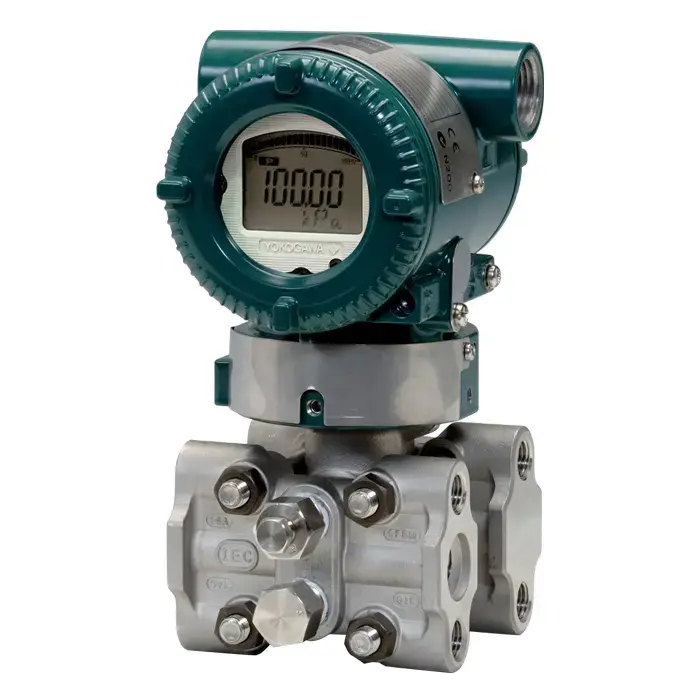
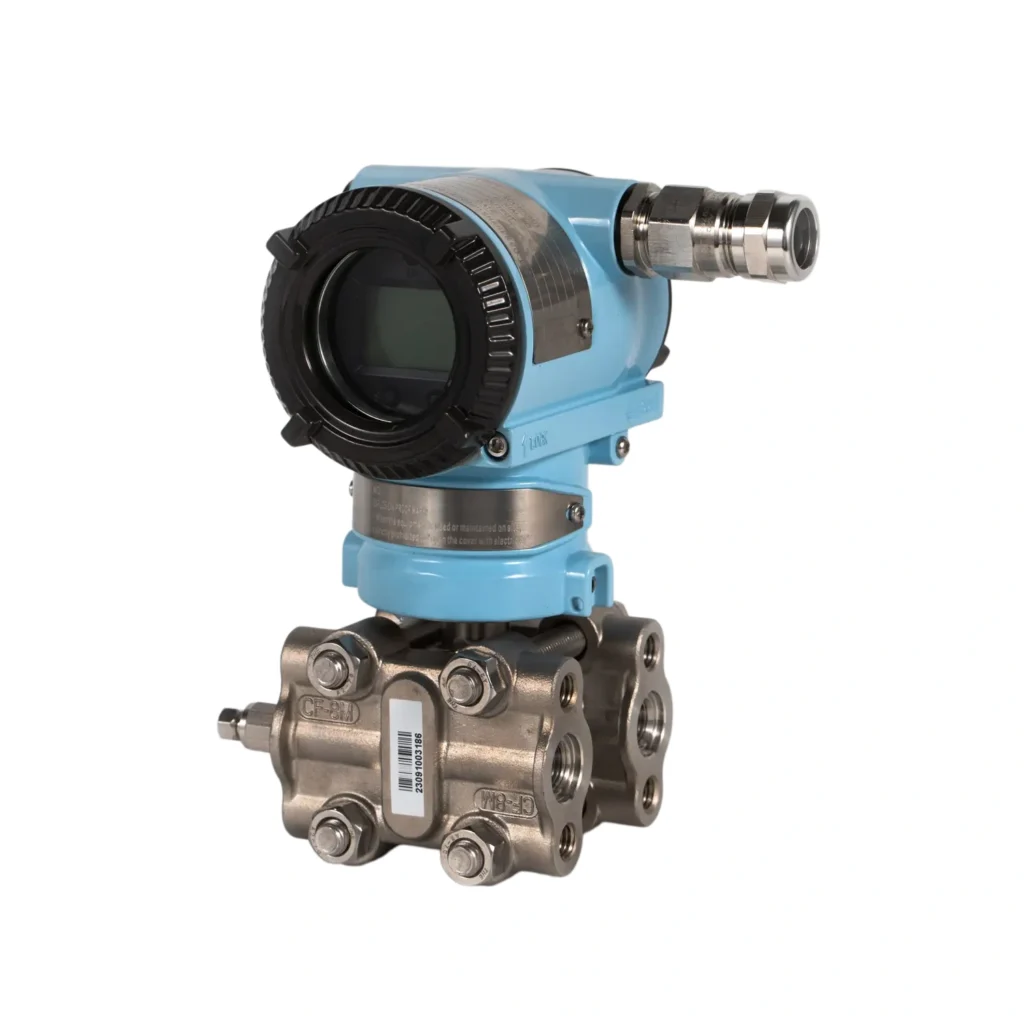
SIY Electric supplies smart differential pressure transmitters for flow, liquid level, filter differential pressure, closed tank level and industrial process monitoring. The transmitter measures the pressure difference between two points and converts the signal into 4–20 mA, HART or other communication outputs, making it suitable for PLC, DCS and automation control systems.
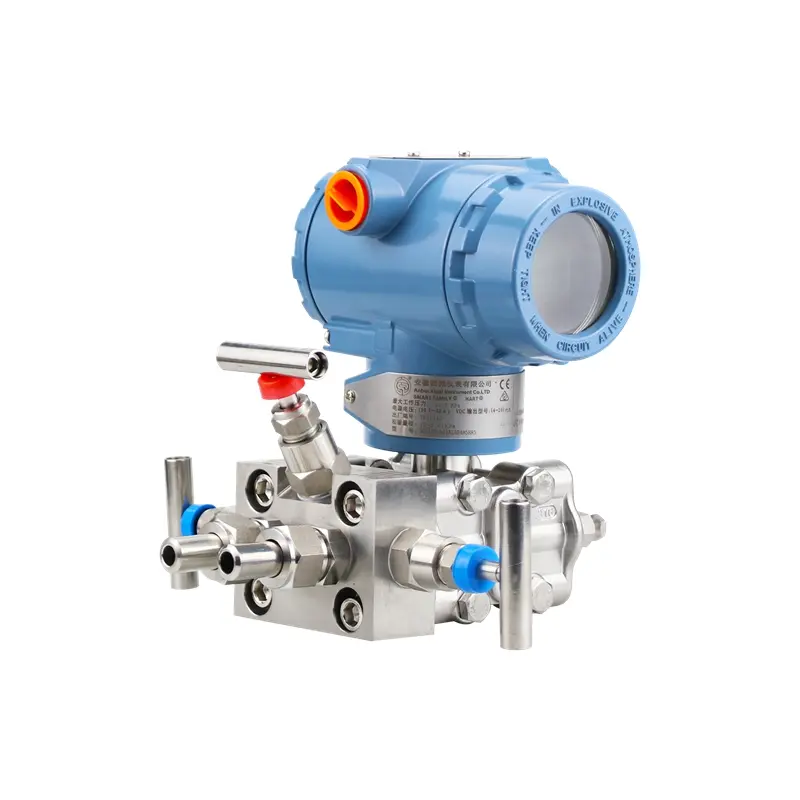
According to different working conditions, the transmitter can be used with manifolds, impulse pipes, mounting brackets, diaphragm seals and capillary remote seals. SIY Electric can provide different diaphragm materials, process connections, local displays, OEM private label options and customized configurations for clean, corrosive, high-temperature, viscous or crystallizing media.
- Pressure Type: Gauge Pressure, Absolute Pressure, Differential pressure
- Pressure Range: 0 bar to 1.5 kPa, 0 bar to 30 bar, 0 bar to 400 bar
- Accuracy: ±0.075%, ±0.2%
- Output Signal: 4–20 mA / HART
- Process Connection: 1/2 NPT, G1/2, M20×1.5 (customized available)
- Diaphragm Material: SS316L, HC-276, Tantalum, Gold-plated
- Power Supply: 12–36 VDC
- Protection Rating: IP65 / IP67
- OEM Service: Available. The transmitter can be supplied with your company name and logo on the nameplate.
- Packaging: Individual carton box with protective foam.
- Weight: Approx. 3 kg per unit.
- Port of Shipment: Shanghai or Ningbo Port, China.
- Delivery Time: 3-7 working days.
- Transportation: Air freight, sea freight, or express delivery.
- Documentation: Certificate of Conformity (COC); Inspection / Test Report; Packing List; Commercial Invoice
Common Accessories for Differential Pressure Transmitters
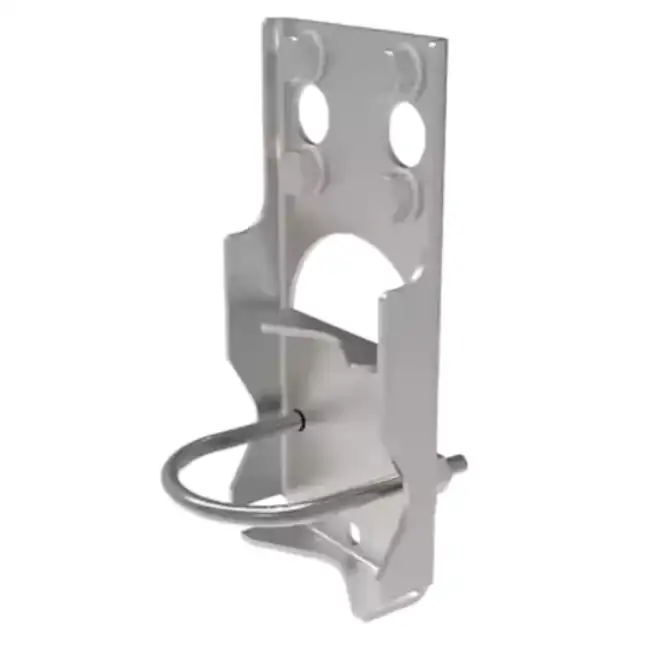
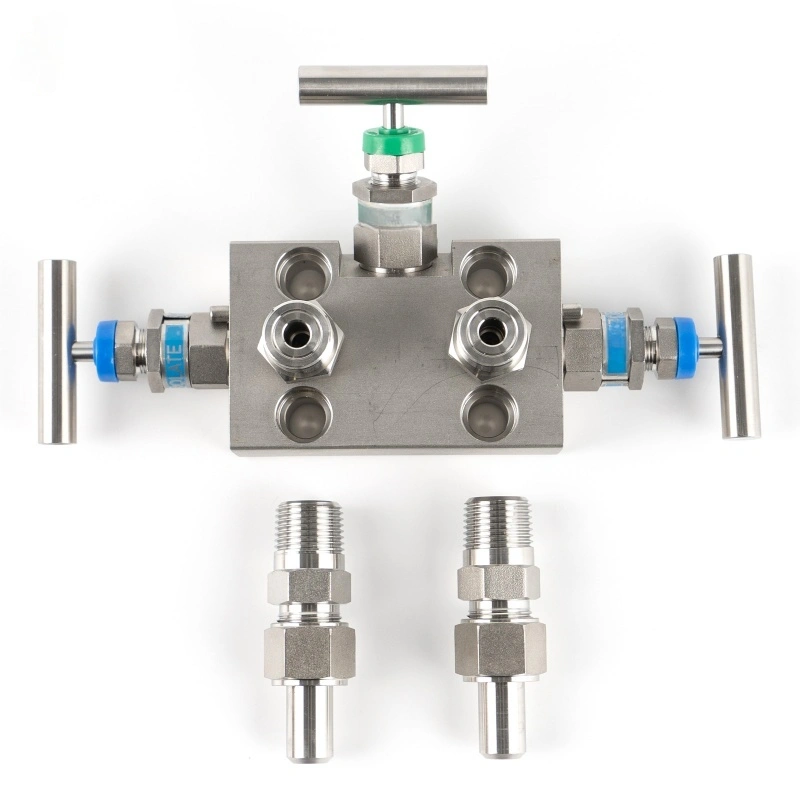
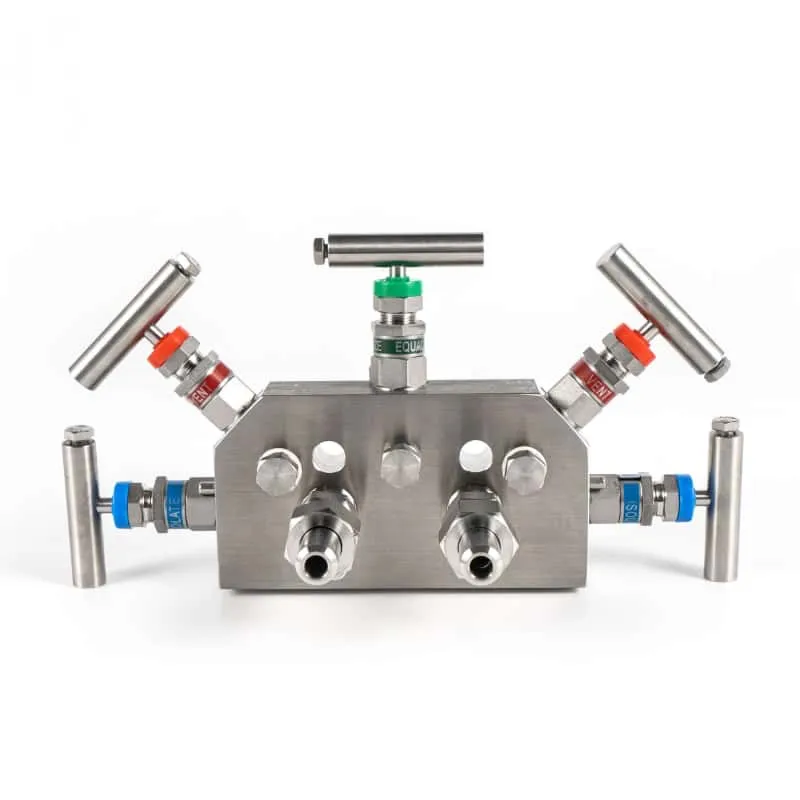
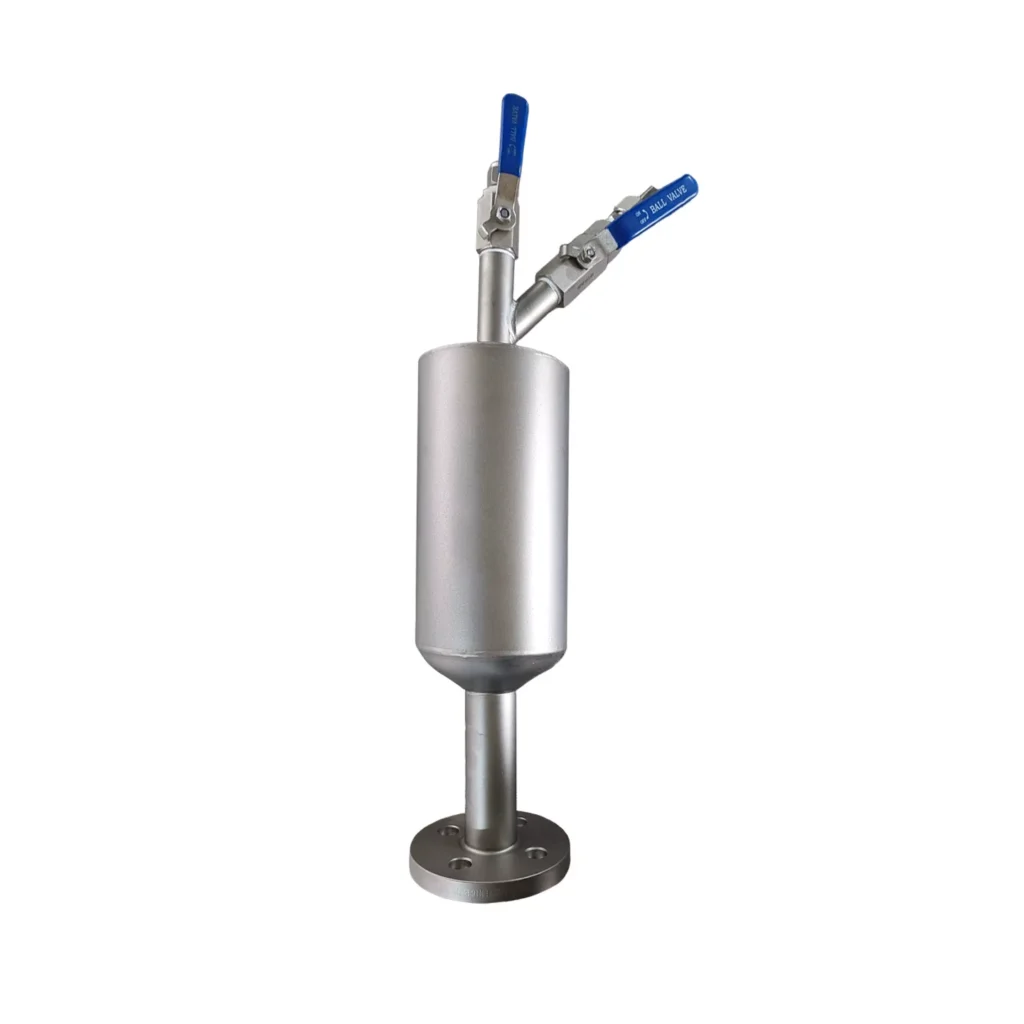
Table of Contents
Differential Pressure Transmitter Overview
1. What Is a Differential Pressure Transmitter?
A differential pressure transmitter is an industrial measuring instrument used to measure the pressure difference between two points. It detects the pressure difference between the high-pressure side and the low-pressure side, then converts that difference into a standard electrical output signal, such as 4–20 mA or HART communication, and transmits the signal to automation control systems such as PLC, DCS, and SIS.
- Pressure sensing:The pressures on the high-pressure side and low-pressure side enter the sensor chamber through impulse lines and act on the measuring diaphragm.
- Differential pressure generation:The pressures on both sides cause slight deformation of the diaphragm, generating a differential pressure signal, ΔP = Phigh − Plow.
- Signal conversion:The differential pressure value is converted into an mV electrical signal that can be recognized and processed by the control system.
- Signal output:The transmitter’s internal electronics amplify, compensate, linearize, and process the original signal, then convert it into a 4–20 mA signal for transmission to PLC, DCS, or other automation equipment.
2. Structure and Diagram of Differential Pressure Transmitter
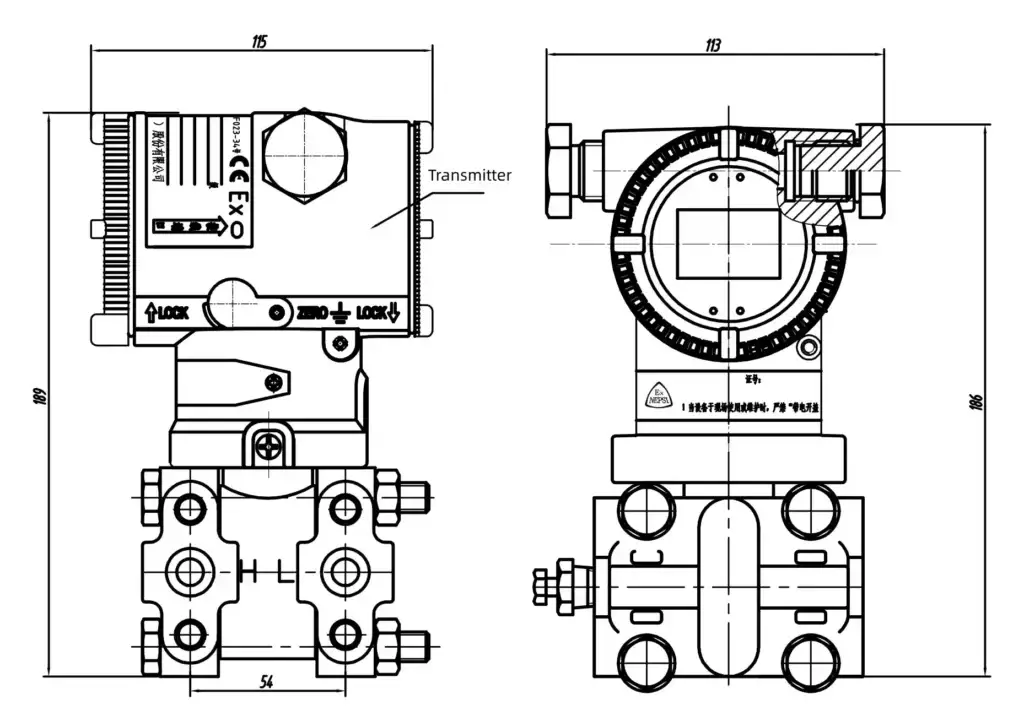
Structurally, a differential pressure transmitter introduces two pressure signals through the high-pressure (HP) side and low-pressure (LP) side at the same time, forming a differential pressure internally and completing the measurement. Although the connection method differs between a standard differential pressure transmitter and a remote seal differential pressure transmitter, their core structure is basically the same.
A differential pressure transmitter usually includes the following parts:
- Housing:Protects the internal electronics and sensor. It is usually made of cast aluminum. In corrosive environments or offshore platforms, stainless steel housing such as 316SS is often selected, usually with explosion-proof design.
- Covers:One blind cover and one cover with a glass window for easy local reading.
- High-pressure and low-pressure ports:Used to connect the high-pressure side and low-pressure side respectively. If only the high-pressure side is connected, the result is pressure measurement, which is essentially a coplanar pressure transmitter.
- Common connection methods:Threaded impulse-line connection, or installation through a 3-valve or 5-valve manifold
- Impulse lines:Used to transmit process pressure from the tapping point to the transmitter’s measuring chamber
- Isolation diaphragm:Isolates the process medium from the internal sensor, preventing corrosive, high-temperature, or viscous media from damaging the sensing element. Common materials include 316L, Hastelloy C-276, and tantalum
- Measuring diaphragm / sensor:The core sensing element. Under high and low pressure, it deforms slightly to detect differential pressure. Common types include monocrystalline silicon, capacitive, and piezoresistive sensors
- Measuring chamber and fill fluid:Internal sealed chamber, usually filled with silicone oil or inert liquid for oxygen service, to transmit pressure and ensure stable measurement
- Electronics module:Amplifies the weak signal from the sensor, compensates for temperature, linearizes it, and converts it into a standard output signal
- Output module:Outputs standard industrial signals such as 4–20 mA, HART, Modbus, or Profibus for connection to control systems
- Electrical connection:Used for wiring and signal transmission. Common sizes include M20×1.5 and 1/2-14 NPT
Display module: LCD display for local indication of differential pressure value, units, and for convenient observation, commissioning, and maintenance
3. Why Is Differential Pressure Important?
Differential pressure measurement is very important in industrial automation. In process control, a single pressure value often cannot fully reflect the operating condition, while the pressure difference between two measurement points (ΔP) can more accurately reflect fluid status, equipment performance, and system changes.
- Flow measurement:In primary elements such as orifice plates, Venturi tubes, and nozzles, fluid flow generates a pressure difference. Based on the differential pressure, flow can be calculated using Bernoulli’s principle. This is one of the most common industrial flow measurement methods.
- Level measurement:In closed vessels or tanks, liquid level can be calculated using the principle of P = ρgh by measuring the pressure difference between the upper and lower points. This is widely used in chemical plants and storage tanks.
- Equipment condition monitoring:By measuring the differential pressure across filters, heat exchangers, and pipelines, blockage, scaling, or equipment abnormalities can be identified, enabling preventive maintenance.
- System pressure balance detection:In HVAC systems, clean rooms, or gas transmission systems, differential pressure can indicate whether the system is balanced and operating stably.
- Improved accuracy and reliability:Compared with single-point pressure measurement, differential pressure measurement can effectively eliminate interference from ambient pressure, static pressure, or system pressure, making the results more stable and accurate.
- Suitable for complex conditions:Under high temperature, high pressure, corrosive media, or closed systems, differential pressure measurement can achieve indirect measurement, such as with remote diaphragm seals, improving safety and instrument life.
4. Working Principles of Differential Pressure Transmitters
According to the internal sensor structure and measurement method, differential pressure transmitters can mainly be divided into several principle types. Different principles vary in accuracy, stability, anti-interference capability, and suitability for different working conditions.
- Monocrystalline silicon resonant type:
This high-end technology uses a monocrystalline silicon resonant sensor. Pressure changes the vibration frequency of the silicon beam to measure differential pressure.
Features: High accuracy, high stability, low long-term drift, strong overpressure resistance
Applications: High-end process control, petrochemical, power plants, custody-transfer or metering-grade flow measurement - Capacitive type:
Differential pressure causes displacement of the capacitive diaphragm, changing the capacitance value and thus measuring differential pressure.
Features: High sensitivity, suitable for low differential pressure measurement, good stability
Applications: Level measurement, low DP measurement, clean rooms, HVAC systems - Piezoresistive type:
Uses the semiconductor strain effect. Pressure changes cause resistance changes, which are converted into electrical signals.
Features: Simple structure, lower cost, fast response
Applications: General industrial applications, water treatment, OEM equipment - Diffused silicon type:
Based on the silicon piezoresistive principle, with a measuring bridge formed by diffusion technology. This is currently one of the most widely used types.
Features: High cost performance, mature technology, suitable for low- to mid-range markets
Applications: Water treatment, general industrial control, OEM equipment
Strain gauge type:
Measures differential pressure through resistance changes in metallic strain gauges under force.
Features: Strong structure, high shock resistance, suitable for high-pressure applications
Applications: Hydraulic systems, high-pressure measurement, construction machinery
5. What Can a Differential Pressure Transmitter Measure?
A differential pressure transmitter is not only used to measure differential pressure (ΔP), but can also measure flow, level, density, interface, and other parameters through different measurement methods and calculation models. It is one of the most flexible instruments in industrial automation systems.
- Differential pressure measurement: The basic function, directly measuring the pressure difference between two points, commonly used for equipment condition monitoring and system DP control.
- Flow measurement: Used with primary elements such as orifice plates, nozzles, and Venturi tubes. By measuring differential pressure and applying square root extraction, the fluid flow rate can be calculated.
- Level measurement: Measures the static pressure difference generated by the liquid column and calculates level height based on density (ρ), suitable for closed tanks or pressurized vessels.
- Density measurement: Under a known height, changes in differential pressure can be used to determine medium density, often used in chemical process control.
- Interface measurement: Used to determine the interface level between two liquids of different densities, such as oil-water interface.
- Pressure loss monitoring: Measures the pressure difference across equipment or pipelines to analyze resistance changes and evaluate operating condition.
Indirect velocity calculation: When pipe cross-sectional area is known, velocity can be inferred from differential pressure, which is also the basis of flow calculation.
Differential Pressure Transmitter Product Technology
1. Technical Specifications of Differential Pressure Transmitters
| SIY3051C Differential, Gauge and Absolute Pressure Transmitter Selection Guide | ||
| 10 | Transmitter Type | |
| D | Differential Pressure Transmitter | |
| G | Gauge Pressure Transmitter | |
| A | Absolute Pressure Transmitter | |
| 20 | Accuracy | |
| -H | Basic error ±0.075% | |
| -N | Basic error ±0.1% | |
| 30 | Measuring Range | |
| 3051CD Differential Pressure | ||
| 3 | -6 kPa to 6 kPa (-60 mbar to 60 mbar) | |
| 4 | -40 kPa to 40 kPa (-400 mbar to 400 mbar) | |
| 5 | -250 kPa to 250 kPa (-2.5 bar to 2.5 bar) | |
| 6 | -1 MPa to 1 MPa (-10 bar to 10 bar) | |
| 7 | -3 MPa to 3 MPa (-30 bar to 30 bar) | |
| 9 | Other agreed measuring ranges | |
| 3051CG Gauge Pressure | ||
| 3 | -6 kPa to 6 kPa (-60 mbar to 60 mbar) | |
| 4 | -40 kPa to 40 kPa (-400 mbar to 400 mbar) | |
| 5 | -100 kPa to 250 kPa (-1 bar to 2.5 bar) | |
| 6 | -0.1 MPa to 1 MPa (-1 bar to 10 bar) | |
| 7 | -0.1 MPa to 3 MPa (-1 bar to 30 bar) | |
| 8 | -0.1 MPa to 10 MPa (-1 bar to 100 bar) | |
| 9 | -0.1 MPa to 21 MPa (-1 bar to 210 bar) | |
| 10 | -0.1 MPa to 40 MPa (-1 bar to 400 bar) | |
| 3051CA Absolute Pressure | ||
| 4 | 0 to 40 kPa (0 to 0.4 bar) | |
| 5 | 0 to 250 kPa (0 to 2.5 bar) | |
| 6 | 0 to 3 MPa (0 to 30 bar) | |
| 9 | Other agreed measuring ranges | |
| Note: 3051CD static pressure: 16 MPa / 25 MPa / 40 MPa | ||
| 40 | Communication Protocol | |
| H | 4–20 mA + HART5/HART6/HART7 communication protocol | |
| M | RS485 Modbus communication protocol | |
| 50 | Diaphragm Material | |
| 2 | 316 stainless steel | |
| 3 | Hastelloy C-276 | |
| 4 | Monel | |
| 5 | Tantalum(only applicable to 3051CD and 3051CG, range codes 4–9; not applicable to 3051CA) | |
| 6 | Gold-plated | |
| 0 | Other diaphragm material as agreed by customer | |
| 60 | Process Connection | |
| N1 | 1/2 NPT female thread | |
| N2 | 1/2 NPT male thread | |
| N3 | 1/4 NPT female thread | |
| N4 | 1/4 NPT male thread | |
| M1 | M20 × 1.5 female thread | |
| M2 | M20 × 1.5 male thread | |
| G1 | G1/2 male thread | |
| G2 | G1 thread | |
| X | Other connection type as agreed | |
| 70 | Wetted Seal Material | |
| N | Nitrile rubber (NBR) | |
| F | Fluoroelastomer (FKM) | |
| P | PTFE (Polytetrafluoroethylene) | |
| 80 | Fill Fluid | |
| 1 | Silicone oil | |
| 2 | Fluorinated oil | |
| 90 | Indicator | |
| N | None | |
| L | LCD display (-20°C) | |
| O | OLED display (-40°C) | |
| 100 | Housing Material / Electrical Connection | |
| B | Aluminum alloy housing, electrical connection M20 × 1.5 | |
| S | Aluminum alloy housing, electrical connection 1/2 NPT | |
| C | Stainless steel housing, electrical connection M20 × 1.5 | |
| T | Stainless steel housing, electrical connection 1/2 NPT | |
| 110 | Connection Accessories | |
| 3M | 3-valve manifold | |
| 5M | 5-valve manifold | |
| 2F | 1/2 NPT oval flange | |
| 120 | Mounting Bracket Option | |
| N | None | |
| 1 | Galvanized carbon steel bracket | |
| 2 | Stainless steel bracket | |
| 130 | Hazardous Area Certification | |
| E5 | Intrinsically safe Ex ia IIC T4–T6 | |
| K5 | Flameproof Ex d IIC T4–T6 | |
| 140 | Other Options | |
| Q4 | Factory calibration certificate | |
| Q3 | Third-party calibration certificate | |
| V6 | Suitable for full vacuum service | |
| J1 | NAMUR NE43 standard | |
| J3 | Built-in lightning protection module | |
| T1 | Oil-free and degreasing treatment | |
| C1 | SIL3 certification (only for HART communication type) | |
| Note: Please contact the sales representative for special options. | ||
2. Selection Guide for Differential Pressure Transmitters
How should a differential pressure transmitter be selected? In essence, it is about choosing the most suitable material, range, structure, and signal output according to actual working conditions.
The core of selection is:
Understand medium characteristics → determine differential pressure and static pressure → consider temperature influence → select a proper range → match the installation connection
At minimum, the following parameters should be confirmed:
1). Medium
The type of medium must be identified clearly, whether it is gas, liquid, or steam, and whether it is corrosive, highly viscous, or prone to crystallization.
Select diaphragm material according to the medium:
- General media:316L
- Corrosive media:HC-276, Tantalum
For highly viscous, crystallizing, or easily blocked media, a diaphragm seal type differential pressure transmitter, such as a 1199 remote seal system, is recommended to avoid impulse line blockage.
2). Pressure
A differential pressure transmitter measures not only differential pressure (ΔP), but also withstands static pressure.
The following must be confirmed:
- Maximum differential pressure
- Static pressure value
- Possible overpressure
Note: High static pressure or sudden pressure surges may cause diaphragm damage, zero drift, or even instrument failure.
3). Temperature
The process temperature range must be confirmed, especially under high- or low-temperature conditions.
Typical temperature range for standard differential pressure transmitters:
-20°C to 80°C
When temperature is high, the following measures should be taken:
- Use impulse lines for heat dissipation
- Or use a capillary remote seal structure
High temperature may cause fill fluid expansion and thus affect measurement accuracy.
4). Range
Range is the upper and lower measurement limit of the differential pressure transmitter.
Recommended principle:
- Range ≈ 1.5 to 2 times the maximum working differential pressure
Avoid:
- Range too small:Cannot cover actual working condition
- Range too large:Lower resolution and reduced measurement accuracy
For flow measurement, square root extraction and turndown ratio should also be considered.
5). Connection
A suitable connection type should be selected according to field installation conditions.
Common configurations:
- Standard connection:1/4-18 NPT for most differential pressure transmitters
- Can be converted through the manifold to 1/2 NPT, flange connection, etc.
- Common impulse line size: φ14×2
Note:
- High-pressure side (HP) and low-pressure side (LP) connections must be correct
- Impulse line lengths and routing should be as symmetrical as possible
3-valve or 5-valve manifold installation should match site requirements
3. What Accessories Are Required for a Differential Pressure Transmitter?
In practical applications, differential pressure transmitters usually require related installation accessories to achieve correct pressure tapping, stable measurement, and easy maintenance.
Common accessories include:
- Impulse fittings:Used to connect the differential pressure transmitter with the impulse line, commonly 1/4 NPT to φ14×2, ensuring reliable sealing and preventing leakage
- Impulse lines:Used to connect the tapping point and the differential pressure transmitter, transmitting the medium to the transmitter measuring chamber, commonly φ14×2
- Mounting bracket:Unlike threaded direct-mount pressure transmitters, differential pressure transmitters cannot be directly fixed to the pipeline. In most cases, a mounting bracket is required to fix the transmitter on a 2-inch pipe
- 3-valve manifold:Used for basic control and protection of the differential pressure transmitter, consisting of a high-pressure shutoff valve, a low-pressure shutoff valve, and one equalizing valve. It is used to balance pressure on both sides, prevent shock, and facilitate maintenance
- 5-valve manifold:Also used for control and protection, but compared with a 3-valve manifold, it adds two vent/drain valves, making venting, draining, online calibration, and maintenance more convenient
- Shutoff valve:Differential pressure transmitters usually also require shutoff valves. A 3-valve manifold cannot completely replace a shutoff valve, which is commonly installed at the tapping point
- Condensate pot:Used in steam or high-temperature gas measurement systems to reduce the temperature of the medium entering the differential pressure transmitter
- Anti-blocking sampling device: Used for media prone to blockage or containing particles, preventing plugging of the tapping point
Installation and Maintenance of Differential Pressure Transmitters
1. How to Install a Differential Pressure Transmitter?
Correct installation directly affects measurement accuracy and long-term stability. In practical engineering, a differential pressure transmitter cannot be directly mounted on the process pipeline like a direct-mount pressure transmitter. Instead, a complete measurement system is formed through the pressure tapping point, shutoff valves, impulse lines, and a 3-valve or 5-valve manifold.
Among them, the shutoff valve plays a key role in isolation and protection, but is often overlooked in practice.
Reasonable installation not only ensures accurate measurement, but also facilitates later maintenance, calibration, and inspection.
1). Typical installation structure:
Process pipeline or vessel
│
Pressure tapping point
│
Shutoff valve (high-pressure side)
Shutoff valve (low-pressure side)
│
Impulse lines
│
3-valve manifold / 5-valve manifold
│
Differential pressure transmitter
2). Installation steps:
- Check whether the transmitter model is correct and whether the nameplate information matches the working condition.
- Install two pressure tapping points on the pipe or equipment: high-pressure side (H) and low-pressure side (L).
- Install shutoff valves at both tapping points for isolation and future maintenance.
- Connect the shutoff valves and the transmitter through impulse lines. Under normal conditions, impulse lines should not be too long. If the temperature is high, the length should be increased appropriately and bends may be used for heat dissipation.
- Install the 3-valve or 5-valve manifold on the transmitter and ensure good sealing between the manifold and the transmitter.
- Fix the differential pressure transmitter to a 2-inch pipe using the mounting bracket
- Connect the impulse lines to the manifold fittings.
- Check sealing performance.
- Perform venting or draining to ensure there is no air or liquid trapped in the impulse lines.
- Wire the transmitter correctly, ensuring proper positive and negative connections.
- Use a HART communicator or the buttons on the transmitter to perform zero adjustment, check the zero point, and confirm whether the output is 4 mA.
- After zero adjustment, the transmitter can be put into operation.
2. How to Calibrate a Differential Pressure Transmitter?
After long-term use, a differential pressure transmitter may develop some measurement deviation and should be calibrated.
Calibration usually requires:
Pressure calibrator, pressure source, ammeter, and HART communicator
- Close the shutoff valves and remove the differential pressure transmitter
- Connect the calibration equipment
- Check the zero point. When differential pressure is 0, the output should be 4 mA
- Apply standard pressure using the calibrator and check the output value
- If there is an error, adjust the zero point and reset the range
- Recheck
- Reinstall the transmitter on the equipment or pipeline
Note: In industrial field applications, only zero adjustment is usually performed. Full calibration is generally carried out by the manufacturer or a third-party laboratory.
Differential Pressure Transmitter Comparison
1. Differential Pressure Transmitter vs Direct-Mount Inline Pressure Transmitter
An inline pressure transmitter is used to measure the pressure at one point, while a differential pressure transmitter is used to measure the relationship between two points.
Differential pressure transmitter:
- Can measure differential pressure, gauge pressure, and absolute pressure
- Connected by impulse lines and mounted on a 2-inch pipe
- Can be used with primary flow elements for flow measurement
- Installation is more complicated
- Cost is higher
Inline Pressure transmitter:
- Can only measure gauge pressure and absolute pressure
- Can be directly installed on the pipeline or equipment
- Cost is lower
In theory, two pressure transmitters can also be used to realize differential pressure measurement, but accuracy and real-time performance are usually inferior to a dedicated differential pressure transmitter.
2. Differential Pressure Transmitter vs Diaphragm Seal Differential Pressure Transmitter
Structurally, the differential pressure transmitter is the core component of a diaphragm seal differential pressure transmitter. A diaphragm seal differential pressure transmitter consists of a differential pressure transmitter plus one or two diaphragm seal systems.
Differential pressure transmitter:
- Simple structure, fast response
- High-pressure and low-pressure sides act directly on the isolation diaphragm, so signal transmission is more direct
- Relatively simple installation and convenient maintenance
- Suitable for normal temperature, normal pressure, clean or mildly corrosive media
- Stable accuracy and less affected by ambient temperature changes
- Lower cost and better cost performance
Diaphragm seal differential pressure transmitter:
- Pressure is transmitted through diaphragm seals and capillaries, and the transmitter body does not directly contact the process medium
- Suitable for high-temperature media, such as steam and hot oil
- Suitable for strongly corrosive media, such as acids and alkalis
- Suitable for highly viscous, crystallizing, or easily blocked media
- Can be used in hygienic applications, such as food and pharmaceutical industries
- Can effectively protect the sensor and extend service life
- Higher price and more complex structure
3. Differential Pressure Transmitter vs Differential Pressure Sensor
A differential pressure sensor is a differential pressure measurement device modified from a 2088-type pressure transmitter or a compact pressure transmitter.
Choose a differential pressure transmitter:
- Specially designed for differential pressure measurement, with a more reasonable structure based on symmetrical dual-side measurement
- Has independent high-pressure side (H) and low-pressure side (L) ports
- High measurement accuracy and good stability, suitable for long-term operation
- Supports standard industrial output signals such as 4–20 mA, HART, and RS485
- Can be used for complex process measurements such as flow and level
- Suitable for industrial automation systems such as PLC / DCS
- Supports standard installation methods such as 3-valve and 5-valve manifolds
Choose a differential pressure sensor (compact modified type):
- Usually realized by combining two pressure sensors or compact transmitters
- Simple structure, small size, and flexible installation
- Lower cost, suitable for limited budgets or simple applications
- Lower accuracy, cannot perform proper temperature compensation, affecting long-term stability
- Not suitable for flow measurement applications
- Faster response speed
OEM Service, Price, and Quotation Information
1. Does the Differential Pressure Transmitter Support OEM / Private Label Service?
Yes.
Custom production can be carried out according to customer requirements. We can also print the customer’s logo and company name on the product nameplate to help customers build their own branded product line.
Siyelectric has focused on the research, development, and manufacturing of differential pressure transmitters for more than 10 years. With rich experience in industrial instrumentation production, we have long provided stable and reliable pressure measurement products to customers around the world. The company has mature production processes, strict quality control procedures, and a complete supply chain system. Our products are widely used in water treatment, petrochemical, energy, power generation, machinery, and automation control industries.
For OEM / ODM cooperation, we can provide:
- Private label service (logo / nameplate customization)
- Model code customization
- Appearance and packaging customization
- Parameter and configuration customization
- Product manual and label customization
All products undergo strict performance testing and calibration before shipment to ensure measurement accuracy and long-term stability. With reliable product quality, stable lead times, and professional technical support, we have already established long-term OEM cooperation with many equipment manufacturers, engineering companies, and instrument distributors.
If you are looking for a stable and reliable pressure transmitter manufacturer or OEM supplier, please feel free to contact us. We will provide a professional product solution according to your requirements.
Please send us your working conditions or data sheet, and we can provide selection support and OEM solutions.
2. Price of Differential Pressure Transmitters
For standard-range differential pressure transmitters with 316L wetted parts and 0.075% accuracy, the price is usually around USD 245 per unit. The standard configuration includes a carbon steel mounting bracket and a stainless steel explosion-proof cable gland.
Please send your data sheet or detailed operating conditions to our email, and we will provide you with a quotation within 1 hour.