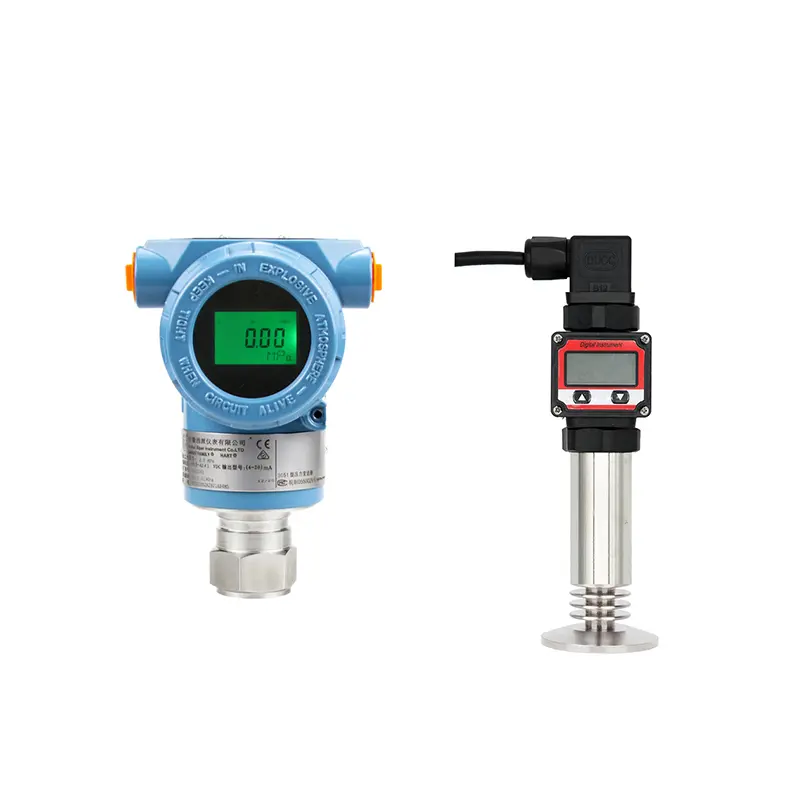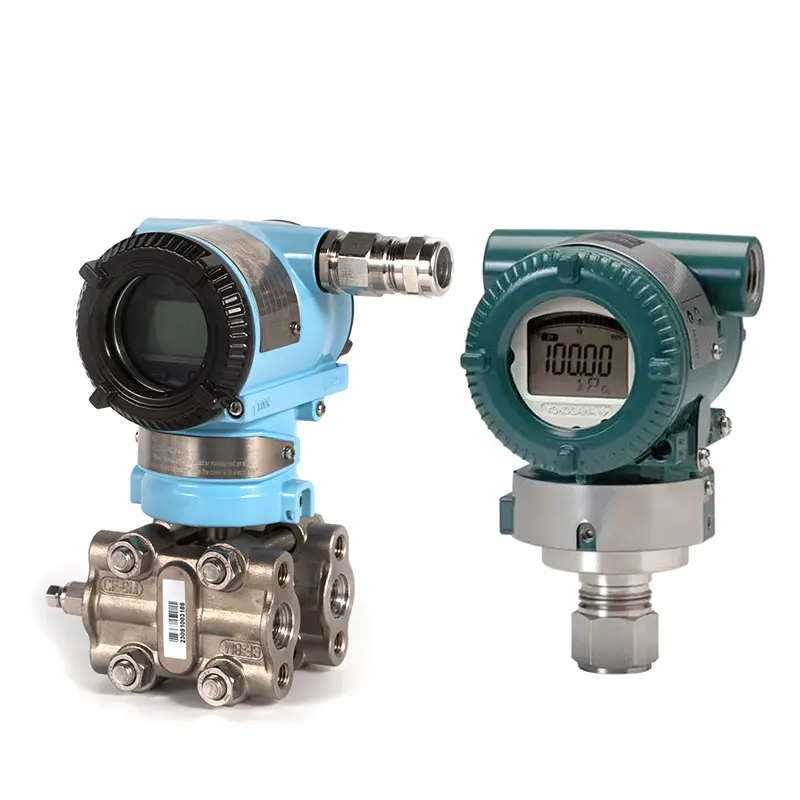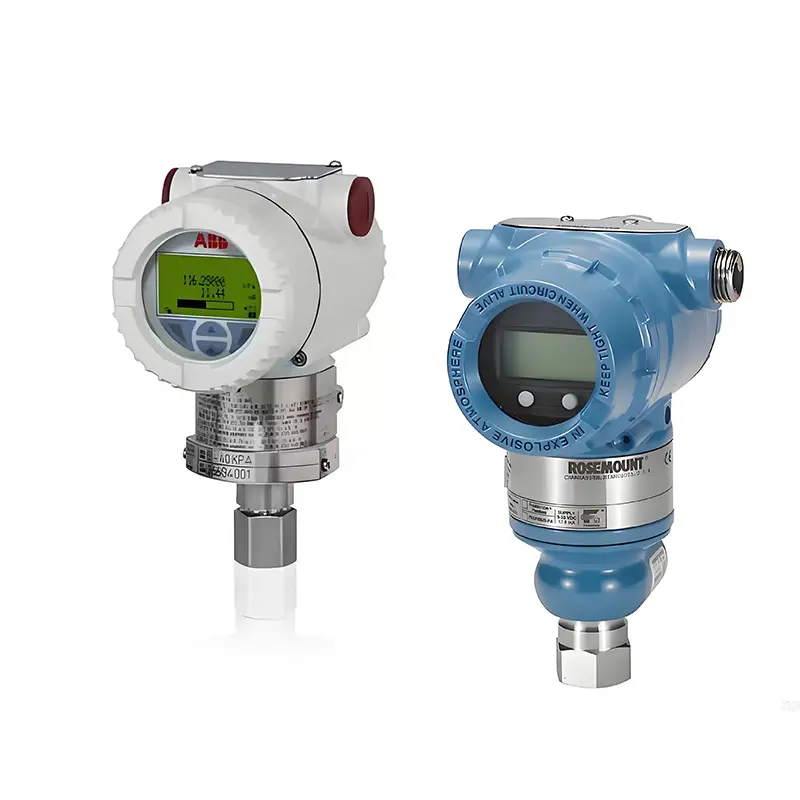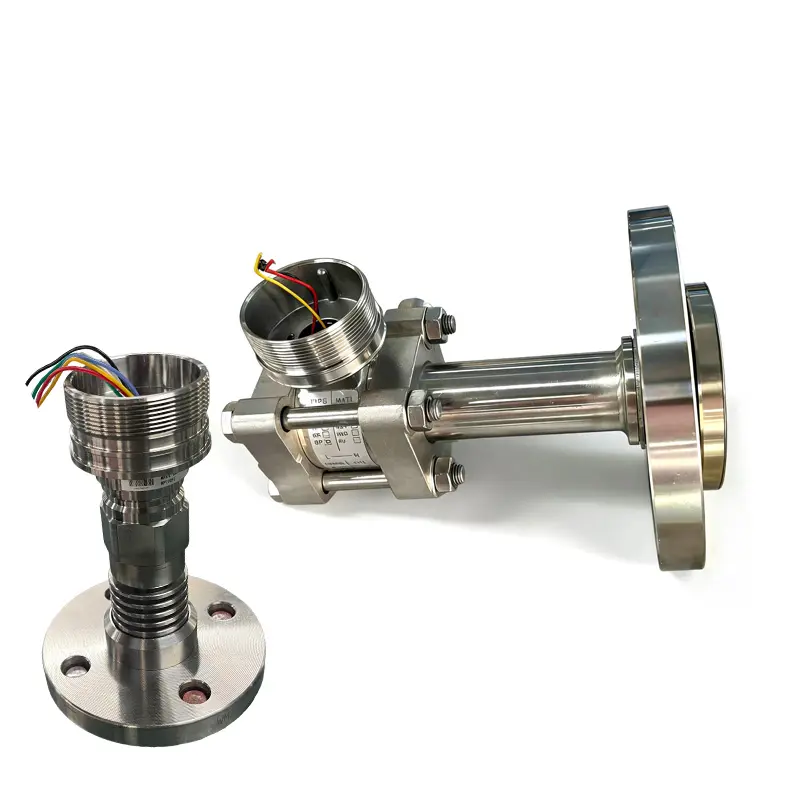
2-wire vs 3-wire pressure transmitter connection is mainly about how the transmitter receives power and sends its output signal. This is a practical wiring question, not only a product specification. If the wiring type is misunderstood, the transmitter may have no output, wrong output, or fail to match the PLC input.
Most industrial pressure transmitters use 2-wire 4–20 mA output. Some compact pressure sensors and OEM devices use 3-wire connections, especially when the output is voltage or when the power and signal circuits are separated.
What Is a 2-Wire Pressure Transmitter?
A 2-wire pressure transmitter uses the same two wires for power supply and signal transmission. The transmitter is connected in a current loop. The loop current changes according to pressure, usually from 4 mA to 20 mA.
This structure is common in process plants because it is simple, reliable, and suitable for long-distance transmission. It is widely used with PLC, DCS, display meters, recorders, and signal isolators.
A 2-wire transmitter is usually preferred when the system uses standard industrial analog input and needs stable field signal transmission.
What Is a 3-Wire Pressure Transmitter?
A 3-wire pressure transmitter usually separates power supply and signal output. It often has positive power, negative power, and signal output wires. This structure is common in compact sensors, machine equipment, and some voltage output applications.
For example, a 3-wire transmitter may provide 0–10 V or 0.5–4.5 V output. Some 3-wire devices can also provide current output, but the wiring logic is different from a 2-wire loop.
This type is often used when the transmitter is installed inside equipment and connected directly to a controller.
Main Selection Difference
The most important question is not which wiring type is better. The real question is which wiring type matches the control system.
Use 2-wire when:
- The system uses 4–20 mA analog input.
- Long-distance signal transmission is required.
- The transmitter is installed in the field.
- The application follows common industrial wiring practice.
Use 3-wire when:
- The controller expects voltage output.
- The transmitter is installed inside equipment.
- The machine wiring design already uses 3-wire sensors.
- Power and signal wiring are separated by design.
Before ordering, buyers should check the PLC input type, power supply, output signal, and wiring diagram. A 2-wire transmitter cannot always replace a 3-wire sensor directly.
Common Mistake
A common mistake is buying a 3-wire voltage output transmitter when the PLC input only accepts 4–20 mA. Another mistake is wiring a 2-wire transmitter as if it had separate power and signal terminals. Both can cause signal failure.
If replacing an old transmitter, a photo of the terminal wiring or old label can help avoid mistakes.
Conclusion
2-wire and 3-wire pressure transmitter connections are used in different systems. A 2-wire transmitter is common for 4–20 mA industrial loops. A 3-wire transmitter is common for compact sensors and equipment applications. The correct choice depends on output signal, PLC input, power supply, and wiring design.
SIY Electric can help buyers match pressure transmitters with 2-wire or 3-wire wiring requirements for PLC, DCS, and OEM equipment systems.