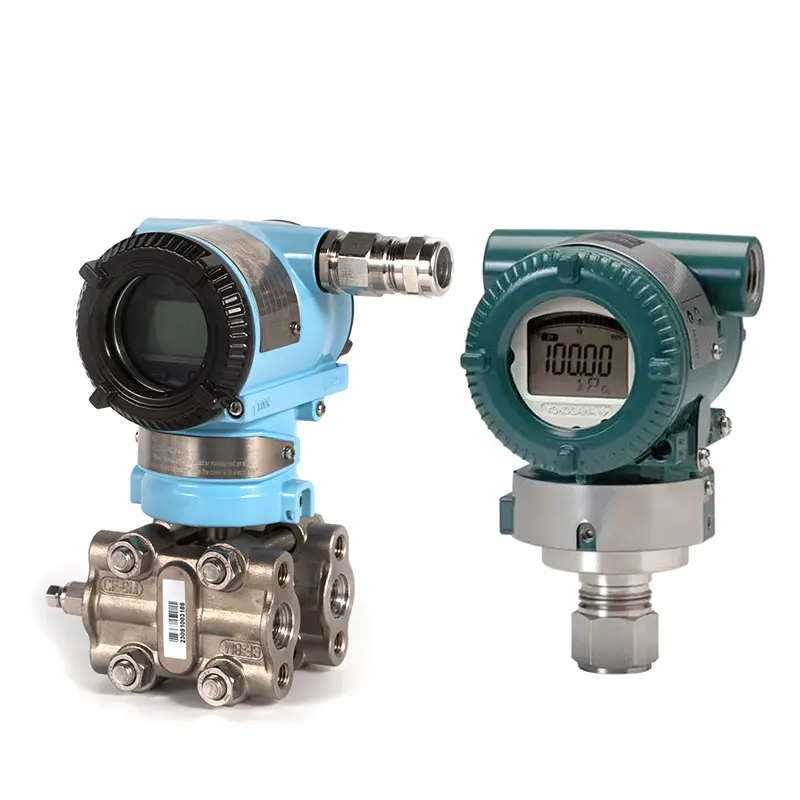
Differential pressure flow measurement works by using a DP transmitter to measure the pressure drop created by a primary flow element. The transmitter does not measure flow directly. It measures differential pressure, and the flow value is calculated from that pressure difference.
This method is widely used with orifice plates, venturi tubes, flow nozzles, and other restriction devices. It is common in liquid, gas, and steam flow measurement.
Basic Working Principle
When fluid passes through a restriction in the pipe, the flow velocity changes and a pressure difference is created between the upstream and downstream sides. A DP transmitter measures this pressure difference.
As flow increases, the differential pressure increases. The relationship is not linear. Flow is related to the square root of differential pressure. This is why square-root extraction is often needed in DP flow measurement.
The square-root calculation may be done in the transmitter, PLC, DCS, flow computer, or other control device. It should only be done once. If both the transmitter and PLC apply square-root extraction, the flow signal will be wrong.
What the DP Transmitter Needs to Match
The DP transmitter range should come from the flow calculation, not from guesswork. The primary element design decides what DP value corresponds to the maximum flow.
Before selecting the transmitter, buyers should confirm the fluid, pipe size, flow range, operating pressure, temperature, primary element type, and designed differential pressure.
Static pressure is also important. A DP transmitter may measure a small pressure difference while both sides are under high line pressure. The transmitter must withstand the system static pressure.
Installation Matters
DP flow measurement depends heavily on installation. The high-pressure and low-pressure impulse lines should connect to the correct tapping points. The impulse line layout must match the medium.
For liquid service, avoid trapped gas. For gas service, avoid trapped liquid. For steam service, condensate legs and heat protection must be handled correctly.
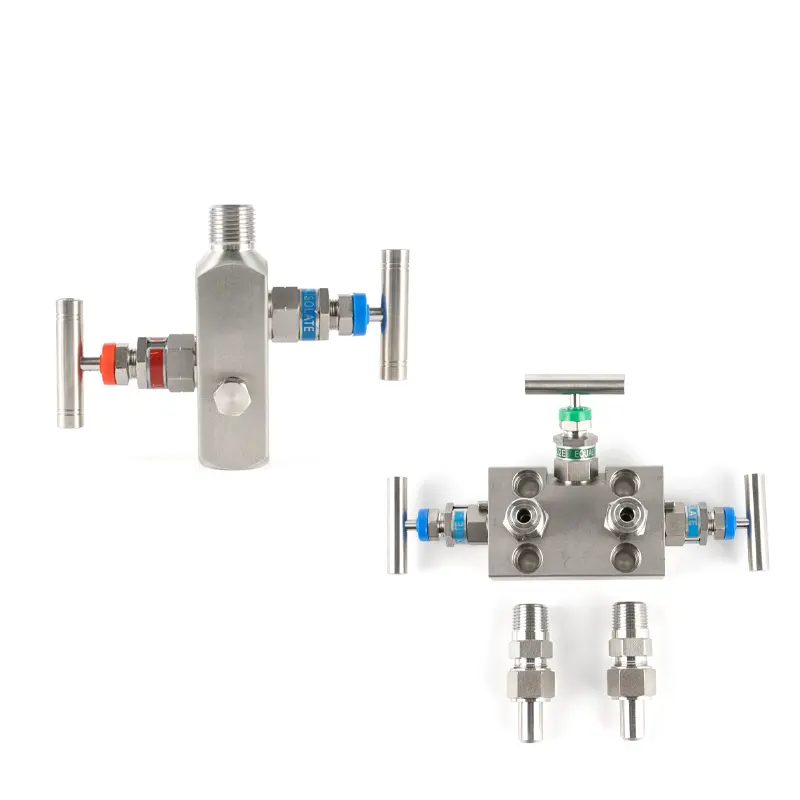
A manifold is usually used for isolation, equalization, and maintenance. Poor impulse line installation can make a correct transmitter give bad flow readings.
When DP Flow Measurement Is Useful
DP flow measurement is useful when the process already uses orifice plates or other primary elements, when the plant is familiar with DP flow systems, or when the application needs a robust and widely accepted flow measurement method.
It is not always the lowest-maintenance method. If the medium is dirty, sticky, or likely to block impulse lines, other flow technologies or remote seal solutions may need to be considered.
Conclusion
Differential pressure flow measurement uses a DP transmitter to measure pressure drop across a primary element, then converts that DP into flow. Correct selection depends on flow calculation, DP range, static pressure, square-root handling, impulse line installation, and medium condition.
SIY Electric can help select DP transmitters for orifice plate flow, steam flow, gas flow, liquid flow, and pressure differential flow applications.