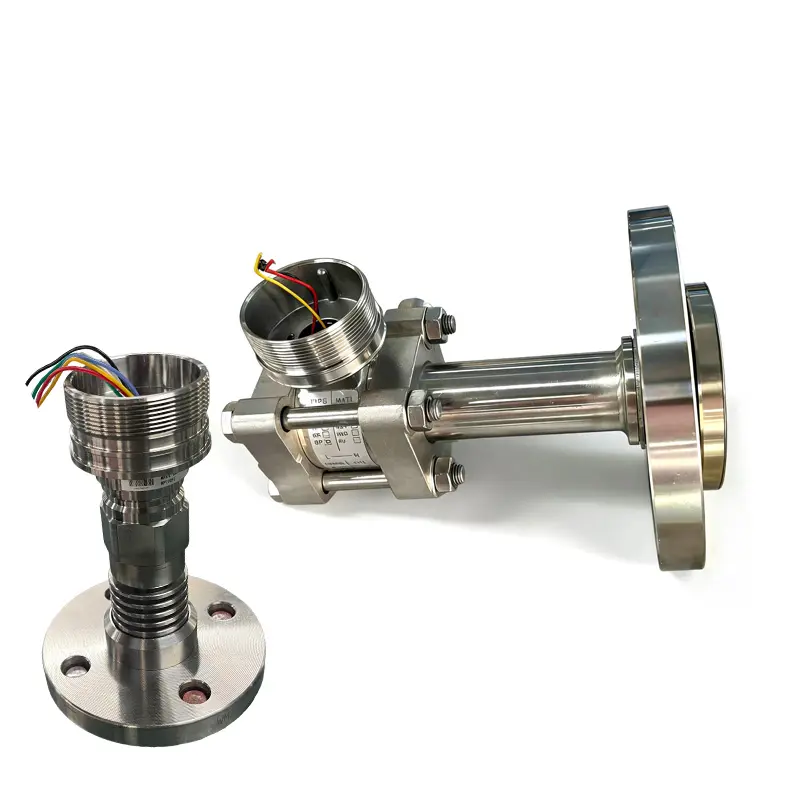
Capillary length affects DP level transmitter accuracy because the fill fluid, ambient temperature, response time, and installation height all become part of the measurement system. A capillary is not just a flexible connection. It is part of the pressure transmission path between the diaphragm seal and the transmitter body.
For single flange capillary DP level transmitters, capillary length must be long enough for installation, but not longer than necessary. Choosing a longer capillary “just to be safe” can create slower response and more temperature influence.
Why Longer Is Not Always Better
A longer capillary gives more freedom for mounting the transmitter body, but it also increases the volume of fill fluid in the system. This can affect how quickly pressure changes are transmitted and how strongly ambient temperature changes influence the signal.
This does not mean long capillaries cannot be used. It means they should be selected for a reason. If the transmitter only needs to be moved a short distance from the tank nozzle, an unnecessarily long capillary may reduce performance without improving installation.
What Accuracy Can Be Affected By
Capillary length works together with other site factors. The final accuracy and stability depend on the whole installation, not the capillary alone.
Important influences include:
- Ambient temperature around the capillary
Temperature changes can affect fill fluid behavior. - Height difference
The fill fluid column may create zero offset, especially in level measurement. - Fill fluid type
Different fill fluids behave differently under temperature and pressure changes. - Measuring range
Low ranges are more sensitive to small installation effects. - Capillary protection
Bending, crushing, or vibration can create mechanical risk.
How to Choose Capillary Length
The best capillary length is usually the shortest length that allows safe installation, easy maintenance, and proper transmitter mounting. Buyers should provide the distance between the tank nozzle and planned transmitter position instead of simply choosing a standard long length.
For level applications, the planned height difference should also be provided before calibration. If the transmitter is moved after calibration, the zero point may need to be checked again.
Conclusion
Capillary length can affect DP level transmitter accuracy through response time, temperature influence, fill fluid behavior, and installation height. Buyers should avoid unnecessary capillary length and provide the real installation distance before ordering.
SIY Electric can help review capillary length, mounting position, fill fluid, and calibration requirements for single flange capillary DP level transmitters.