pressure transmitter shop
Flushing Ring
shop

pressure transmitter shop
Flushing Ring
shop
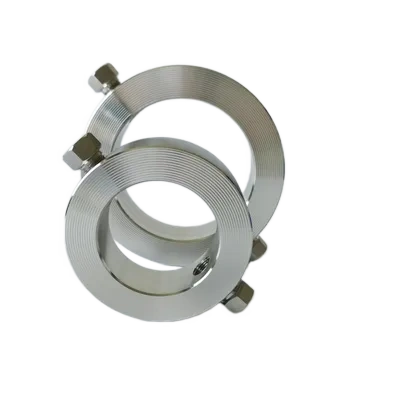
The Flushing Ring is an accessory used with flanged pressure transmitters, diaphragm seal pressure transmitters, and flanged differential pressure level transmitters. It is installed between the diaphragm seal flange and the process flange to provide flushing, draining, venting, and calibration access.
It is especially useful for viscous, crystallizing, corrosive, dirty, or easily blocked media, helping operators clean the diaphragm seal area and maintain stable pressure or level measurement without frequently removing the transmitter.
The SIYelectric Flushing Ring is a process connection accessory used together with flanged pressure transmitters, diaphragm seal pressure transmitters, single flange level transmitters, and dual flange differential pressure level transmitters.
It is normally installed between the process flange and the diaphragm seal flange. The flushing ring provides one or two side ports, which can be used for flushing, draining, venting, pressure release, or calibration connection.
In actual industrial applications, diaphragm seal transmitters are often selected for difficult media such as viscous liquids, slurry, crystallizing fluids, corrosive chemicals, polymerizing media, or fluids containing solids. These media may accumulate near the diaphragm surface and affect measurement accuracy. A flushing ring gives operators a practical way to clean or drain the measuring area without frequently removing the transmitter from the process connection.
A flushing ring is not a measuring instrument itself. It is an auxiliary part used to improve the maintenance convenience and measurement reliability of diaphragm seal systems.
When a flange-mounted transmitter is installed directly on a tank, vessel, pipe, or reactor, the diaphragm seal is exposed to the process medium. If the medium is clean and non-sticky, normal installation may be enough. But for dirty, viscous, crystallizing, or corrosive media, deposits may build up around the diaphragm seal over time.
Without a flushing ring, cleaning the diaphragm seal area usually requires removing the transmitter or opening the process flange. This can increase maintenance time, leakage risk, and shutdown cost.
By adding a flushing ring, operators can connect flushing liquid, purge gas, drain valves, vent valves, or calibration equipment through the side ports. This allows easier cleaning, pressure release, and inspection of the measuring point.
The flushing ring is mounted as a spacer between two flanges:
Process Flange → Flushing Ring → Diaphragm Seal Flange → Transmitter
The side port on the flushing ring provides an additional access point to the space near the diaphragm seal. Depending on the site requirement, this port can be connected to:
For dual flange differential pressure level transmitters, flushing rings can be installed on one side or both sides, depending on the vessel structure, medium condition, and maintenance requirement.
The flushing ring provides a convenient access point for cleaning the diaphragm seal area. This is especially useful when the process medium may leave residue, crystallize, or block the measurement connection.
The side port can be used to drain residual liquid or vent trapped gas before inspection, calibration, or transmitter removal. This improves maintenance safety and reduces the risk of uncontrolled pressure release.
The flushing ring can also provide a connection point for calibration tools, test gauges, pressure sources, or other maintenance devices.
By allowing cleaning and flushing near the diaphragm, the flushing ring helps reduce problems caused by buildup, sediment, crystallization, or blockage.
It can be used with flanged pressure transmitters, diaphragm seal pressure transmitters, single flange level transmitters, and dual flange differential pressure level transmitters.
The flushing ring can be supplied in different materials according to the process medium, such as SS304, SS316, SS316L, Hastelloy, Monel, PTFE-lined options, or other corrosion-resistant materials.
Common side port options include 1/4″ NPT, 1/2″ NPT, G thread, or customized thread connections according to the project requirement.
| Item | Specification |
|---|---|
| Product Name | Flushing Ring |
| Brand | SIYelectric |
| Product Type | Diaphragm Seal Accessory / Instrument Accessory |
| Suitable Instruments | Flanged Pressure Transmitter, Diaphragm Seal Pressure Transmitter, Single Flange Level Transmitter, Dual Flange DP Level Transmitter |
| Installation Position | Between Process Flange and Diaphragm Seal Flange |
| Main Functions | Flushing, Draining, Venting, Pressure Release, Calibration Access |
| Side Port Quantity | One Port or Two Ports |
| Side Port Thread | 1/4″ NPT, 1/2″ NPT, G Thread, or Customized |
| Common Materials | SS304, SS316, SS316L, Hastelloy, Monel, PTFE-Lined Options |
| Flange Standards | ASME, EN, DIN, JIS, GB, or Customized |
| Sealing Face | RF, FF, or Customized |
| Typical Media | Viscous, Dirty, Crystallizing, Corrosive, Slurry, Easy-to-Block Media |
| Customization | Size, Material, Flange Standard, Side Port, Thickness |
Used with flanged pressure transmitters to provide flushing, venting, and draining access at the process connection.
Suitable for diaphragm seal pressure transmitters used in tanks, pipelines, vessels, reactors, and chemical process equipment.
Used in liquid level measurement applications where the diaphragm seal is mounted directly on a tank or vessel flange.
Suitable for closed tanks, pressurized vessels, and differential pressure level measurement systems. The flushing ring can be installed on the high-pressure side, low-pressure side, or both sides.
Used for corrosive, viscous, crystallizing, polymerizing, or dirty process media where diaphragm cleaning and maintenance access are important.
Suitable for applications where suspended solids, sludge, sediment, or sticky media may accumulate around the diaphragm seal.
Can be used in compatible process or utility systems where cleaning and flushing access is required. For direct sanitary service, surface finish, dead-leg design, gasket material, and sanitary connection requirements should be confirmed separately.
When selecting a flushing ring, the following details should be confirmed:
Request Your Custom Solution & Factory Price
*We respect your privacy. Your information is used for technical quotation purposes only and will never be shared.
We use cookies to improve your experience and analyze site traffic. Choose which cookies you allow.
Required for the website to function. Cannot be disabled.
Help us understand how visitors interact with the website.
Used to deliver relevant advertisements and track campaigns.
No marketing cookies are used on this site.
Remember your settings and preferences for a better experience.
No preference cookies are used on this site.