pressure transmitter shop
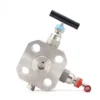
Stainless Flanged Reducer
shop

pressure transmitter shop
Stainless Flanged Reducer
shop
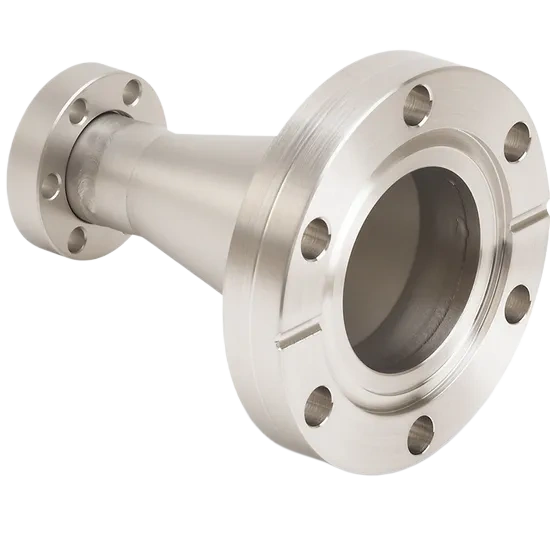
The Stainless Flanged Reducer is a stainless steel process connection accessory used to connect flanges or nozzles of different sizes in industrial piping and instrumentation systems. It helps adapt a smaller process connection to a larger flange size, providing a reliable transition for valves, pipelines, pressure instruments, and diaphragm seal assemblies.
In pressure transmitter and level measurement applications, a stainless flanged reducer is often used when the tank or vessel nozzle is too small. By enlarging the process connection, it helps provide a better installation surface for flanged pressure transmitters, diaphragm seal pressure transmitters, and differential pressure level transmitters, improving measurement stability and reducing the risk of blockage or diaphragm interference.
The SIYelectric Stainless Flanged Reducer is used to connect two flange sizes or process interfaces with different diameters. It provides a strong and convenient transition between a smaller pipe or vessel nozzle and a larger flange connection.
In general piping systems, it is used for pipeline size transition, equipment connection, valve installation, and process modification. In instrumentation applications, it is especially useful for installing flanged pressure transmitters, diaphragm seal pressure transmitters, and flange-mounted differential pressure level transmitters when the original equipment connection is too small.
For liquid level measurement, the size of the process opening can directly affect the measuring result. If the vessel nozzle is too small, the diaphragm seal may be restricted, blocked, or affected by local deposits. A stainless flanged reducer can help enlarge the effective connection size and provide a more suitable installation interface for the transmitter.
A stainless flanged reducer is normally installed between the equipment nozzle and the instrument or pipeline flange. One side matches the smaller process connection, while the other side provides a larger flange interface.
For pressure transmitter applications, this product is commonly used in the following situation:
The tank or vessel has a small process nozzle, but the selected flange-mounted transmitter or diaphragm seal requires a larger flange connection.
In this case, the stainless flanged reducer can be used to adapt the smaller equipment interface to a larger transmitter flange. This is particularly useful for level measurement, because a larger diaphragm seal area and better process opening can improve measurement response and reduce problems caused by clogging, crystallization, or poor contact with the process medium.
It is also suitable for process pipelines where the pipe size needs to be reduced or enlarged while maintaining a flanged connection.
Manufactured from stainless steel materials such as SS304, SS316, or SS316L, depending on the process medium and corrosion requirement.
Used to connect two different flange sizes or process interfaces, allowing a smaller nozzle to be adapted to a larger flange connection.
Commonly used with flanged pressure transmitters, diaphragm seal pressure transmitters, single flange level transmitters, and dual flange differential pressure level transmitters.
When the equipment nozzle is too small, the reducer can enlarge the connection size, helping ensure better exposure of the diaphragm seal to the process medium.
A larger connection opening can help reduce the risk of blockage in viscous, dirty, crystallizing, or slurry media.
Can be manufactured according to different flange standards, including ASME, EN, DIN, JIS, GB, or project-specific dimensions.
With proper material and sealing selection, it can be used in chemical, petrochemical, wastewater, slurry, oil and gas, and general industrial applications.
For flange pressure or level transmitter installation, the stainless flanged reducer is often installed as:
Tank / Vessel Nozzle → Stainless Flanged Reducer → Diaphragm Seal Flange → Pressure or DP Level Transmitter
For dual flange differential pressure level measurement, reducers may be used on one side or both sides, depending on the vessel nozzle size and transmitter flange size.
| Item | Specification |
|---|---|
| Product Name | Stainless Flanged Reducer |
| Brand | SIYelectric |
| Product Type | Flanged Reducer / Instrument Connection Adapter |
| Material Options | SS304, SS316, SS316L, or Customized |
| Connection Type | Flange to Flange |
| Flange Standards | ASME, EN, DIN, JIS, GB, or Customized |
| Sealing Face | RF, FF, RTJ, or Customized |
| Main Function | Flange size transition / process connection adaptation |
| Suitable Instruments | Flanged Pressure Transmitter, Diaphragm Seal Pressure Transmitter, DP Level Transmitter |
| Typical Applications | Pipeline transition, equipment nozzle adaptation, transmitter installation |
| Customization | Size, material, flange standard, pressure rating, thickness, sealing face |
Used when the process connection size does not match the required flange size of a pressure transmitter or diaphragm seal. It helps create a suitable mechanical connection between the vessel and the instrument.
For tank or vessel level measurement, a flanged reducer can enlarge a small nozzle connection, helping the diaphragm seal contact the process medium more effectively.
Suitable for diaphragm seal pressure transmitters where a larger flange size is required for better measurement performance, easier installation, or compatibility with the selected transmitter model.
Used in chemical reactors, storage tanks, pipelines, and process vessels where flange size conversion is required.
Suitable for pipelines, tanks, filtration systems, sludge systems, and wastewater applications where pipe size transition or instrument connection adaptation is needed.
Used in process pipelines, pressure measurement points, storage systems, and auxiliary equipment where stainless flanged connections are required.
Applied in pipeline modification, equipment connection, valve installation, and process system upgrades.
When selecting a stainless flanged reducer, confirm the following details:
Request Your Custom Solution & Factory Price
*We respect your privacy. Your information is used for technical quotation purposes only and will never be shared.
We use cookies to improve your experience and analyze site traffic. Choose which cookies you allow.
Required for the website to function. Cannot be disabled.
Help us understand how visitors interact with the website.
Used to deliver relevant advertisements and track campaigns.
No marketing cookies are used on this site.
Remember your settings and preferences for a better experience.
No preference cookies are used on this site.